
🌿 Stories carved by wind and water
Channel Islands Fox Recovery Preserved Each Island's Genetics
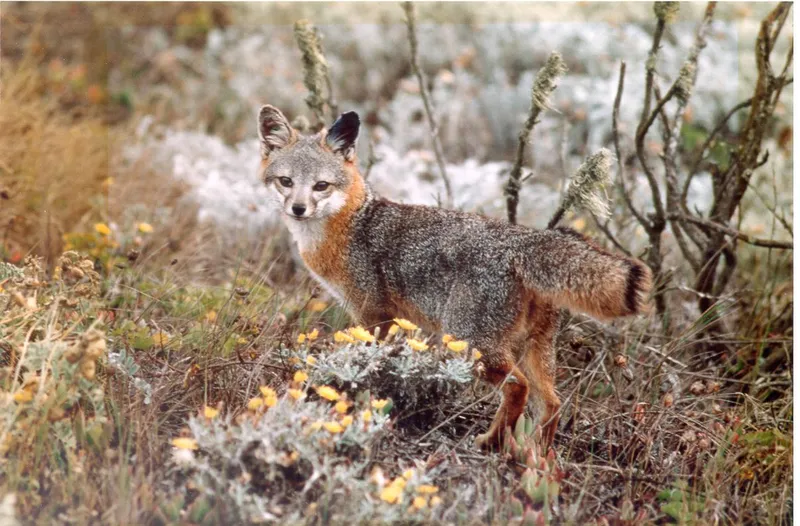
- What: The Channel Islands fox’s recovery was managed as separate island lineages, using captive breeding, studbooks, and careful genetic tracking to restore populations without mixing them.
- Where: The Channel Islands in Southern California.
- When: After severe population crashes in the 1990s, with recovery work continuing into the early 2000s.
After devastating population crashes in the 1990s, the Channel Islands fox became a recovery story built not just on numbers, but on genetics. The challenge in Southern California was unusually specific: bring foxes back fast without blending the distinct island populations that had evolved separately for thousands of years.
Separate Island Fox Populations
That meant recovery teams could not treat all Channel Islands foxes as one interchangeable group. Foxes from Santa Cruz, San Miguel, Santa Rosa, and Santa Catalina each belonged to their own island lineage. When populations plunged, managers had to rebuild them carefully, keeping track of where each fox came from and which animals bred with which.
The system was meticulous. Captive-breeding programs used founder foxes, the small number of animals selected to represent each island’s remaining genetic diversity. Individual foxes were identified with unique ear tags, and their histories were recorded in studbooks, the same kind of lineage records used in zoo and species management programs. Those records helped teams avoid pairing close relatives when possible and prevented accidental mixing between island populations.
1990s Crash and Recovery Work
The need for that precision came from a real crisis. On several islands, fox numbers dropped sharply in the 1990s, largely because of predation by golden eagles and, on Santa Catalina, disease also played a major role. By the early 2000s, some island populations had fallen to tiny numbers. Recovery work included captive breeding, relocating golden eagles from the islands, reestablishing bald eagles, vaccination on Catalina, and close monitoring after releases.
Why Genetic Management Mattered
What makes the rebound remarkable is that it was not simply a race to increase fox counts. It was a race to restore separate populations without erasing what made each one biologically distinct. A fast comeback can sometimes narrow a species into a genetic bottleneck or push managers toward mixing groups for convenience. Here, the opposite principle guided the work: save the foxes, but keep each island fox population itself.
That has a practical consequence. The Channel Islands fox is now often cited as one of the fastest recoveries of a mammal under the U.S. Endangered Species Act, but its recovery also shows how conservation can operate at a finer scale than a species name. On the Channel Islands, success meant that a fox on one island was not just another fox. It was part of a population with its own history, and rebuilding that population required records, restraint, and years of genetic management.
Did You Know?
The Channel Islands fox is often cited as the smallest fox species in North America.