
🏺 Recovered from the dusty archives
Alan Turing's Morphogenesis Theory Changed Biology's Questions
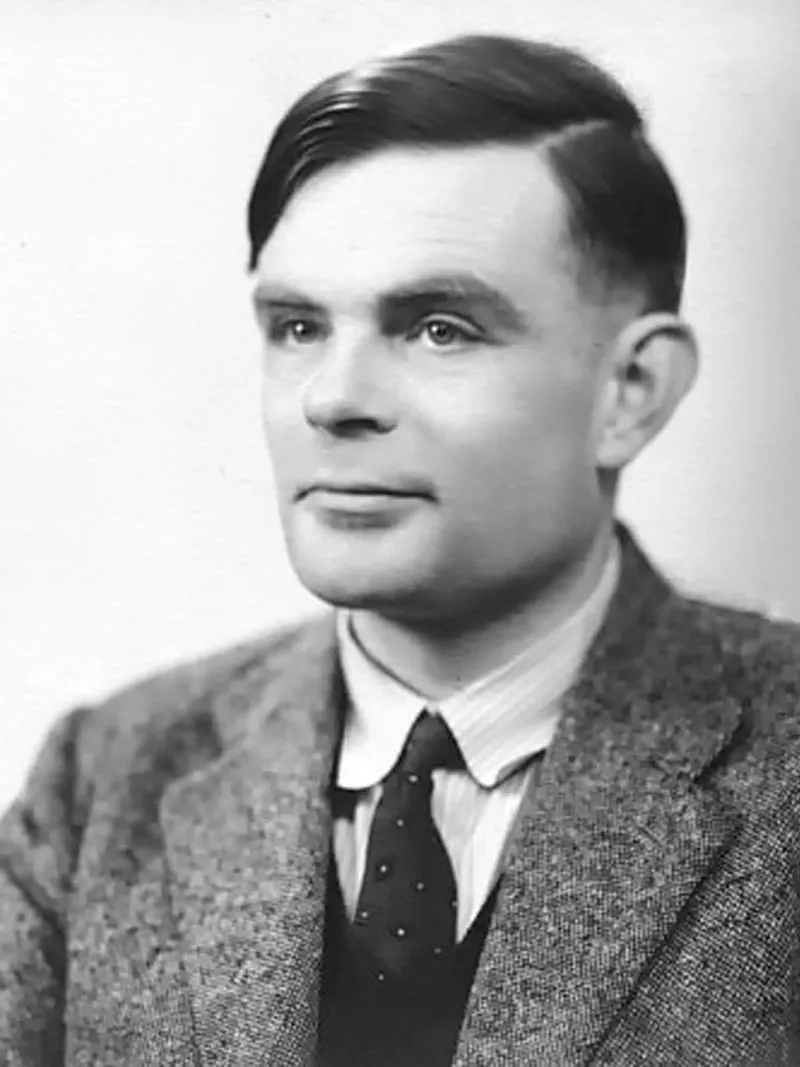
- What: Alan Turing’s 1952 morphogenesis paper proposed a reaction-diffusion mechanism to explain how biological patterns like stripes and spots can emerge from simple interactions.
- Where:
- When: 1952, with later influence on developmental biology in subsequent decades.
In 1952, Alan Turing published a paper on morphogenesis, the process by which living things develop visible patterns and form. He was asking a strikingly simple question: how does an embryo, starting from near-uniform tissue, produce stripes, spots, spirals, and organized structure?
Turing’s Reaction-Diffusion Model
His answer was mathematical. Turing proposed that chemicals spreading through tissue and reacting with each other could turn tiny differences into stable patterns. He called them morphogens. The basic idea is now known as a reaction-diffusion model: one process drives change, another spreads and shapes it, and from that interaction, order appears.
That may sound abstract until you picture what he was trying to explain. Think of a leopard’s spots, a zebra’s stripes, or the spacing of structures in plants and animals. Turing was not claiming to have solved every case. He was offering a general mechanism for how pattern could emerge without a designer placing each mark by hand inside the organism.
Why the Theory Was Bold
At the time, this was a bold move. Turing was already famous for work in logic, computing, and codebreaking, but morphogenesis showed him applying mathematical thinking to biology in a different way. Not by reducing life to a machine in some simplistic sense, but by asking whether biological form might arise from local rules repeated across space.
The remarkable part is the timing. In the early 1950s, biology did not yet have the experimental tools needed to test many of these ideas directly. Turing’s paper was not instantly embraced as a settled explanation, and for years it sat more as a provocative framework than a confirmed account. Only decades later did experiments and models in developmental biology begin to show cases where reaction-diffusion-like mechanisms could plausibly generate real biological patterns.
Legacy in Developmental Biology
That matters because it places Turing in a wider scientific context. His morphogenesis work was not a side curiosity. It was an early example of a style of science that became far more common later: using mathematics to describe how complex biological structure can emerge from simple interactions.
The concrete implication is still visible across modern research. Developmental biologists, mathematicians, and physicists still use Turing-style pattern models to study animal markings, tissue organization, and chemical signaling. His 1952 question remains active because it was never just about stripes or spots. It was about whether form itself could be explained.
Did You Know?
Turing’s morphogenesis paper was published in the journal Philosophical Transactions of the Royal Society of London B.