
🏺 Recovered from the dusty archives
Marie Curie's Notebooks Are Still Radioactive Today
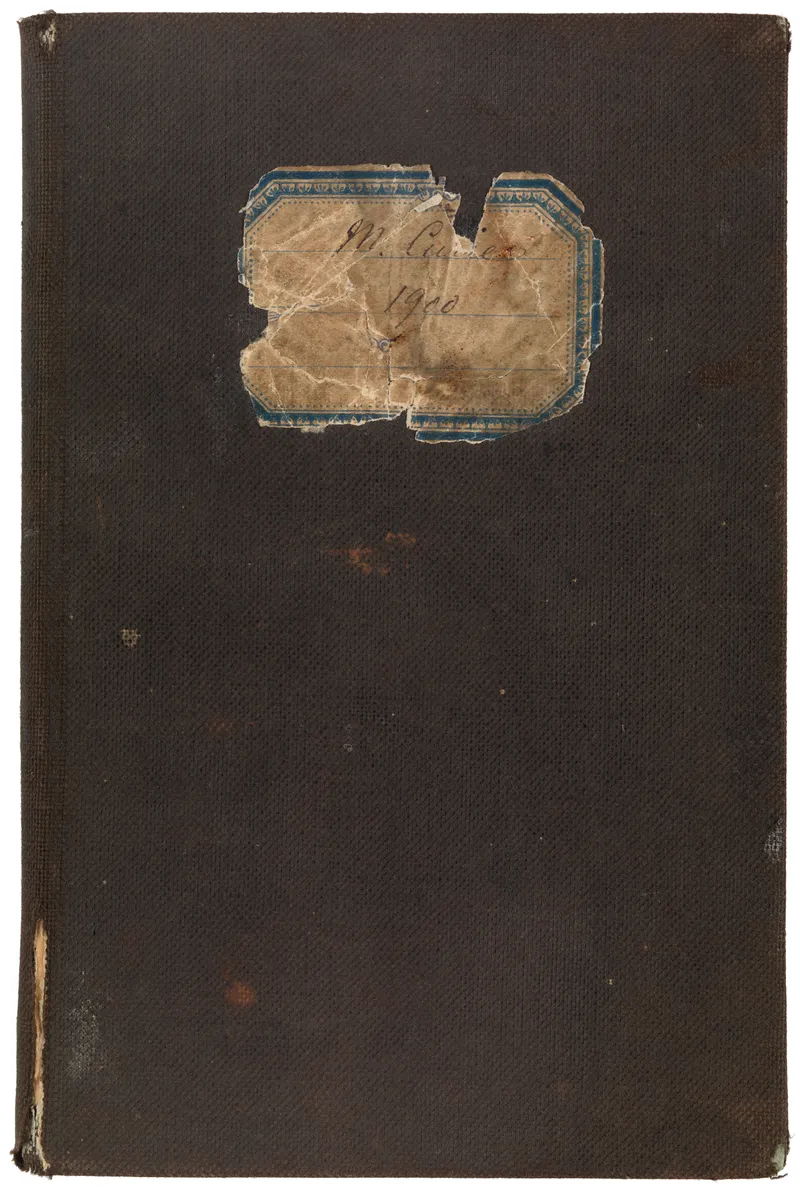
- What: Marie Curie’s notebooks and some personal papers remain radioactive because they were contaminated by radium during her research.
- Where: Bibliothèque nationale de France, Paris.
- When: More than a century after Curie’s early-1900s research.
Marie Curie’s notebooks are still radioactive, and that is not a metaphor. More than a century after she handled radium in Paris, some of her papers and personal effects still require special storage and controlled access.
Why the Notebooks Are Radioactive
The objects come first in this story: laboratory notebooks, loose papers, even some belongings associated with her research life. At the Bibliothèque nationale de France, Curie’s papers have long been treated as physically hazardous artifacts. Researchers who want to consult certain items may need protective measures because the contamination did not simply fade away on a human timescale.
The reason is straightforward. In the late 1890s and early 1900s, Marie Curie and Pierre Curie worked closely with radioactive materials, especially radium. At the time, the dangers of long-term radiation exposure were not fully understood, and modern protective methods did not yet exist. Radium was handled in laboratories with standards that would be unacceptable today. It could contaminate work surfaces, tools, clothing, and paper.
Curie was not careless by the standards of her era. She was working at the frontier of physics and chemistry, helping define radioactivity itself. But the material she studied was persistent. Radium-226, the isotope most associated with her work, has a half-life of about 1,600 years. That means contaminated objects can remain hazardous for many generations, even when the risk is managed and the items are not causing immediate harm to the public.
Radium Contamination and Archives
That is what makes her archive so unusual. Historians often treat old papers as fragile because of age, ink, or temperature. Curie’s surviving notebooks are a rarer case: they also reflect the physical conditions of early scientific discovery. The record of the work is inseparable from the material consequences of doing it.
The broader consequence is hard to miss. Curie’s notebooks are not just evidence of a breakthrough in modern science; they are also evidence of the price of learning what radioactive elements could do. Her research changed medicine and physics, but it also arrived before the culture of lab safety had caught up.
Accessing Curie’s Original Papers
So the concrete implication is simple and striking: if a scholar wants to read parts of Marie Curie’s original papers today, the experience is closer to consulting a controlled scientific object than casually opening an old notebook in an archive.
Did You Know?
Marie Curie was the first person to win Nobel Prizes in two different sciences: physics and chemistry.