
🏺 Recovered from the dusty archives
Carolingian Minuscule Changed How Medieval Europe Read
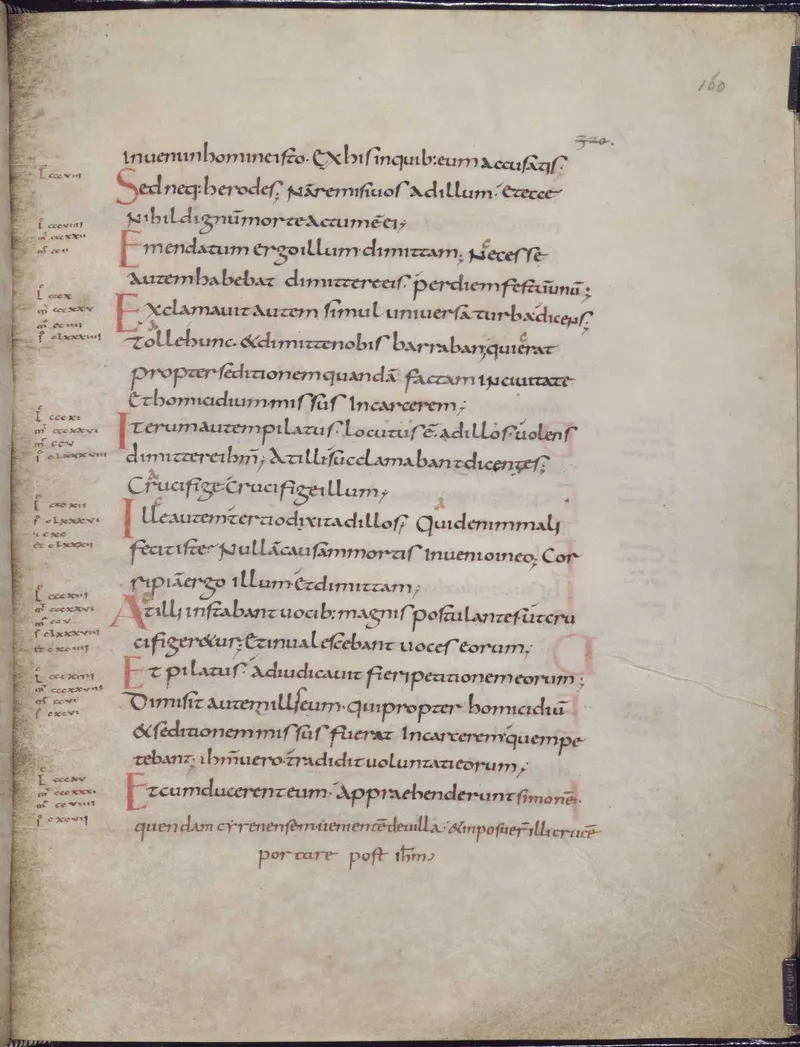
- What: Charlemagne’s court backed Carolingian minuscule, a clearer handwriting reform that improved copying, reading, and transmission of texts across the Carolingian Empire.
- Where: Across western Europe in the Carolingian Empire.
- When: Late 8th and early 9th centuries.
Charlemagne’s court did not just extend military and political control across parts of western Europe in the late 8th and early 9th centuries. It also backed a handwriting reform. Working with the scholar Alcuin of York, the Carolingian world promoted a clearer script now called Carolingian minuscule, and that mattered because texts were easier to copy, read, and share across a fragmented empire.
Why Script Reform Mattered
The basic problem was practical. Early medieval manuscripts often used regional writing styles that could be dense, inconsistent, and hard to decipher outside their local context. In an empire stretching across much of modern-day France, Germany, northern Italy, and beyond, that created friction. If church officials, scholars, and scribes could not reliably read the same texts, correcting them, teaching from them, and reproducing them became slower and more error-prone.
Carolingian minuscule offered a more regular solution. Letters were shaped more distinctly. Spacing between words was clearer than in many earlier scripts. The overall page became more legible. This did not mean every manuscript suddenly looked identical, and it did not erase local habits overnight. But it created a widely influential standard that scribes could learn and recognize across different centers of copying.
Role in the Carolingian Renaissance
A monastery or school copying a biblical text, a legal collection, or a work of classical Latin now had a better chance of producing something another reader could actually use. That is where the reform’s importance shows up. Its value was practical first, not symbolic. Better handwriting reduced misreading, helped comparison between copies, and made textual transmission more dependable.
The consequence was larger than penmanship. Carolingian minuscule became one of the tools that supported the Carolingian educational and textual revival, sometimes called the Carolingian Renaissance. It was not the only cause, and historians do not treat script reform as a magic switch. Patronage, schools, monastic networks, correction of texts, and broader political ambitions all mattered too. But a clearer script lowered a real barrier: the difficulty of moving knowledge through many hands.
Legacy of Carolingian Minuscule
Its afterlife was even more concrete. Centuries later, Renaissance humanists admired manuscripts written in this style and treated them as models of readable ancient writing. Modern lowercase Latin letters, as used in print and on screens, owe part of their shape and logic to that medieval reform. A script designed to make copying easier in Charlemagne’s Europe helped set the visual foundation for how much of the West reads today.
Did You Know?
Charlemagne also sponsored a major standardization of Latin spelling and grammar through court scholars, which helped make written texts more consistent as well as easier to read.