
🏺 Recovered from the dusty archives
Reagan's Berlin Wall Quote in 1987 Context
Mr. Gorbachev, tear down this wall!
- Who: Ronald Reagan
- Where: At the Brandenburg Gate in West Berlin, with the Berlin Wall behind him
- When: June 12, 1987
- Why: It became a defining Cold War challenge because it publicly pressured Soviet leader Mikhail Gorbachev and made the Berlin Wall a concrete test of whether reform in the East was real.
“Mr. Gorbachev, tear down this wall!” was the line Ronald Reagan delivered at the Brandenburg Gate in West Berlin on June 12, 1987, during his speech on East–West relations. It is often remembered as a simple Cold War challenge. In its original setting, though, it was more specific than that: a public demand aimed at Soviet leader Mikhail Gorbachev at a moment when reform language was already changing the political atmosphere in Europe.
Brandenburg Gate Speech Context
The setting mattered. Reagan was speaking with the Berlin Wall behind him, one of the starkest physical symbols of postwar division. By 1987, Gorbachev had introduced policies of glasnost and perestroika, and many in the West were trying to judge whether those reforms were genuine, limited, or mostly rhetorical. Reagan’s line turned that uncertainty into a test. If Soviet openness was real, he argued, then the Wall should not stand.
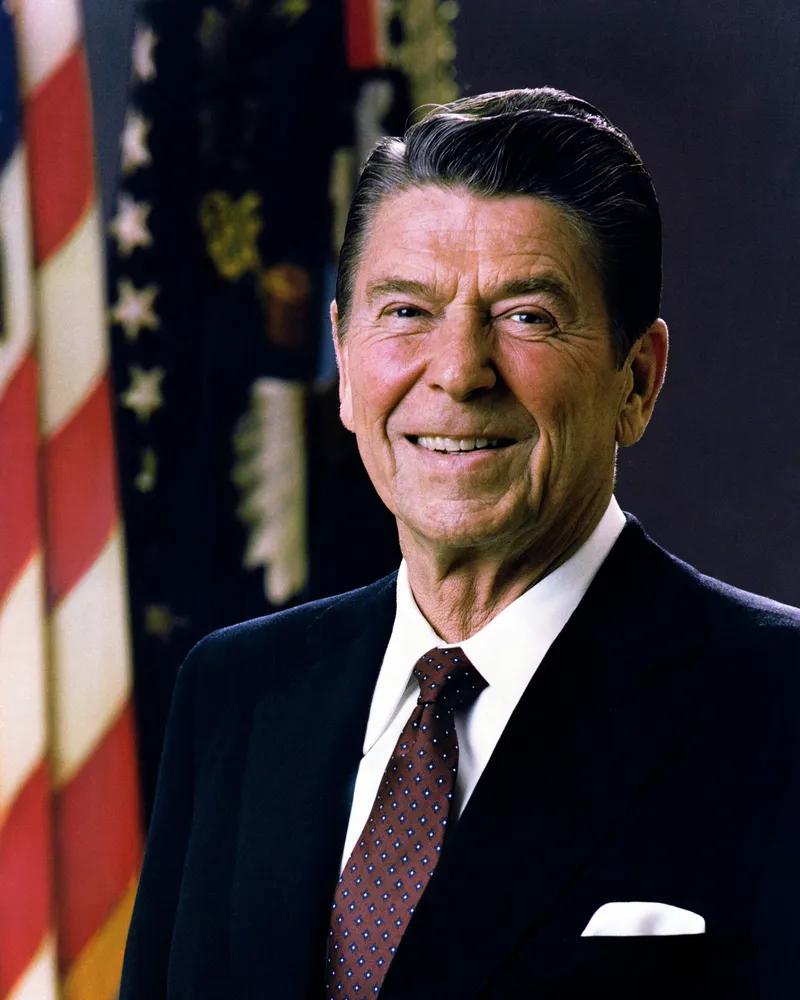
That is why the wording landed so forcefully. Reagan did not speak in abstract terms about freedom or peace alone. He attached those ideals to a visible structure and to a named political leader. “Tear down this wall” was concrete, plain, and impossible to misunderstand. It turned a vast geopolitical conflict into one direct sentence. The line also worked because it matched the location so exactly. At the Brandenburg Gate, no audience needed help understanding what “this wall” meant.
Political Meaning of the Quote
The quote mattered politically because it sharpened pressure without pretending the Wall would fall the next day. It challenged the Soviet Union in public while also speaking to Berliners who had lived for decades with the reality of division. West Berlin had long been a showcase city in the Cold War, but also a place where the stakes were daily and local. Reagan’s sentence recognized that the Wall was not only a strategic boundary; it was a human and civic wound.
It is still remembered partly because later events gave it retrospective power. When the Berlin Wall fell in 1989, Reagan’s 1987 demand seemed prophetic. But the line endures not because it alone caused that outcome; historians do not treat it that way. It lasts because it captured, in a few words, a political argument that was already building: reform had to be measured by what it changed in the real world.
Why the Line Endures
That is the concrete implication of the quote. Its staying power comes from how precisely it joined rhetoric to reality. Reagan did not merely condemn communism in general. He pointed at the Wall itself and made its existence the measure of whether East–West change meant anything at all.
Did You Know?
The line later gained added force after the Berlin Wall fell in 1989, though historians do not treat Reagan’s remark as the cause.