
🏺 Recovered from the dusty archives
Klondike Gold Rush Mining Exposed Mammoth Bones
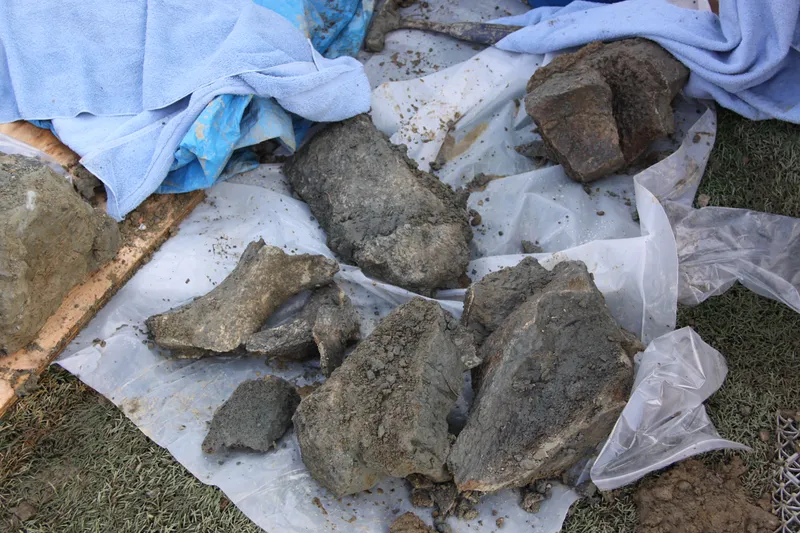
- What: Klondike gold miners thawing Yukon permafrost for gold accidentally exposed and recovered Ice Age animal remains, including mammoth bones and tusks.
- Where: Klondike region around Dawson City, Yukon, and nearby Alaska goldfields.
- When: Late 1890s during the Klondike Gold Rush.
During the Klondike Gold Rush in the late 1890s, miners digging into Yukon permafrost were trying to reach gold-bearing gravel, not ancient fossils. But the way they mined frozen ground kept bringing up something else: mammoth bones and other Ice Age remains locked in the earth for thousands of years.
How Klondike Miners Thawed Permafrost
In the Klondike, especially around Dawson City, frozen muck and gravel made mining slow and brutal. To get through it, miners first used fires to thaw the ground. They built fires on the surface, let the heat sink in, scraped away loosened material, and repeated the process again and again. Later, many switched to steam points, metal pipes driven into the frozen ground that blasted steam to melt it more efficiently. Either way, the work opened deep layers of permafrost that had not been disturbed since the Pleistocene.
As those layers came apart, miners sometimes uncovered large bones, tusks, and buried animal remains. Woolly mammoth remains were among the most famous finds, though other extinct Ice Age animals also appeared in the Yukon and Alaska goldfields. Some material was saved and sent to museums for scientific study. Other pieces entered curio shops, where tusks and bones were sold as souvenirs of the gold rush frontier.
Accidental Ice Age Fossil Finds
This was not organized paleontology at first. It was a side effect of industrial-scale digging in frozen sediment. Gold seekers were stripping away exactly the kind of ground that preserved Ice Age remains unusually well: cold, waterlogged, and sealed off by permafrost. In that sense, mining became an accidental fossil recovery system.
The consequence was mixed. Important specimens reached researchers and helped build museum collections and scientific knowledge of northern Ice Age life. At the same time, many finds were poorly documented, scattered into private hands, or damaged in the rush of extraction. Valuable context about where bones lay in the ground, and what that could reveal, was often lost.
Scientific Value and Lost Context
What remains clear is this: a mining method designed to thaw frozen Yukon earth for gold also exposed a second buried resource. Around the Klondike, the same fires and steam points that opened pay gravel also opened a window into the Ice Age, one bone at a time.
Did You Know?
Woolly mammoth specimens from Yukon permafrost have helped museums and researchers study Ice Age life in northern North America.