🚀 Whispers from the silent cosmos
Tardigrades Survived Open Space in ESA FOTON-M3 Test
- What: In 2007, tardigrades on ESA’s FOTON-M3 mission were exposed to vacuum and ultraviolet radiation in space, and some survived, with a few still able to reproduce afterward.
- Where: Low Earth orbit, outside the European Space Agency’s FOTON-M3 capsule.
- When: 2007.
In 2007, a group of tiny animals called tardigrades was exposed directly to space outside the European Space Agency’s FOTON-M3 mission, and many came back alive.
TARDIS Experiment in Orbit
The experiment, known as TARDIS, placed dehydrated tardigrades in low Earth orbit for about 10 days. There, they faced two conditions that usually destroy living tissue: the vacuum of space and intense radiation from the Sun. Some were exposed to vacuum alone. Others were exposed to both vacuum and ultraviolet radiation.
After the capsule returned to Earth, researchers rehydrated the animals and checked what happened next. A significant number revived. Some even remained capable of reproduction, depending on the species and the exact exposure conditions. That result made the experiment one of the clearest real-world demonstrations of tardigrade durability.
Vacuum vs. Ultraviolet Damage
The details mattered. Survival was much better for tardigrades exposed to space vacuum without the full blast of solar ultraviolet radiation. Ultraviolet light was far more damaging, especially at the higher ranges used in the experiment. So the finding was not that tardigrades are somehow immune to space. It was that, in a dehydrated state, some of them can endure parts of the space environment far better than most animals ever tested.
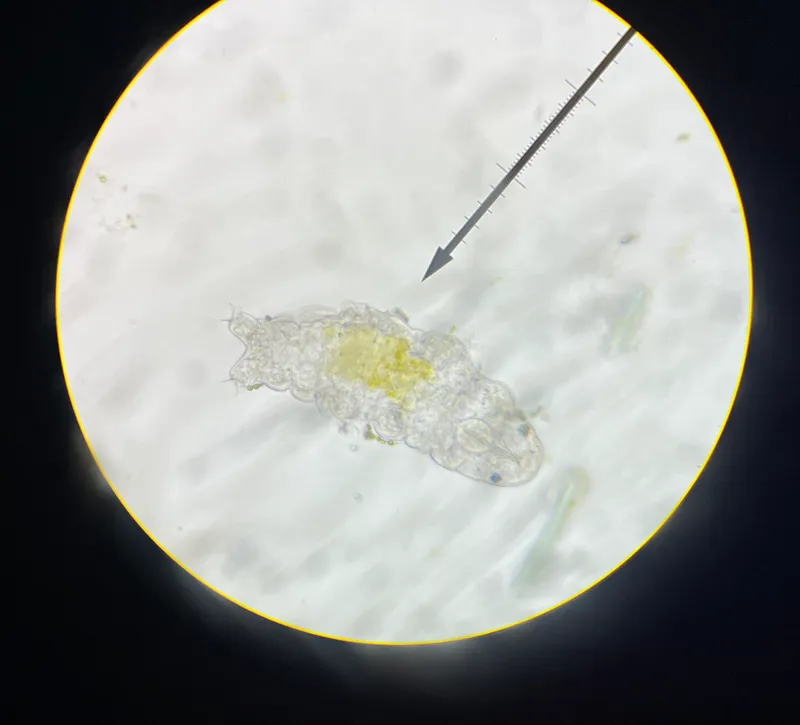
Tardigrades, often called water bears, are microscopic animals known for entering a dried-out survival mode called cryptobiosis. In that state, their metabolism drops to an almost undetectable level. That helps them tolerate freezing, drying, and other extremes that would normally be fatal. The FOTON-M3 results showed that this resilience is not just a lab curiosity. It holds up, at least in part, in actual orbit.
Why the Results Matter
The broader insight is concrete rather than speculative. This experiment did not show that complex life can casually live in space, and it did not prove anything about life elsewhere. What it showed is narrower and more useful: some organisms can survive short-term direct exposure to vacuum and radiation if they are in the right biological state.
That matters for space biology because it gives scientists a real test case for the limits of animal survival, contamination control, and how living systems respond when Earth’s normal protections are stripped away.
Did You Know?
Some tardigrades survive harsh conditions by entering cryptobiosis, a reversible state in which their metabolism drops to almost undetectable levels.