🏺 Recovered from the dusty archives
Harriet Tubman and the Combahee River Raid
- What: Harriet Tubman helped make the 1863 Combahee River Raid possible by gathering intelligence and supporting a Union operation that freed more than 700 enslaved people.
- Where: South Carolina’s Combahee River near Beaufort.
- When: June 1863, during the Civil War.
In June 1863, Harriet Tubman helped guide a Union raid up South Carolina’s Combahee River. By the time it ended, hundreds of enslaved people had reached freedom. That operation matters because Tubman was not there only as a symbol. She was part of the military work that made the raid possible.
Planning the Combahee River Raid
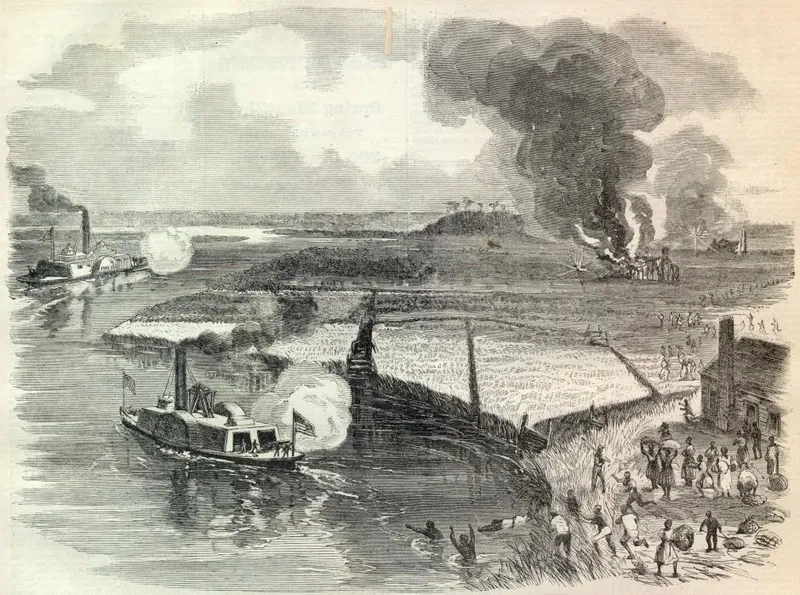
The raid was carried out under Colonel James Montgomery, with Union forces moving by boat through Confederate territory near Beaufort. The region was heavily dependent on enslaved labor, and the waterways were dangerous. Confederate troops had planted torpedoes, what would now be called mines, in the river. Tubman had spent time gathering local intelligence from Black residents, pilots, and networks of people who knew the terrain. That information helped Union forces navigate the river and target plantations supplying the Confederate war effort.
What Happened During the Raid
When the gunboats arrived, the action moved fast. Rice mills and infrastructure were hit. Enslaved people along the river understood what the boats meant and rushed toward them, often carrying children and whatever they could grab. Contemporary reporting and later accounts differ on exact numbers, but historians broadly agree that more than 700 enslaved people were liberated in the raid. Tubman later described the scene in practical terms, not romantic ones: confusion, urgency, and people trying to get aboard before Confederate resistance could stop them.
Harriet Tubman’s Military Role
What is often missed is the nature of Tubman’s role. She is commonly remembered for the Underground Railroad, and rightly so. But that memory can flatten her into a purely humanitarian figure, as if wartime intelligence and military coordination belonged to someone else. In South Carolina, Tubman worked as a scout, spy, nurse, and organizer. She helped turn information into action. That does not mean she acted alone, and it does not require mythmaking. The raid depended on Union officers, Black troops, local knowledge, and the courage of enslaved people who chose a dangerous chance at freedom. Tubman was a crucial operational link inside that larger effort.
The concrete implication is simple: Harriet Tubman was not just adjacent to Civil War history. She was inside its machinery. The Combahee River raid shows her not only as an abolitionist icon, but as a Union asset whose intelligence work contributed to one of the war’s most successful liberation operations.
Did You Know?
The Combahee River Raid is often described as a rare Civil War operation in which a woman played a key planning and guiding role.