
🏺 Recovered from the dusty archives
Oppenheimer's "Destroyer of Worlds" Quote, Explained
Now I am become Death, the destroyer of worlds.
- Who: J. Robert Oppenheimer.
- Where: In a 1965 NBC interview reflecting on the Trinity nuclear test.
- When: He recalled it about twenty years after the first atomic bomb test on July 16, 1945.
- Why: It became famous as Oppenheimer’s most memorable reflection on Trinity and the dawn of the atomic age, symbolizing the scale and horror of nuclear destruction.
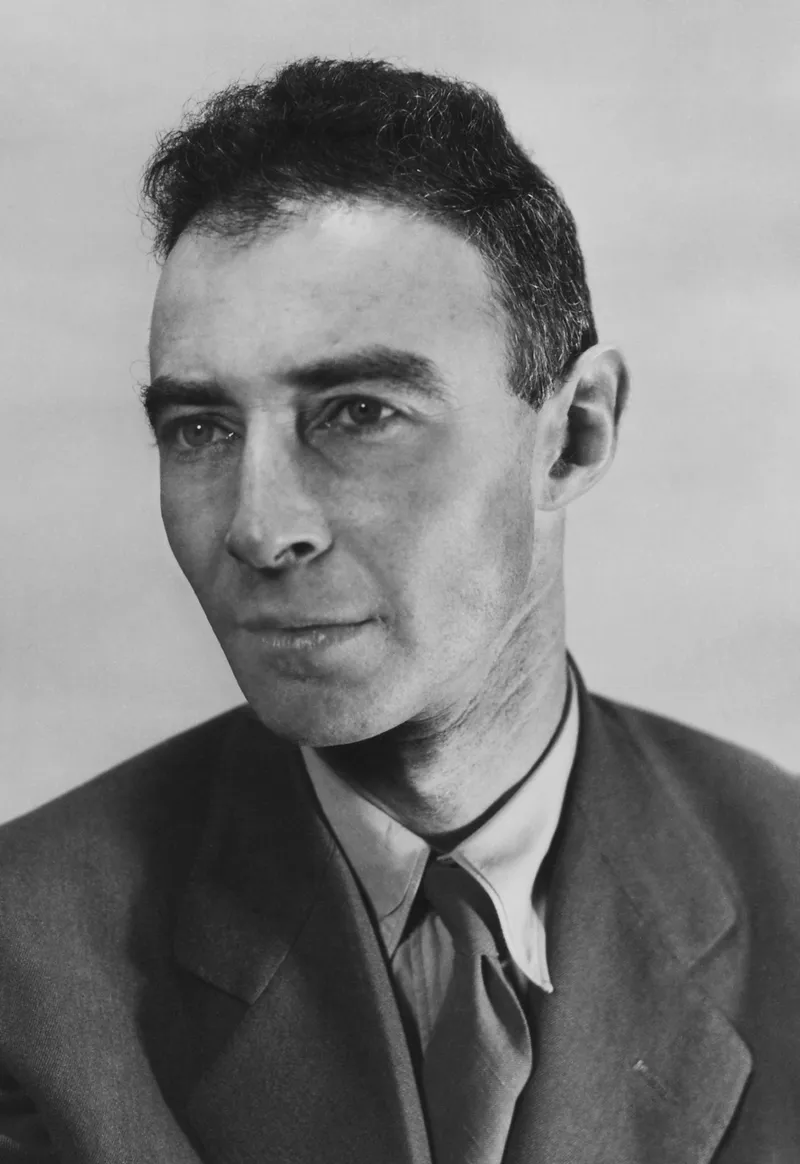
“Now I am become Death, the destroyer of worlds” is the line most closely tied to J. Robert Oppenheimer, but it was not recorded as something he said at the Trinity explosion itself. The wording became famous because Oppenheimer recalled it twenty years later in a 1965 NBC interview, when he was asked what he thought after the first atomic bomb test on July 16, 1945.
Trinity and the 1965 Recollection
That setting matters. Trinity, in the New Mexico desert, was the first detonation of a nuclear weapon. Oppenheimer was the scientific director of the Los Alamos laboratory that built it. By the time of the interview, the world already knew Hiroshima, Nagasaki, and the nuclear arms race. So when Oppenheimer looked back and said that “a few people laughed, a few people cried, most people were silent,” then added that he remembered a line from the Bhagavad Gita, the quote arrived with the full weight of what nuclear weapons had come to mean.
Bhagavad Gita Source
The line itself comes from the Bhagavad Gita, a Hindu scripture he had studied in the 1930s. In the text, the god Krishna reveals a vast and terrifying divine form to the warrior Arjuna. The passage is about overwhelming power, duty, destruction, and cosmic scale. Oppenheimer reached for that language because ordinary description was too small for what Trinity represented. He was not just describing an explosion. He was trying to name a human threshold: a moment when scientific achievement and destructive capacity fused into something world-changing.
Why the Quote Endured
That is why the quote mattered in context. It condensed the meaning of Trinity into one sentence. It did not explain policy, strategy, or ethics in a neat way. Instead, it captured the shock of realizing that a weapon built by human hands had opened a new era. The phrasing also helped it endure. “Destroyer of worlds” sounds larger than any single battlefield or nation. It makes the bomb feel planetary, which is exactly why it resonated in the Cold War age.
The quote is still remembered because it sits at the intersection of several histories at once: World War II, the atomic bomb, modern science, and public fear of annihilation. It also survives because Oppenheimer’s recollection was careful rather than triumphant. He did not offer a slogan of victory. He reached for scripture to describe the scale of what had happened. The historical fact is plain: the famous line entered public memory through his 1965 recollection of Trinity, not through a verified on-the-spot transcript from July 16, 1945.
Did You Know?
The line comes from the Bhagavad Gita, which Oppenheimer studied in Sanskrit.