
🌿 Stories carved by wind and water
Namib Desert Fog-Basking Beetles Harvest Water From Air
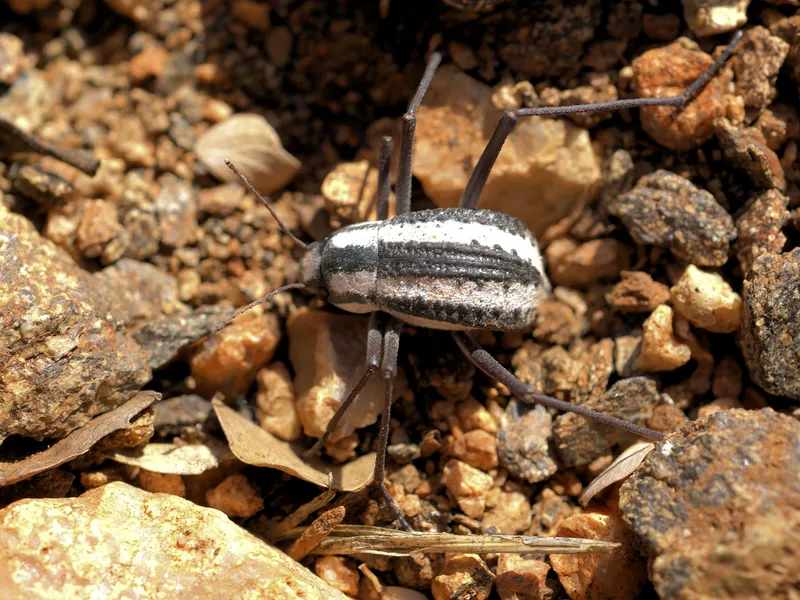
- What: Namib Desert beetles collect water from fog by tilting their bodies so condensation forms on their wing covers and rolls to their mouths, inspiring fog-harvesting technology.
- Where: Namib Desert in southwestern Africa, especially coastal dunes where fog moves inland from the Atlantic.
- When:
In the Namib Desert of southwestern Africa, some beetles collect drinking water from fog. The method is simple in outline and precise in execution: the beetle tilts its body, moisture condenses on its hardened wing covers, and the droplets roll down to its mouth.
How Fog-Basking Beetles Drink
The key idea is condensation control. Coastal fog regularly pushes inland from the Atlantic, even where rainfall is scarce. For a small animal in that setting, liquid water may appear not as a puddle or a stream, but as suspended droplets moving through cold morning air. Fog-basking beetles take advantage of that brief window by adopting a head-down posture on dunes, lifting the rear of the body so the shell faces the airflow.
What makes the posture work better is the surface itself. The elytra, the beetle’s hard outer wing covers, have microtextures that influence how water behaves. Tiny raised areas help droplets form, while surrounding regions help them move once they become large enough. The result is not magic and not unlimited water, but a directional system: condense, gather, roll, drink.
Beetle Shell Water Collection
This became especially interesting beyond entomology because it suggested a design principle engineers could copy. If a beetle shell can collect water from fog in one of the driest places on Earth, then carefully textured materials might do something similar at larger scales. Researchers have used that basic biological model to explore fog-harvesting surfaces, meshes, and coatings that encourage droplets to form and then drain efficiently into a collector.
The important consequence is practical. In dry coastal regions where fog is more reliable than rain, engineered surfaces inspired by these beetles could help capture small but usable amounts of water without pumps or complex machinery. Real-world systems still depend on local wind, fog density, temperature, maintenance, and cost, so the beetle is not a complete blueprint. But it does show how a very small physical trick can become a useful design lesson.
Fog Harvesting Technology
In concrete terms, the Namib beetle’s posture and shell texture turned an insect survival strategy into a model for water-harvesting technology: shape the surface, face the fog, and let gravity finish the job.
Did You Know?
The Namib Desert beetle is often cited in biomimicry research because its fog-collecting strategy helped inspire engineered surfaces that try to harvest water without moving parts.