🏺 Recovered from the dusty archives
6 Hidden Objects Found Inside Old British Walls
- What: The article explains that old houses in Britain sometimes contain deliberately concealed objects that were likely used as protective, ritual, or symbolic deposits.
- Where: Old houses and buildings in Britain, with some examples also noted in Ireland.
- When: Mainly the early modern period through later historic domestic building traditions; some examples are specifically documented from the 17th and 18th centuries.
Open an old wall in Britain, and sometimes the house stares back. During renovations, builders have repeatedly found objects tucked into chimneys, under floors, above ceilings, and behind beams.
These were not always accidents. Many appear to have been placed there on purpose, as charms, offerings, or practical protections shaped by fear, faith, and household custom.
1. Concealed Shoes
One of the most famous finds is a single old shoe hidden near a chimney, hearth, or doorway. It is usually worn, personal, and placed deep in the fabric of the house, where nobody would casually leave it.
The usual interpretation is counter-witchcraft. In Britain, concealed shoes were widely recorded as protective charms, especially around openings like thresholds and fireplaces, where danger was imagined to enter. That is why they still surprise builders during refurbishments: the shoe was meant to stay hidden.
2. Witch Bottles
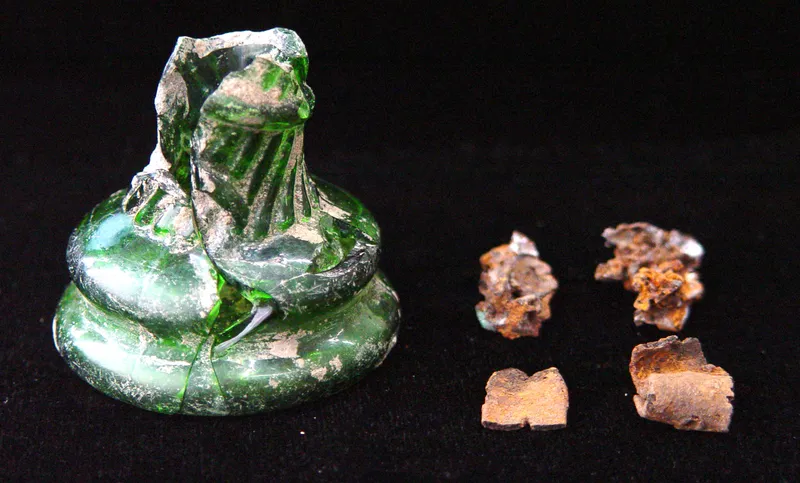
Then there are witch bottles: Bellarmine or glass bottles filled with things like urine, pins, and nails, concealed in hearths or under floors. They sound extreme because they were.
Many examples can be dated to the 17th and 18th centuries, and their meaning is fairly clear. They were used as counter-magic, intended to trap or turn back harmful witchcraft. What looks like rubbish in a sealed bottle was, to the household that buried it, a defensive device.
3. Mummified Cats
Few discoveries hit harder than a dried cat emerging from a wall void or roof space. These desiccated cats have been found in old British buildings often enough to form a recognized pattern.
Why they were placed there is still debated. Protective, or apotropaic, intent is one common interpretation, and pest-related symbolism is another. There is no single definitive explanation for every case, but they were likely more than random animal remains.
4. Dried Chickens and Poultry
Rarer still are whole birds or chicken remains tucked into walls or roof spaces. These discoveries are documented, but they are much less common than shoes, bottles, or cats.
Their meaning is not always certain. They are often interpreted as protective deposits or foundation offerings, suggesting that some households used animal remains in rituals tied to safety, luck, or the life of the building itself.
5. Birth Girdles and Prayer Papers
Not every hidden object was bodily or brutal. Some finds are folded prayer slips, written charms, or other protective texts hidden behind mantels or beams. In some cases, they are linked to childbirth and household protection.
This is where the record needs care. Written charms in houses are documented, but true medieval birth girdles mostly survive in institutions rather than as ordinary household finds. Even so, hidden prayer papers show how written words could function as physical protection inside the home.
6. Horse Skulls in Ceilings
Builders in Britain and Ireland have also uncovered horse skulls concealed under floors or above ceilings. It is the kind of find that instantly makes a room feel older and stranger.
The reason is contested. Some explanations say the skulls were used to improve room resonance, while others treat them as protective deposits. No definitive proof settles every example, but either explanation shows a household trying to shape the unseen qualities of a space.
Behind old British walls, these objects turn up like messages with no authors attached. A shoe, a bottle, a cat, a folded scrap of text: each one suggests a home that was not just built, but also guarded.
Did You Know?
The Northampton Museum and Art Gallery in England is known for maintaining a large index of concealed shoes found in historic buildings.