
🌍 Records from the halls of power
Homo floresiensis Discovery Changed Human Evolution on Flores
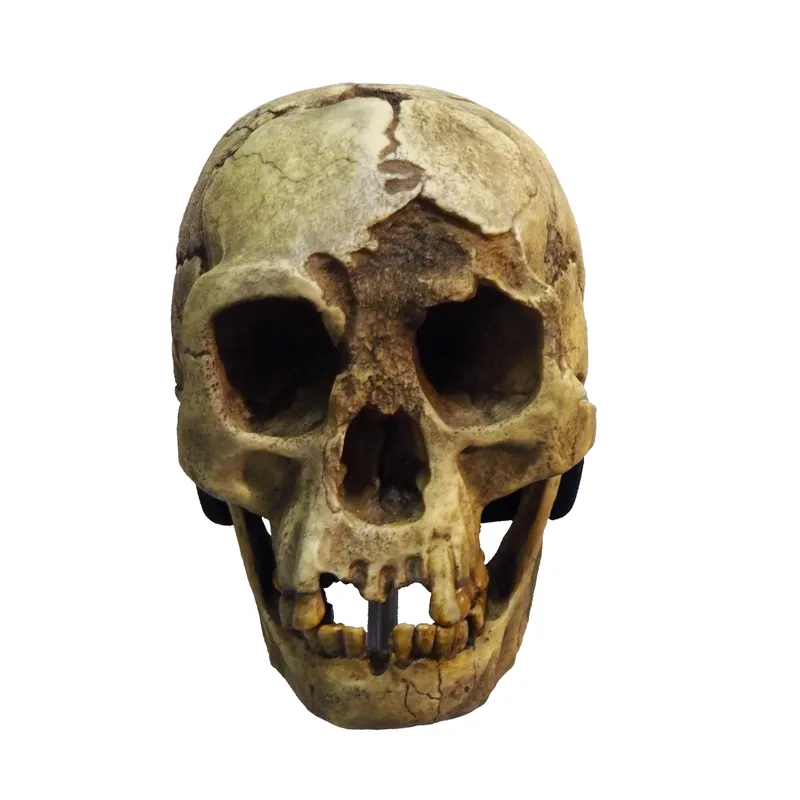
- What: Archaeologists at Liang Bua cave found tiny hominin fossils later classified as Homo floresiensis, a discovery that challenged simple views of human evolution and raised questions about island-driven change.
- Where: Liang Bua cave on Flores Island, Indonesia.
- When: The fossils were uncovered in 2003, with the remains dated to roughly 100,000 to 60,000 years ago.
In 2003, archaeologists working in Liang Bua cave on the Indonesian island of Flores uncovered a tiny hominin skeleton that did not fit the usual picture of human evolution. The remains, later assigned to Homo floresiensis, were small-bodied, small-brained, and unlike any recent human population known from the region.
Flores Island and Evolution
The find mattered immediately because Flores is an island. Isolation changes animals all the time. On islands, large species can become smaller and small species can become larger. Flores already had unusual fauna in its past, including dwarf stegodons and giant rats. The discovery of Homo floresiensis raised a difficult question: could island conditions also reshape a human lineage in dramatic ways?
That question is still central to the debate. The most widely discussed interpretation is that Homo floresiensis represents a distinct hominin species, not simply modern humans with a medical condition. Researchers pointed to a mix of features in the skull, jaw, wrist, feet, and limbs that did not line up neatly with Homo sapiens. At the same time, scientists have debated where this population fits on the human family tree. Some analyses suggest descent from an earlier hominin lineage, while others differ on the exact relationship. There is no full consensus on every detail.
Liang Bua Fossil Timeline
What is clearer is the timeline and the setting. Fossils of Homo floresiensis from Liang Bua indicate these hominins lived on Flores until relatively recently in prehistoric terms, with evidence often placed roughly between about 100,000 and 60,000 years ago for the skeletal remains, and associated signs of occupation extending later in the cave record. That meant a small-bodied hominin survived on an isolated island long after many people once assumed only Homo sapiens remained in this part of the world.
Why the Discovery Matters
The larger consequence is practical for science. Flores showed that human evolution was not a simple march toward one body type or one brain size. In isolated environments, selection pressures, limited resources, and long separation may produce unexpected outcomes. Researchers now take island contexts more seriously when interpreting fragmentary fossils elsewhere, especially in Southeast Asia.
The concrete implication is straightforward: when scientists excavate islands, they no longer assume unusual bones must belong to abnormal modern humans or to a familiar species in miniature. Flores forced a more careful approach, and Homo floresiensis remains one of the clearest examples of how geography can reshape the human story.
Did You Know?
Homo floresiensis was nicknamed “the Hobbit” in popular media because of its very small body size.