
🫀 Secrets of the human vessel
Pemberton's Sign and Substernal Goiter Compression
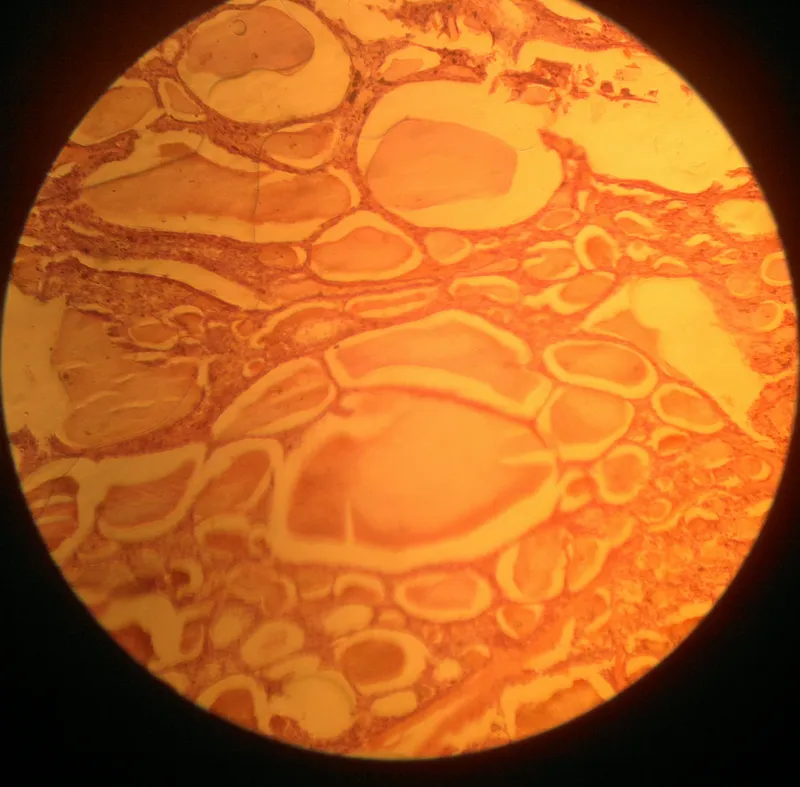
- What: Pemberton's sign is a bedside maneuver in which raising both arms causes facial congestion and neck vein distension, suggesting substernal goiter and possible thoracic inlet compression.
- Where: At the bedside during a physical examination.
- When: Described in the mid-20th century.
Pemberton's sign is a simple bedside maneuver: a patient lifts both arms, and within seconds the face may turn congested and neck veins may stand out. That reaction can point to a substernal goiter, meaning an enlarged thyroid that extends behind the breastbone into the upper chest.
How Pemberton's Sign Works
If that goiter is already crowding the thoracic inlet, the narrow space where major veins, the trachea, and other structures pass between the neck and chest, raising the arms can make the squeeze worse. The result is visible and fast. Venous blood has a harder time draining from the head and neck. The face becomes flushed or dusky. Veins distend. Some patients also feel short of breath, tight in the neck, or lightheaded.
That is why the finding can resemble superior vena cava obstruction. In both situations, blood returning from the upper body meets resistance, and the outward signs can look similar. The difference is that Pemberton's sign is a positional clue. The arm raise briefly narrows an already crowded space, exposing hidden compression that may not be obvious at rest.
Substernal Goiter Compression
The sign is named for Hugh Pemberton, who described it in the mid-20th century in the United Kingdom. It remains useful because it links anatomy to what is happening in real time. A thyroid enlargement in the lower neck is not always just a neck problem. When part of it extends into the chest, it can press on vessels and airways where there is very little extra room.
One common misconception is that visible facial redness with arm elevation automatically means a primary vein disorder. Sometimes the problem is external compression, not a clot inside the vein and not classic superior vena cava syndrome from another cause. The maneuver does not replace imaging, but it can quickly sharpen suspicion and explain symptoms that seem intermittent or position-dependent.
Why the Sign Matters
In practical terms, Pemberton's sign matters because it can reveal thoracic inlet compression before the anatomy is fully mapped on scans. A brief arm raise can turn a hidden substernal goiter into an obvious mechanical problem, helping connect facial congestion, venous distension, and upper chest crowding in one concrete bedside moment.
Did You Know?
It is often tested by asking the patient to raise both arms until the signs appear, sometimes within seconds.