
🏺 Recovered from the dusty archives
Galileo and the Medicean Stars: Why He Named Jupiter's Moons
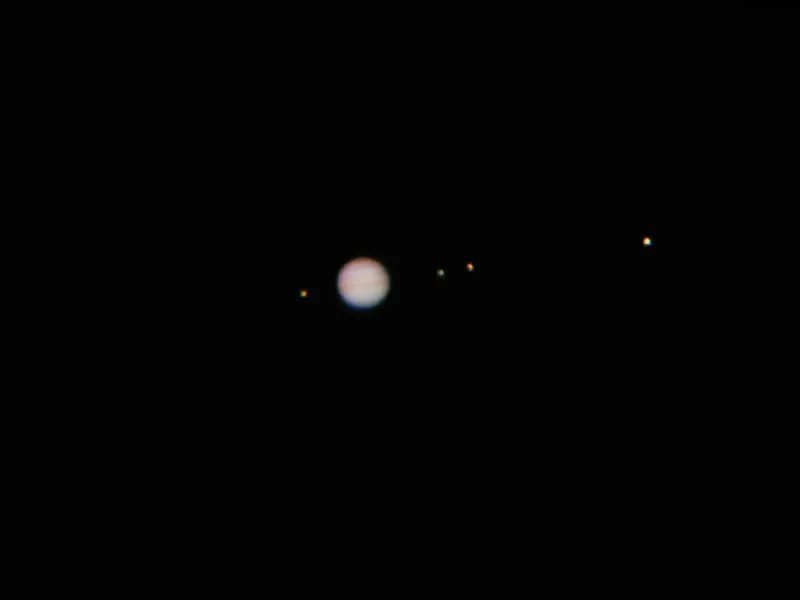
- What: The article explains how Galileo’s discovery of Jupiter’s four moons was tied to patronage, since he named them the Medicean Stars to honor the Medici family and support his career.
- Where: Florence, Italy; Jupiter in the night sky.
- When: Early 1610, especially January and March 1610.
In 1610, after turning his telescope toward Jupiter, Galileo Galilei saw four small bodies moving around the planet. It was a stunning observation. It showed that not everything in the heavens circled Earth.
Why Galileo Named Them
But the discovery did not enter the world under a neutral label. Galileo named the four moons the Medicean Stars, tying them to the powerful Medici family of Florence. This was not a random flourish. It was a calculated dedication aimed at securing patronage from a ruling house that could fund his work and strengthen his position.
The sequence matters. First came the observation, made in early January 1610. Galileo tracked the tiny lights night after night and realized they were moons orbiting Jupiter. Then came the publication. In March 1610, he announced the discovery in Sidereus Nuncius, or Starry Messenger. There he presented the moons not just as a scientific finding, but as a gift in name to Cosimo II de’ Medici and his dynasty.
He even shaped the symbolism carefully. The four moons matched the four Medici brothers. The dedication linked celestial order to dynastic prestige. In a courtly world, that mattered. Learned work often depended on elite support, and names could carry political weight.
Patronage and Scientific Credit
This does not mean the science was fake or the naming was purely cynical. Galileo’s observations were real, repeatable, and historically important. At the same time, discovery in early seventeenth-century Italy did not float free from power. Scholars needed salaries, protection, access, and status. Patronage was part of the machinery of knowledge.
The naming also shows how scientific credit worked before modern institutions took their later form. There were universities, courts, printers, and networks of correspondence, but no clean wall separated knowledge from favor. A new moon could be evidence in astronomy and a courtly offering at the same time.
The Moons' Later Names
Today those moons are usually called Io, Europa, Ganymede, and Callisto, names that became standard later. But Galileo’s original title still reveals something concrete about his world: a telescope could change astronomy, and a name could help change a career.
Did You Know?
The moons Galileo saw were the first moons ever discovered around another planet.