
🧩 Fragments from the unknown
Michel Dokis Trading Ledger Preserves Rare Ojibwa Pictographs
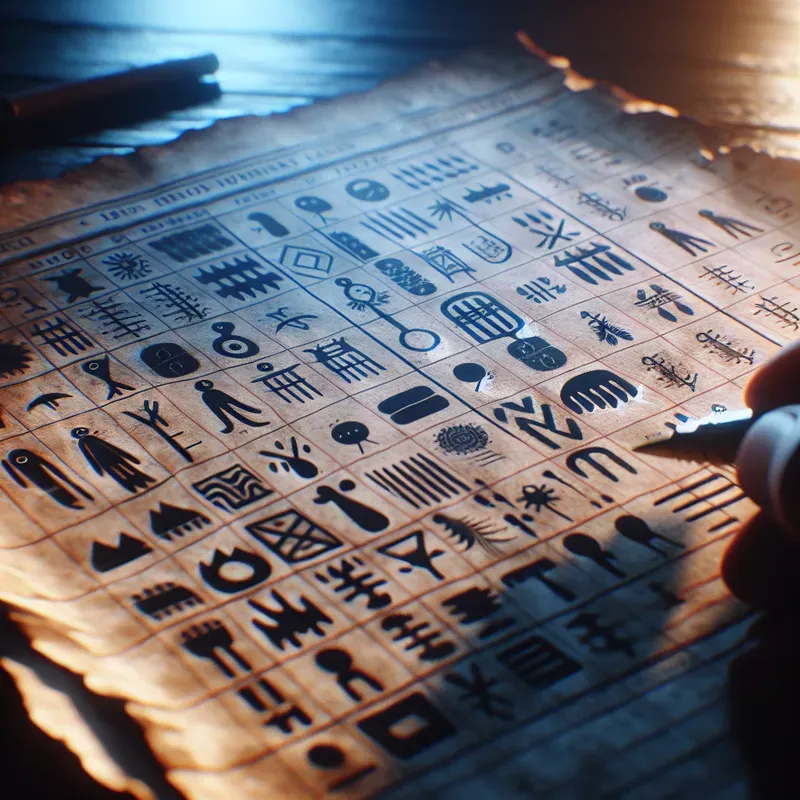
- What: A digital copy of a 19th-century trading ledger linked to Michel Dokis uses Ojibwa pictographic writing to record everyday trade, showing Indigenous record-keeping in commerce.
- Where: Library and Archives Canada.
- When: 19th century.
Library and Archives Canada holds a digital copy of a 19th-century trading ledger connected to Michel Dokis, an Ojibwa chief and fur trader. At first glance, it looks like a practical account book. Then the writing comes into focus: not standard English or French script, but a pictographic system that many modern readers cannot easily follow.
Ojibwa Pictographic Ledger
The object itself is what makes the record so compelling. A trading ledger is usually one of the most ordinary documents in an archive. It tracks who traded what, who owed what, and how business moved from one day to the next. In this case, those routine entries were recorded in a visual writing system tied to Ojibwa communication. The result is a document that is both administrative and hard to decode for anyone outside that tradition.
Michel Dokis is known as both a chief and a fur trader, which places the ledger at the meeting point of Indigenous leadership and the commercial world of 19th-century Canada. That matters because the book does not appear to preserve only a ceremonial or official message. It records everyday exchange. Goods, debts, transactions, and the mechanics of trade were important enough to be written down in a system that reflected local knowledge rather than simply switching into a European script.
Indigenous Record-Keeping in Trade
That is the rare insight here. Archives hold many records about the fur trade, but far fewer that show ordinary commercial bookkeeping carried out through an Indigenous pictographic system. Histories of trade often survive in the language of companies, missionaries, or colonial administrators. A ledger like this points to something more grounded: Indigenous record-keeping embedded in daily economic life.
There is also an unavoidable limit to what the document offers at a glance. Because the pictographs are not readily legible to most viewers, the ledger can seem mysterious, but not in a theatrical way. Its difficulty is practical. The challenge is interpretation. What survives is clear evidence that a written accounting system was used. What any single page says in detail depends on specialized knowledge.
Why the Ledger Matters
That gives the ledger a concrete value beyond curiosity. It is not just an unusual artifact on a screen. It is evidence that 19th-century commerce in Canada was recorded in more than one writing tradition, and that some of those traditions remain harder to access today than the transactions they once organized.
Did You Know?
The Ojibwa pictographic system used in the ledger is related to a broader tradition of Indigenous visual writing in the Great Lakes region.