
🌿 Stories carved by wind and water
Asian Longhorned Beetle in New York Changed City Trees
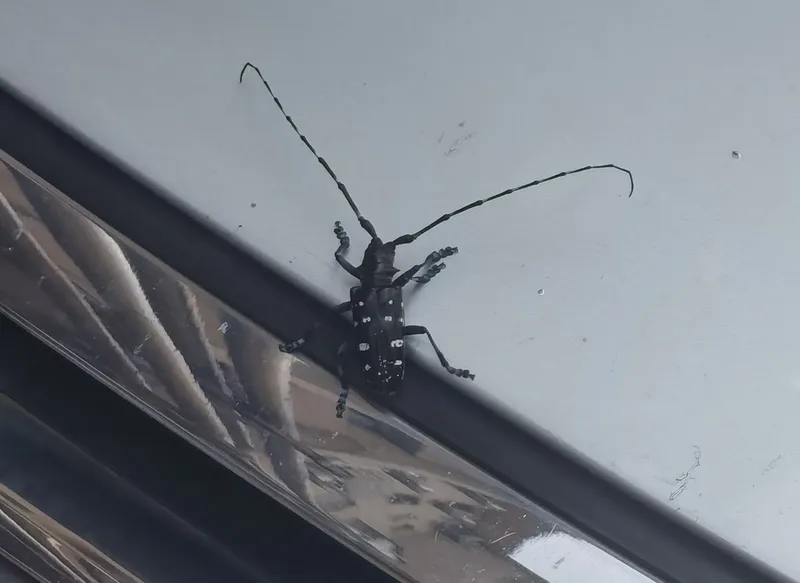
- What: New York removed thousands of urban trees, including apparently healthy maples, to stop the spread of the Asian longhorned beetle.
- Where: New York City and other affected urban areas.
- When: 1996 and the years of eradication efforts that followed.
In New York in 1996, the discovery of the Asian longhorned beetle led to a response that looked extreme at first glance: authorities cut down thousands of urban trees, including many maples that still appeared healthy.
How the Beetle Damages Trees
The reason was inside the wood. Adult beetles leave distinctive round exit holes, but the more serious damage happens earlier, when larvae tunnel deep through trunks and branches. By the time a tree shows clear decline, the insect may already have spread. In dense city neighborhoods, where host trees often line entire blocks, waiting could give the beetle time to move from one canopy to the next.
That is why eradication programs in New York and other affected areas removed not only infested trees but also nearby host trees considered at risk. Maples were a major concern, along with other hardwoods the beetle can attack. The cuts were highly visible. Streets that had been shaded for years were suddenly open to the sun. Residents saw crews remove mature trees that did not look dead, diseased, or dangerous.
Why Healthy Trees Were Removed
It was a hard public lesson in how invasive wood-boring insects are managed. A city tree can seem fine from the sidewalk while its interior structure is being hollowed out. Officials were not treating the loss of a few trees as a local nuisance. They were trying to prevent a much larger ecological and economic problem: widespread mortality in street trees, parks, neighborhoods, and regional forests, plus the high cost of long-term removal and replacement.
The consequence was immediate and concrete. To protect the broader urban forest, cities accepted the loss of visible, established trees in specific neighborhoods. That tradeoff reshaped blocks in the short term, but it was aimed at stopping a pest that could have turned a contained outbreak into a much wider and more expensive one.
Impact on New York City Trees
The episode remains one of the clearest examples of how invasive species control can demand destructive action before the damage is obvious. In practical terms, the beetle did not just threaten trees. It changed how cities measured risk, value, and loss in the urban landscape.
Did You Know?
The Asian longhorned beetle was first detected in the United States in 1996 in Brooklyn.