🧪 Echoes from the lab
Sandia Z Machine Tests Extreme Fusion Conditions
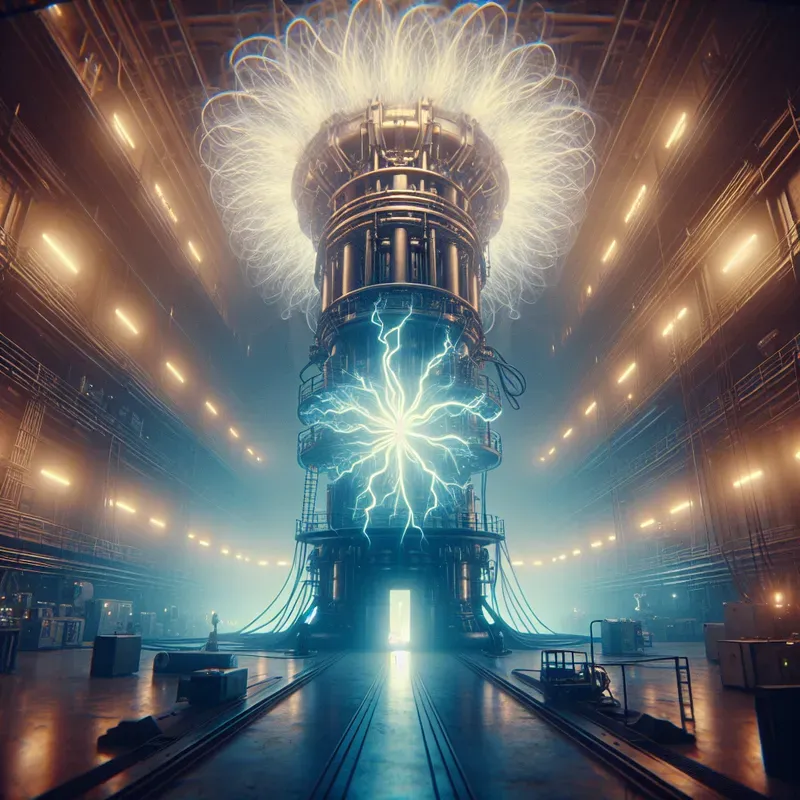
- What: The Z machine at Sandia National Laboratories uses huge electrical pulses to briefly create extreme plasma conditions for fusion and materials research.
- Where: Albuquerque, New Mexico, at Sandia National Laboratories.
- When:
At Sandia National Laboratories in Albuquerque, New Mexico, the Z machine is built for a very specific job: to create a brief, violent burst of energy that pushes matter into conditions that are otherwise hard to reproduce on Earth. In those pulses, researchers have generated plasma temperatures that can exceed the Sun’s surface temperature, but only for an instant.
How the Z Machine Works
If a lab wants to study what happens when materials are suddenly squeezed, shocked, and heated by enormous electrical currents, a machine like Z becomes useful. The event starts with a massive pulse of electricity. That current is driven through an experimental setup, producing intense magnetic fields that crush material inward in what is known as a Z-pinch. As the material compresses, it can turn into plasma, the hot, charged state of matter found in stars and lightning.
That is where the machine’s value becomes clear. The point is not to hold a miniature sun in the lab for long periods. The point is to create a short-lived, measurable extreme. In that fraction of a second, scientists can watch how plasma behaves, compare the results with computer models, and test how materials respond under severe pressure and heat.
Fusion and Materials Research
This matters in two major research areas. One is fusion science, where understanding plasma instabilities, compression, and energy flow is essential. The other is materials research tied to national security, where scientists study how weapon-related materials behave under extreme conditions without conducting a nuclear explosive test. Those are related in terms of physics tools, but they are not the same policy question, and the machine’s role is fundamentally experimental and diagnostic.
The broader context is that many of the most important states of matter are also the hardest to hold still. Astrophysical interiors, fusion targets, and shock-compressed materials exist at temperatures and pressures that are difficult to sustain and even harder to measure directly. Facilities like the Z machine fill that gap by making those conditions briefly, then capturing data fast enough to learn from them.
Why Brief Plasma Pulses Matter
The concrete implication is simple: even a pulse that lasts only moments can help refine fusion models, improve simulations, and reveal how real materials behave when theory alone is not enough.
Did You Know?
The Z machine is widely described as the largest pulsed-power facility in the United States.