
🌿 Stories carved by wind and water
Great Barrier Reef Bleaching Can Shift Coral Recovery
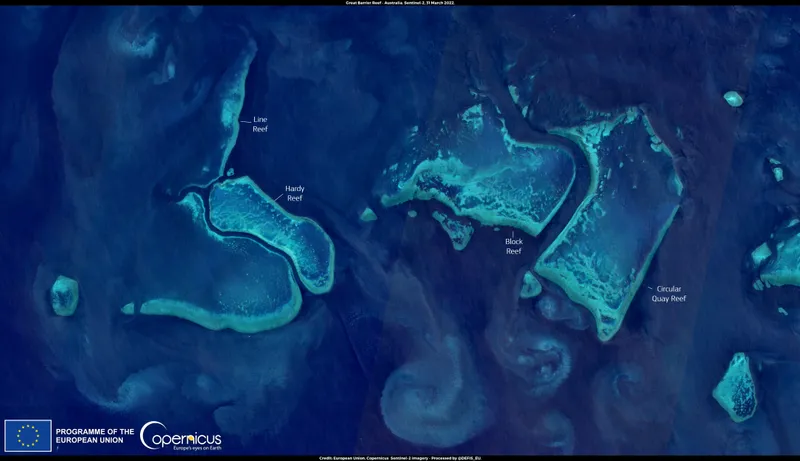
- What: Repeated bleaching on the Great Barrier Reef can shift coral recovery toward brooding species, changing which corals recruit after damage and potentially altering reef structure and habitat value.
- Where: Great Barrier Reef
- When: After repeated marine heat waves and bleaching events in recent years
Great Barrier Reef bleaching is not only reducing coral cover. It can also change which corals return after damage, and that shift can reshape how reefs recover.
Coral Recruitment After Bleaching
The key change is in coral recruitment, meaning the arrival and survival of new young corals. After repeated bleaching, reefs can start favoring brooding corals over broadcast spawners. Brooding corals fertilize internally and release more developed larvae, often close to the parent colony. Broadcast spawners do the opposite: they release eggs and sperm into the water at the same time, relying on mass spawning events and ocean conditions to bring the next generation back onto the reef.
That difference matters after heat stress. On a reef hit again and again, the conditions that help large spawning events rebuild coral populations may be less reliable. Brooding species can sometimes repopulate disturbed patches faster because they produce larvae more frequently and over shorter distances. In practical terms, that means the first corals coming back may not be the same ones that dominated before.
Brooding Corals on the Reef
On the Great Barrier Reef in recent years, repeated marine heat waves and bleaching events have created exactly that kind of pressure. Researchers tracking recovery have found that the mix of new recruits can shift toward these brooding species in some locations, while many broadcast spawners struggle to regain their former numbers. Parts of the reef are recovering, but the path of that recovery can change from one dominated by major reef-building spawners to one led more by opportunistic local colonizers.
How Coral Recovery Is Changing
This is the part that is easy to miss: bleaching is not just a story of loss. It is also a story of replacement. And replacement changes the reef’s future. If the balance tilts away from broadcast spawners, the reef may recover with a different structure, different growth patterns, and potentially different habitat value for fish and other marine life.
So when scientists assess recovery on the Great Barrier Reef, they are not only asking how much coral is back. They are also looking closely at which coral species are settling in, because a reef repopulated by brooders is not the same reef, ecologically, as one rebuilt by the broadcast spawners that once defined many sections of it.
Did You Know?
Coral larvae can settle within hours to days after spawning, which is one reason recruitment timing strongly affects reef recovery.