🌍 Records from the halls of power
Millennium Bridge Opening Wobble Led to a Fast Fix
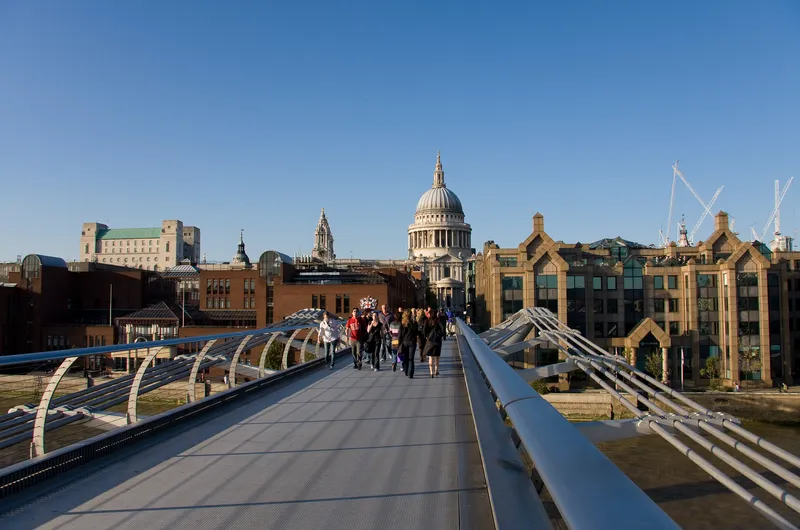
- What: London’s Millennium Bridge opened in 2000, developed a noticeable sideways wobble when crowded, and was later retrofitted with dampers before reopening in 2002.
- Where: Across the River Thames in central London, between St Paul’s Cathedral and Tate Modern.
- When: Opened in June 2000, closed two days later, and reopened in 2002.
London’s Millennium Bridge opened in June 2000 as a sleek new pedestrian crossing over the River Thames. Within hours, it was clear something unexpected was happening: the bridge had a noticeable sideways wobble when large numbers of people walked across it.
The scene was public and immediate. Crowds arrived for the launch. As more pedestrians stepped onto the bridge, the movement became easier to feel. This was not a case of a bridge being close to collapse, but it was a real problem for a structure meant to give people a calm, confident walk between St Paul’s Cathedral and Tate Modern. Officials closed it just two days after opening.
Why the Millennium Bridge Wobbled
What made the story so striking was how visible the problem was. The bridge was new, prominent, and heavily watched. Engineers then had to diagnose an issue playing out in front of the public, not hidden inside a lab or found years later during routine checks.
The explanation turned out to be more subtle than a simple design error in the usual sense. When enough people crossed, small sideways movements of the bridge encouraged walkers to adjust their steps. Without meaning to, many pedestrians began to move in sync with the bridge’s motion. That made the swaying stronger. Engineers call this synchronous lateral excitation, but the basic idea is straightforward: people responded to the motion, and their response fed more motion back into the structure.
A common misconception is that the wobble proved the bridge was weak or unsafe in the dramatic way people often imagine. That is not what the episode showed. The problem was that human movement and structural movement interacted in a way designers had not fully anticipated for a crowded pedestrian bridge. Once that interaction was understood, the solution was practical.
Millennium Bridge Retrofit Fix
The fix was a retrofit. Engineers installed dampers to absorb and control the motion, including devices placed beneath the deck and around the structure to reduce both lateral and vertical movement. After testing and modifications, the Millennium Bridge reopened in 2002.
That sequence is why the Millennium Bridge remains an engineering case study, not just a launch-day embarrassment. A landmark crossing opened, showed unexpected behavior almost instantly, and was then methodically corrected in public view. Today, the bridge still spans the Thames, carrying pedestrians across central London on a structure that became famous not for failing, but for being rapidly understood and fixed.
Did You Know?
The bridge’s correction involved about 90 dampers, according to engineering accounts of the retrofit.