
🛍️ Artifacts of human ingenuity
Levi's 501 Hidden Rivets Started as Furniture Protection
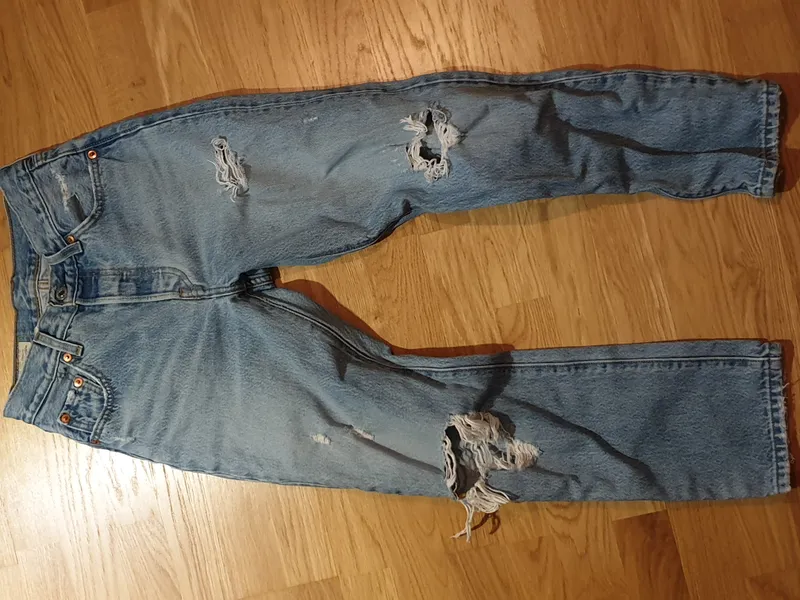
- What: Levi Strauss & Co. moved the 501’s back-pocket rivets to the inside in 1937 so the jeans would stay durable without scratching furniture and other surfaces.
- Where:
- When: 1937, with context extending into the late 1930s.
In 1937, Levi Strauss & Co. changed one small detail on the 501: the metal rivets on the back pockets were moved to the inside. Those “hidden rivets” were meant to solve a practical problem. The exposed rivets on earlier jeans could scratch furniture.
That change sounds minor until you picture the original construction. Rivets were part of what made workwear durable in the first place. On early Levi’s, the back pockets were reinforced with visible copper rivets at the corners, just like other stress points on the garment. They did the job. They also left hard metal exposed on the outside of the seat.
Why Levi’s Added Hidden Rivets
By the late 1930s, Levi’s had a cleaner fix: keep the reinforcement, but cover it. So the company tucked those pocket rivets under the denim. The pockets still got the extra strength, but chairs, saddles, and upholstered furniture were less likely to get marked up by metal hardware.
The detail matters because it shows how the 501 evolved through use, not abstract styling. This was not a decorative redesign. It was a manufacturing adjustment tied to how people actually wore the product and what it came into contact with. In that sense, the hidden rivet is a concise example of product design doing two jobs at once: preserving function while reducing a side effect.
Hidden Rivets in 501 Dating
Collectors and denim historians pay attention to hidden rivets today because they help place a pair within a specific period of 501 construction. The feature is one of several small make-details that distinguish one era from another. It is not the only clue, and by itself it does not tell the whole story, but it is a real, concrete marker in the model’s timeline.
How the 501 Changed
There is also a broader context here. By 1937, Levi’s was no longer making garments only for hard labor in the strictest sense. As jeans moved through different settings and users, the product had to work around domestic life as well as work life. Protecting furniture sounds mundane, but it captures a shift in where the 501 was being worn and what problems the company needed to solve.
So the hidden rivet stands as a specific 1937 design choice with a plain purpose: stop the back pockets from scratching what people sat on. That practical fix became one of the details that now helps identify and explain a particular chapter in the history of the Levi’s 501.
Did You Know?
Levi Strauss & Co. patented a riveted-pocket design to strengthen stress points on work pants.