
🌿 Stories carved by wind and water
Svalbard Reindeer Eat Seaweed When Winter Ice Blocks Grazing
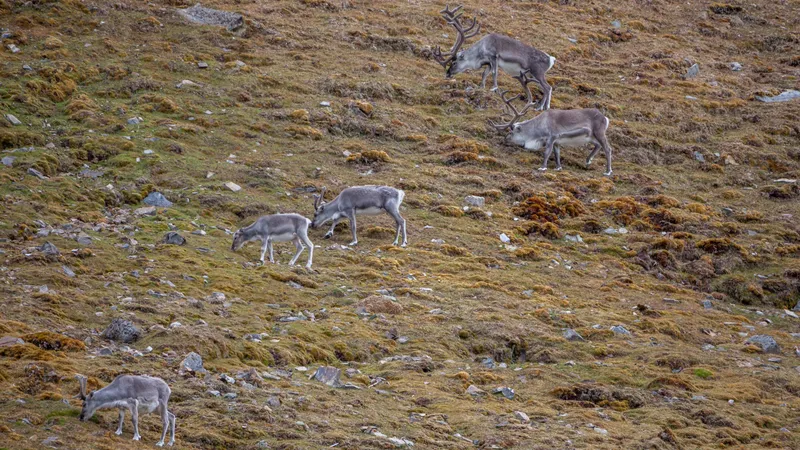
- What: Researchers in Norway documented Svalbard reindeer eating seaweed in winter when ice seals off their usual tundra forage.
- Where: Svalbard, along the Arctic shoreline.
- When: Winter, especially during ice or freeze-thaw conditions.
On Svalbard, some reindeer have been observed eating seaweed in winter. Norwegian researchers have documented the shift along the shoreline, where animals turn to seaweed when ice locks away the vegetation they usually dig up on land.
Why Svalbard Reindeer Eat Seaweed
The change starts with the ground. Svalbard reindeer normally feed on tundra plants, mosses, and other low vegetation, often scraping through snow to reach them. But if winter weather creates thick ice over those pastures, access drops fast. When that happens, some reindeer move to coastal areas and feed on washed-up seaweed instead.
That behavior is notable because seaweed is not their standard winter diet. It is a fallback food used under difficult conditions. Researchers in Norway have reported this shoreline feeding as part of a broader picture of how Arctic animals respond when familiar food sources become harder to reach. In Svalbard, winter rain and freeze-thaw events can leave grazing areas sealed under ice, forcing a practical dietary switch rather than a gradual preference change.
Winter Ice and Grazing Access
The explanation is fairly direct. Reindeer need food that is physically available, not just nutritionally ideal. If inland plants are covered by hard ice, seaweed on the shore may become the most accessible option. That does not mean it fully replaces tundra forage or that it is equally suitable in all cases. It means that under specific winter conditions, it can help bridge a shortage.
The consequence is important. A reindeer population that can use shoreline food has one more buffer against harsh winters, but that buffer depends on where animals are, how severe the icing is, and what reaches the coast. In other words, the switch shows flexibility, but it also reveals how strongly winter surface conditions can reshape feeding behavior in the High Arctic.
Shoreline Feeding in Winter
In practical terms, the image is very specific: reindeer on the Svalbard coast in winter, feeding on seaweed because inland pasture is sealed under ice. Norwegian researchers did not describe a new normal diet, but rather a documented emergency workaround at the edge of the tundra.
Did You Know?
Reindeer are known to have wide, seasonal diets that can include many kinds of plants, lichens, and fungi depending on what is available.