
🚀 Whispers from the silent cosmos
6 Spacecraft That Outlived Their Original Missions
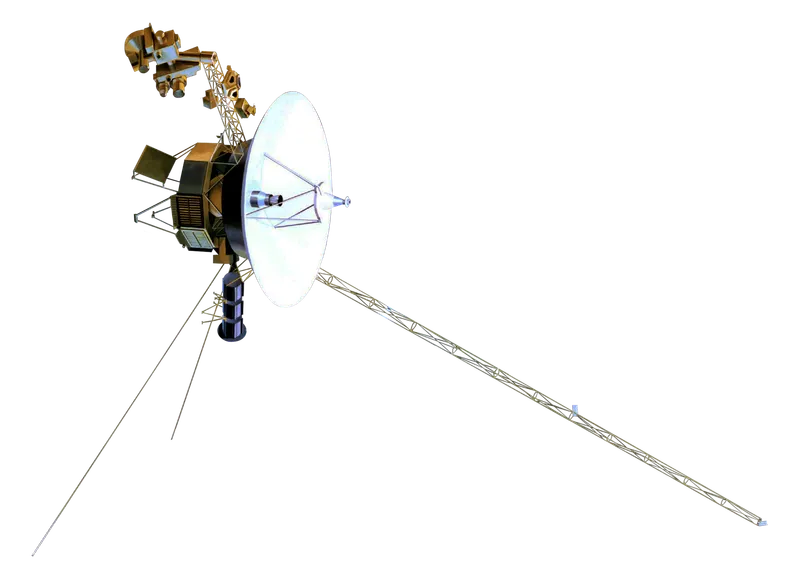
- What: This list highlights six space missions whose operations lasted far beyond their original plans or that were successfully revived after major setbacks, leading to major additional scientific returns.
- Where: Space, including Earth orbit, the Solar System, and interstellar space.
- When: From the 1970s through the 2010s and beyond, during the modern space age.
Some spacecraft were built for a short job and ended up rewriting the schedule. In spaceflight, that is rare enough on its own.
These six missions kept working long after their original plans ended, or survived a crisis and came back with years of extra science. The result was not just endurance. It was a second life.
1. Landsat 5 — decades of Earth imaging beyond plan
Landsat 5 launched in 1984 with a design life of roughly three years. Instead, it kept imaging Earth until 2013.
That longevity is startling because it helped preserve a continuous record of the planet’s surface far beyond what planners first expected. Nearly three extra decades of observations turned one mission into a long baseline for watching change on Earth.
2. Voyager probes still speaking after they left the planets
Voyager 1 and Voyager 2 launched in 1977 for an initial planetary tour expected to last about five years. But they did not stop when the planetary visits ended.
They kept transmitting for decades from the outer heliosphere and interstellar space. That is the part that still feels unreal: spacecraft built for one era of exploration kept sending back data from places their original mission plans did not center on for the long term.
3. SOHO — a solar observatory revived from a near-loss
SOHO nearly became a mission obituary in 1998, when it lost contact and attitude control. A solar observatory drifting out of control usually sounds like the end.
Instead, SOHO was recovered and returned to solar observations for many years. Its extended life mattered not only for watching the Sun, but also because it enabled the discovery of thousands of comets.
4. Kepler — from broken reaction wheels to a new mission life
Kepler’s original mission took a major hit in 2013 when it lost two reaction wheels. For a precision space telescope, that kind of failure can end everything.
Engineers found a workaround: the K2 mission, which used solar-pressure balancing to keep the spacecraft useful. What followed was not a limp final chapter, but a repurposed mission that delivered many more exoplanet discoveries beyond the original plan.
5. LAGEOS — decades of laser geodesy from a simple passive sphere
LAGEOS, launched in 1976, and LAGEOS-2, launched in 1992, are different from the others here. They are passive satellites covered with retroreflectors, built for laser ranging rather than complex onboard operations.
That simplicity is exactly why their longevity stands out. For decades, they have supported high-precision geodesy and tectonic studies with minimal degradation, showing that sometimes the spacecraft that lasts longest is the one that does the least onboard.
6. Cassini — extended tours revealing surprises beyond Saturn's rings
Cassini arrived at Saturn in 2004, and its prime mission ran through 2008. That alone would have made it one of the landmark planetary missions of its time.
But Cassini kept going through extensions until 2017. Those extra years included the Grand Finale proximal orbits and produced new details about Saturn’s rings and moons such as Enceladus and Titan, turning an already historic mission into a much longer scientific harvest.
What makes these missions memorable is not just that they survived. It is that the extra time changed what they were able to teach us.
Did You Know?
Voyager 1 and Voyager 2 each carry a Golden Record, a phonograph record with sounds and images from Earth intended as a time capsule.