
🧪 Echoes from the lab
NASA Stardust Mission Found Glycine in Comet Dust
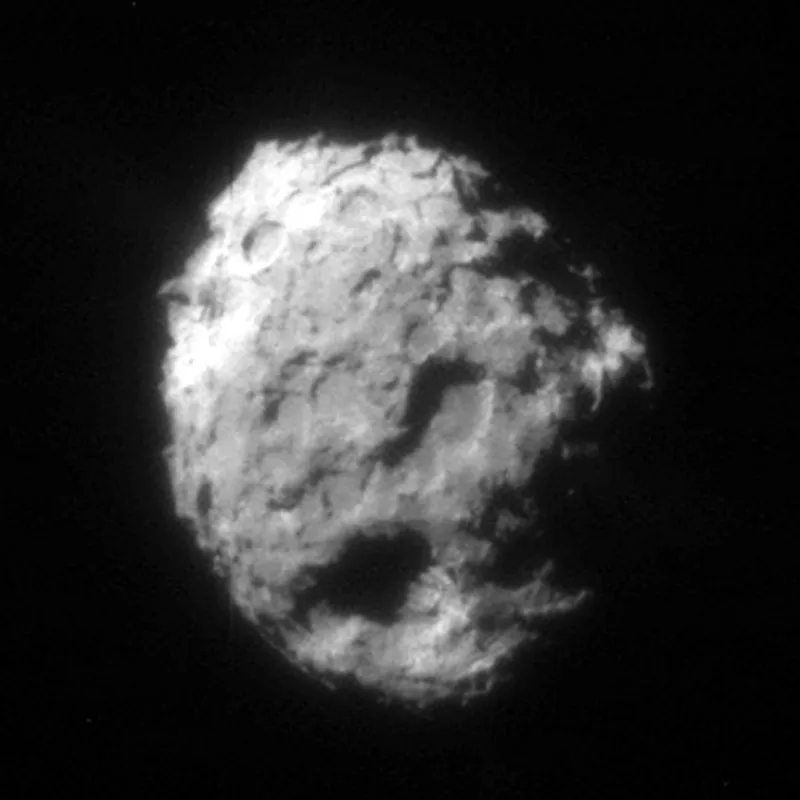
- What: NASA’s Stardust mission returned comet dust from Comet Wild 2, and later analysis found the amino acid glycine in the samples as direct evidence of extraterrestrial organic material.
- Where: Comet Wild 2 and the sample capsule landing site in Utah.
- When: Collected in 2004, returned in January 2006, and reported in a 2009 study.
NASA’s Stardust mission returned comet dust to Earth, and scientists later found glycine in those samples. That mattered because glycine is an amino acid used by living things to build proteins, and this was direct evidence from returned comet material, not a remote observation.
Stardust Sample Return Timeline
The key event came in 2004, when Stardust flew through the coma of Comet Wild 2 and collected tiny particles. In January 2006, the spacecraft’s sample capsule landed in Utah. Years later, researchers analyzed the captured dust and reported glycine in a 2009 study, along with isotopic evidence indicating the amino acid was extraterrestrial rather than a product of Earth contamination.
Why Glycine in Comets Matters
That distinction was the key point. Organic molecules had been suggested in comets before, but returned samples gave scientists something much stronger: material they could test directly in laboratories, over and over, with stricter contamination checks. Glycine is also the simplest amino acid, so it is a reasonable target in prebiotic chemistry research. Finding it in comet dust did not show that life came from comets, and it did not solve the origin of life. What it did show is narrower and more solid: comets can carry ingredients relevant to life’s chemistry.
The Stardust result also fits a broader picture of the early solar system as a place where organic chemistry was widespread. If small icy bodies preserved and transported molecules like glycine, then impacts could have delivered at least some prebiotic material to young planets, including early Earth. That matters because it shifts part of the question from “did Earth make everything itself?” to “how much chemistry arrived ready-made from space?”
Evidence and Scientific Limits
There are still limits. Glycine alone is not biology, and a single amino acid is not a pathway to cells. Scientists also remain careful about contamination whenever delicate organic compounds are involved. But Stardust changed the standard of evidence by bringing comet dust home and letting researchers test a real sample from Comet Wild 2.
In concrete terms, the mission showed that a comet can contain an amino acid and that this can be demonstrated in returned material on Earth. That makes Stardust one of the clearest sample-based links between comets and prebiotic organic chemistry.
Did You Know?
Stardust was the first mission to bring material from a comet back to Earth.