
🚀 Whispers from the silent cosmos
Luna 9 Images Reached Britain Before Moscow Published Them
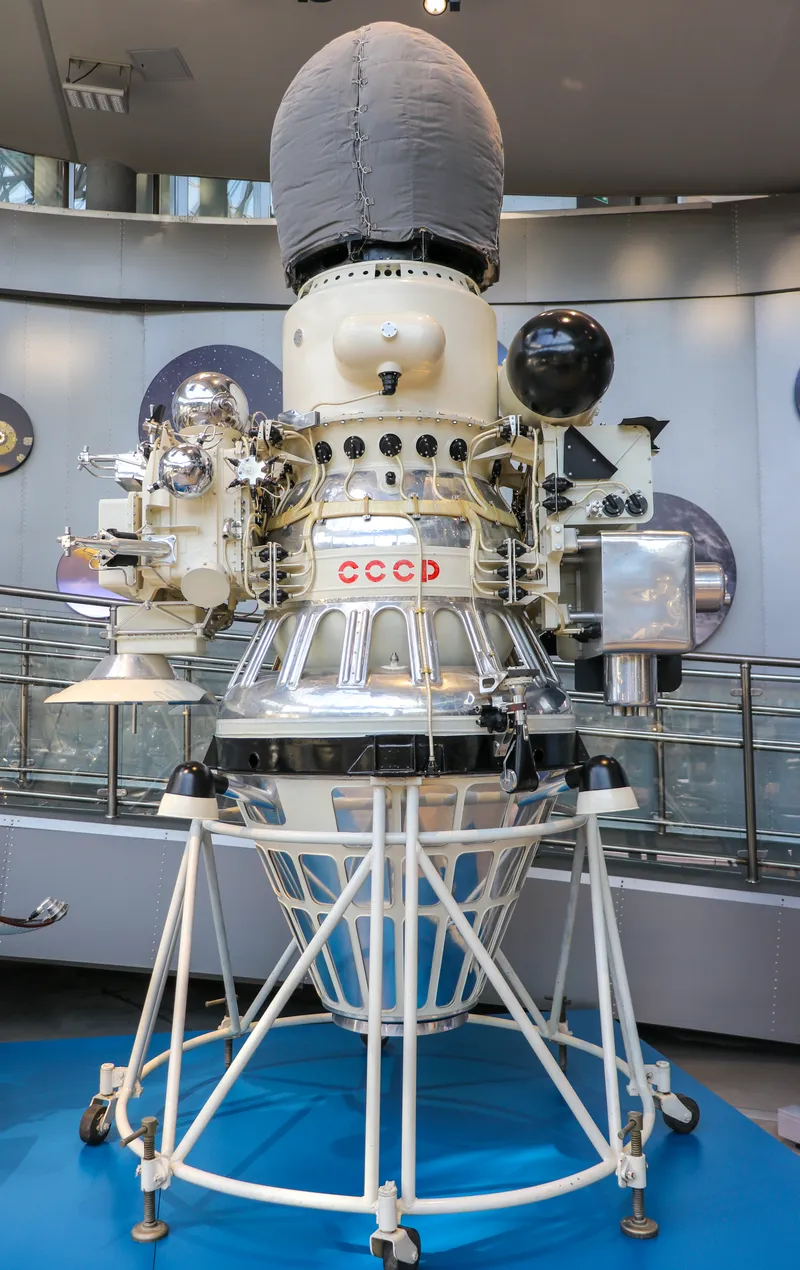
- What: Luna 9 became the first spacecraft to make a soft landing on the Moon, and Jodrell Bank later decoded its image signals to publish the first lunar surface panorama before the Soviet release.
- Where: Oceanus Procellarum on the Moon; Jodrell Bank Observatory in Cheshire, England.
- When: February 1966.
In February 1966, Luna 9 made history by becoming the first spacecraft to achieve a soft landing on the Moon. Then the story took an unexpected turn on Earth: British radio astronomers at Jodrell Bank managed to decode the lander’s picture signals and publish the lunar panorama before the Soviet side released it.
Luna 9 Moon Landing
The landing itself was already a major technical success. Luna 9 came down in Oceanus Procellarum using a braking system and an airbag-cushioned package that bounced on the lunar surface before settling. Once at rest, it began transmitting data back to Earth, including the first panoramic images ever sent from the Moon’s surface.
Jodrell Bank Decoded the Images
Those signals did not stay exclusively in Soviet hands. Jodrell Bank Observatory in Cheshire was tracking the mission, and staff there recognized that the image transmissions used a format similar enough to wirephoto systems that they might be reconstructed. According to the well-known account, they borrowed a fax machine from the Daily Express, matched it to the incoming signal, and turned the radio data into printable images.
The result was a genuine media scoop. Before the Soviet Union had formally published the pictures, British newspapers were already carrying the first views from the lunar surface. It was not that Jodrell Bank had intercepted a secret in cinematic fashion. The transmissions were being sent from the Moon, and the real achievement was practical: recognizing what kind of signal they were hearing and finding a fast way to decode it.
That detail matters because it shows what the space race often looked like outside launch pads and official announcements. The breakthrough was not only engineering on the Moon, but also improvisation on the ground. A lunar first became a communications story, shaped by observatory staff, signal analysis, and an ordinary newsroom machine repurposed for space data.
First Lunar Surface Panorama
The images themselves were important for another reason. They showed a rocky, solid lunar surface rather than a deep layer of dust, helping answer a question that had lingered in public discussion and in some engineering debates. The panorama was grainy by modern standards, but it was direct evidence from the surface of another world.
So the concrete outcome of Luna 9 was twofold. The Soviet spacecraft delivered the first successful soft landing on the Moon, and a team in Britain turned its transmissions into the first published lunar surface panorama using a borrowed Daily Express fax machine. For a brief moment, one of the Moon’s most important firsts was also a very terrestrial deadline story.
Did You Know?
Jodrell Bank’s reconstruction of the images is often described as a “fax machine” breakthrough because the staff adapted a Daily Express machine to match the incoming signal.