
🌍 Records from the halls of power
The Vast Seagrass Clone That Dominates Shark Bay
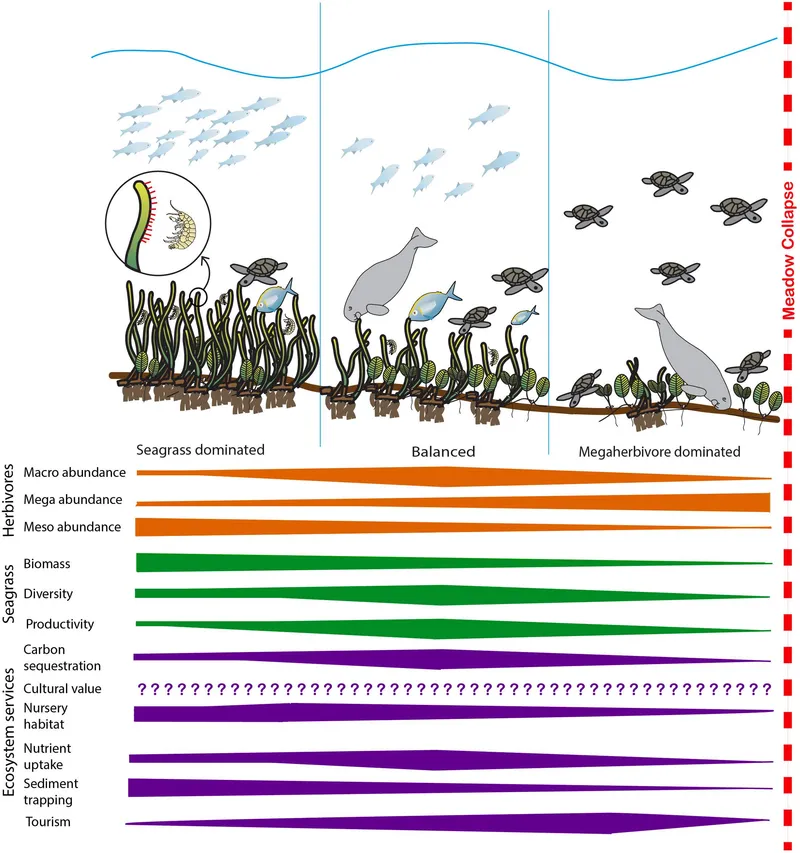
- What: Posidonia australis is the largest known living organism by area, spanning approximately 200 square kilometers in Shark Bay, Western Australia.
- Where: Shark Bay, Western Australia
- When:
In the clear waters of Shark Bay, Western Australia, lies a hidden giant—an enormous seagrass clone known as Posidonia australis. This remarkable organism is not just any plant; it's the largest known living organism by area.
Spanning approximately 200 square kilometers, this vast network of interconnected rhizomes makes it one of nature's most astonishing marvels. Imagine a single plant stretching over an area larger than many cities, thriving beneath the waves.
But how does it grow so large? Posidonia australis reproduces through a process called vegetative cloning. As it spreads, it creates a dense underwater meadow, providing vital habitat for marine life and playing a crucial role in the ecosystem.
This seagrass not only supports diverse species, including fish and invertebrates, but it also helps combat climate change by absorbing carbon dioxide. With such significance, preserving this underwater wonder is essential.
So, the next time you think of living organisms, remember this astonishing seagrass clone in Shark Bay, a testament to the wonders of our natural world.
Did You Know?
Posidonia australis in Shark Bay is estimated to be at least 4,500 years old.