🌍 Records from the halls of power
Julius Caesar and the Meaning of Crossing the Rubicon
The die is cast (Alea iacta est)
- Who: Julius Caesar.
- Where: As he crossed the Rubicon into Italy.
- When: 49 BC.
- Why: It marked Caesar’s decision to defy the Senate, turning a political standoff into civil war and becoming a lasting symbol of an irreversible choice.
“The die is cast,” or in Latin, “Alea iacta est,” is the phrase traditionally linked to Julius Caesar as he crossed the Rubicon in 49 BC. The exact wording and whether he said it in Latin or quoted a Greek line are matters historians note with caution. What is clear is the meaning attached to the moment: Caesar moved his army into Italy without legal authority to do so, turning a political standoff into open civil war.
Why Crossing the Rubicon Mattered
That is why the quote matters. The Rubicon was not just a river. It marked a boundary that Roman generals were not supposed to cross with troops. Caesar had been ordered to give up command. If he obeyed, he risked prosecution and political ruin. If he advanced, he defied the Senate’s authority and challenged his rivals directly. The phrase, whether reported exactly or shaped by later retelling, became the verbal marker for that decision.
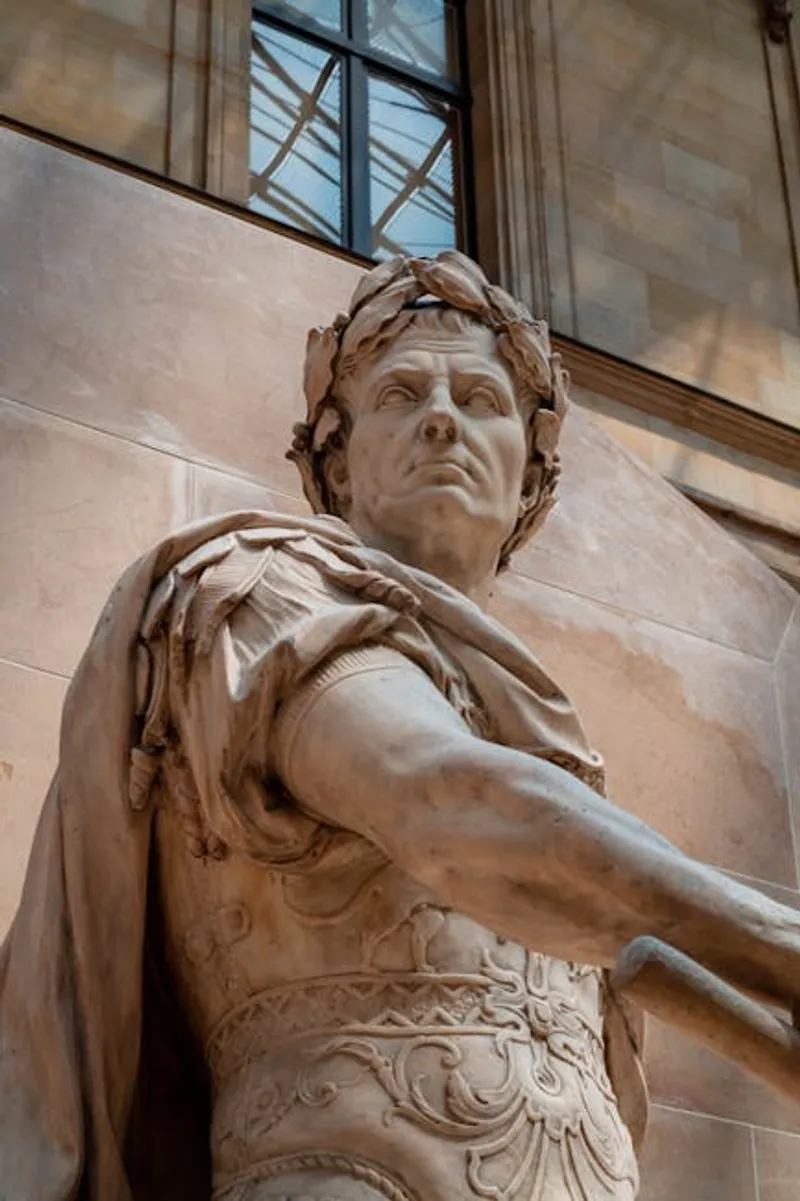
Its force comes from how brief it is. “The die is cast” does not describe a debate. It signals that deliberation is over. A die, once thrown, cannot be taken back into the hand. In that setting, the image fit perfectly. Caesar was not making a vague statement about fate. He was recognizing that he had chosen an action with irreversible public consequences. The crisis would no longer be settled by procedure alone. Events would now be decided by force, loyalty, and speed.
The Meaning of “Alea Iacta Est”
The phrase also resonated because Romans understood the scale of the breach. This was not a private gamble. It was a constitutional rupture. Caesar was already one of the most powerful figures in Roman politics, and his move exposed how fragile the republican system had become. The reported quote gave later generations a compact way to describe that wider collapse: one sentence tied to one crossing, carrying the weight of a civil war.
It is still remembered because it names a familiar kind of moment with unusual precision. Many historical sayings survive because they are flexible; this one survived because it is exact. It refers to a specific act at a specific border, under specific political pressure. When people say someone has “crossed the Rubicon,” they are echoing that original setting: a point at which retreat is no longer realistic because a public, high-stakes choice has already been made.
Why the Phrase Endures
That is the lasting power of “Alea iacta est.” Even with uncertainty about its precise form, the phrase endures because it captures the instant Caesar stopped negotiating within Rome’s political crisis and forced the crisis into war.
Did You Know?
The phrase is traditionally reported in Latin as “Alea iacta est,” though historians note the exact wording is uncertain.