
🏺 Recovered from the dusty archives
Hagia Sophia's 40 Windows Made the Dome Glow
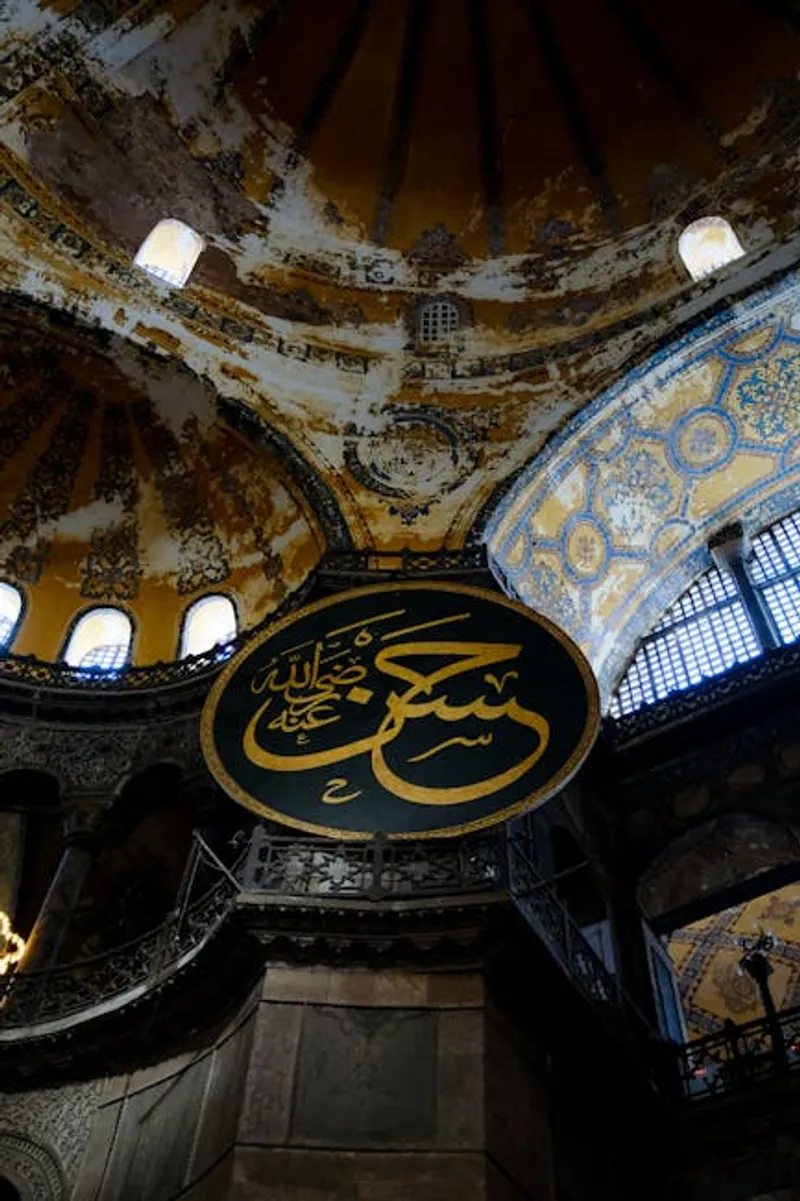
- What: Hagia Sophia’s 40-window ring at the base of its dome made the huge structure seem lighter by flooding the interior with daylight.
- Where: Constantinople (Byzantine capital), in Hagia Sophia.
- When: Completed in 537, during the 530s under Emperor Justinian.
In Constantinople in the 530s, Emperor Justinian’s Hagia Sophia was designed to solve a visual problem with stone: how do you make an enormous dome feel light instead of crushing? Part of the answer sat right at its base, in a ring of 40 windows.
How Hagia Sophia’s Dome Glowed
That architectural device changed the whole interior. Instead of meeting a heavy, dark rim, the dome rises above a band of openings that flood the space with daylight. The effect is immediate and physical. The dome seems less like a solid mass and more like a canopy suspended over the church. Contemporary observers were struck by it. The 6th-century writer Procopius described the light in the building in glowing terms, and later descriptions often emphasized its golden radiance.
The point was not illusion for its own sake. Hagia Sophia, completed in 537 in the heart of the Byzantine capital, was an imperial church built at extraordinary speed under Justinian. Its architects, Anthemius of Tralles and Isidore of Miletus, were working on a massive scale, and they needed the building to feel ordered, open, and elevated. The windows helped detach the dome visually from the supports below. Light entered at the very place where the eye expects weight.
Byzantine Architecture and Light
That matters because a dome this large can easily feel overpowering. In Hagia Sophia, the light breaks that heaviness. As the sun shifts, the windows turn the dome’s lower edge into a bright ring, softening the transition between structure and sky-lit space. Gold mosaics, used across the interior in different periods, amplified that brightness by catching and scattering light across curved surfaces. The result was not magic; it was a precise combination of geometry, materials, and daylight.
There is a larger Byzantine insight here. Imperial architecture was not just about size. It was about directing attention and emotion through controlled visual effects. Hagia Sophia’s 40-window ring shows how Byzantine builders used light as a structural experience, not just decoration. They made engineering serve perception.
Why the 40 Windows Mattered
That is why the dome remained so memorable to visitors. The 40 windows did more than brighten the church. They altered how the dome was read by the eye: not as a single heavy shell pressing down from above, but as a vast surface edged in light, hovering over the center of Justinian’s great church.
Did You Know?
Hagia Sophia’s dome later suffered earthquake damage and was rebuilt at points in its history, showing how often the building had to be adapted to survive.