
🌍 Records from the halls of power
Kākāpō Recovery Program Tracks Individual Birds to Breed
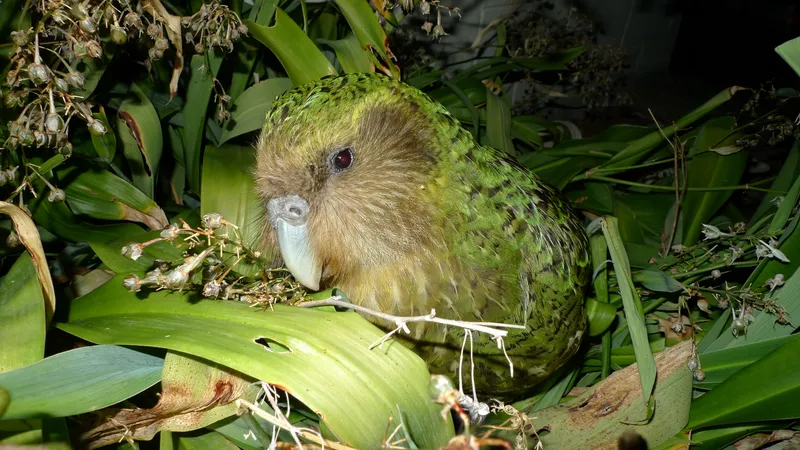
- What: New Zealand’s kākāpō recovery program relies on bird-by-bird monitoring, nest cameras, and direct intervention to improve breeding success for the endangered parrots.
- Where: New Zealand, especially predator-free island sanctuaries and fenced sites.
- When: Modern conservation efforts.
New Zealand’s kākāpō recovery program does not treat the species as one large population problem. It works bird by bird. For one of the world’s rarest parrots, breeding success often depends on constant monitoring, individual records, and direct intervention at the level of a single nest.
Kākāpō Breeding Monitoring
Kākāpō are large, nocturnal, flightless parrots found only in New Zealand. They breed slowly, and their breeding cycles are tied to irregular food events in native forests. That means conservation teams cannot simply protect habitat and wait. They track where each bird goes, how often it calls, which birds are interacting, and whether a female has started nesting. Transmitters help rangers locate adults. Nest cameras let them watch eggs and chicks without repeatedly disturbing the site. Detailed data then guides decisions about pairings, fertility, and timing.
The unusual part is how individualized the system has become. Some birds are matched or encouraged toward pairings that may improve genetic diversity. Some nests receive extra support if chicks are at risk. Rangers can step in when eggs fail, when chicks need help, or when a breeding attempt needs closer supervision. In practice, that makes the recovery effort look less like broad wildlife management and more like a rolling case file for every surviving bird.
Individual Nest and Bird Management
That level of management matters because the margin for error is small. If a species has only a limited number of breeding adults, one failed season can affect the population for years. With kākāpō, a missed mating, an infertile clutch, or a chick lost at a critical stage is not just one isolated setback. It changes the recovery pace of the whole species. Individual monitoring is therefore not a side detail of the program; it is the mechanism that makes breeding gains possible.
This has been especially visible in the modern recovery effort on predator-free island sanctuaries and fenced sites in New Zealand, where staff follow named birds across breeding seasons. The result is straightforward: the species survives not only through protection, but through close, repeated management of behavior, nests, and genetics.
Kākāpō Recovery on Sanctuaries
In concrete terms, kākāpō recovery means a rare parrot wearing a transmitter, a nest camera recording in the dark, and conservation staff adjusting support around one bird at a time to improve the odds that a chick survives.
Did You Know?
Kākāpō are the world’s heaviest parrots.