🌿 Stories carved by wind and water
Yellow-Spotted River Turtles Time Nesting Around the Full Moon
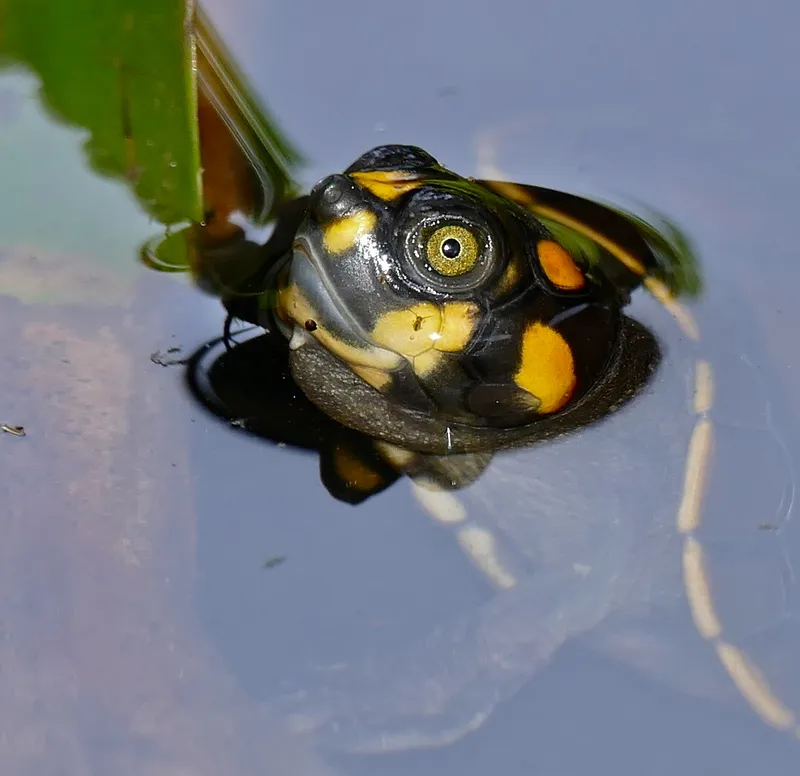
- What: Researchers have observed that yellow-spotted river turtles nest more often near the full moon and that many hatchlings emerge together in a single-night burst.
- Where: Brazilian river systems in northern South America.
- When: During the nesting season, with activity noted around the full moon.
In some monitored areas, yellow-spotted river turtles appear to nest more often around the full moon. Researchers have also observed that their hatchlings commonly emerge in a tight burst, often within a single night.
Together, those findings make this species especially interesting. They suggest reproduction may be synchronized not just by season and river conditions, but also by the lunar cycle. The idea is not that the moon is doing anything mysterious. More likely, moon phase lines up with practical environmental cues such as nighttime light, river timing, predator patterns, or the turtles’ own internal rhythms. Scientists are still cautious about cause and effect, but the pattern itself is notable.
Yellow-Spotted River Turtle Nesting
The yellow-spotted river turtle, Podocnemis unifilis, lives across northern South America, including Brazilian river systems. Females come ashore to lay eggs on exposed banks during the nesting season. In some monitored areas, nesting activity has been recorded more frequently near the full moon than at other lunar phases. Later, when incubation is complete, hatchlings often do not trickle out one by one over many nights. Instead, many emerge together in a concentrated event.
Single-Night Hatchling Emergence
That single-night emergence matters. For small hatchlings, leaving the nest all at once may reduce the odds that any one individual will be eaten, simply because predators can only catch so many at a time. It also means the timing of hatching is not just about when an egg is ready. The group may be responding to shared cues inside the nest and outside it, then making a coordinated move to the surface.
Lunar Cycle and Reproduction
The broader context is that many animals use repeating environmental cycles to organize life events. Tides, rainfall, temperature, day length, and moon phase can all provide reliable timing signals. For freshwater turtles in large river systems, where water levels and exposed nesting beaches change through the year, a dependable schedule can be especially useful. A lunar link would fit that pattern without requiring certainty about the exact mechanism.
What stands out is the combination of two observations from monitored populations: yellow-spotted river turtles have been recorded nesting more frequently around the full moon, and their hatchlings often emerge in one night, a hard, measurable sign of synchronized reproduction.
Did You Know?
Podocnemis unifilis is also known as the yellow-spotted Amazon river turtle.