🧪 Echoes from the lab
6 Animals That Turn Objects Into Smart Tools
- What: The article highlights how different animals use objects as tools for practical tasks such as shelter, protection, and feeding.
- Where: Across marine, coastal, island, and terrestrial environments worldwide.
- When: Modern-day observations of wild animal behavior.
Animal tool use can look almost unreal when you see the details up close. These are not random accidents. In each case, an animal takes something ordinary from its environment and uses it again and again for a specific job.
From beach debris to cactus spines, these six animals show how practical and specialized nonhuman problem-solving can be. Some build shelter. Some protect their bodies. Some turn simple objects into feeding equipment.
1. Octopus coconut-cup shelters
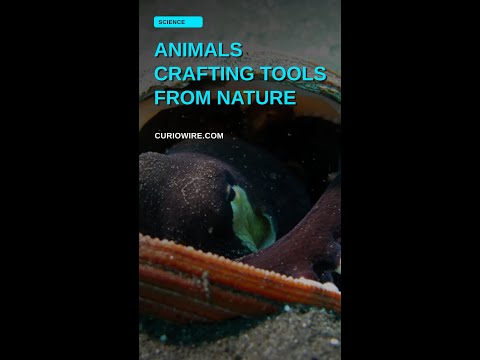
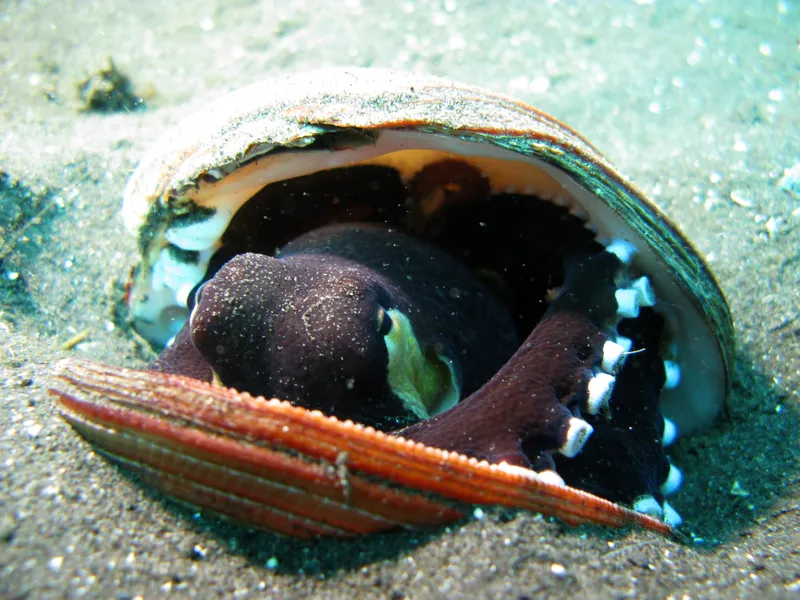
Veined octopuses have been observed carrying half coconut shells across the seafloor, even though the shells are awkward to move. When needed, the octopus can assemble the two halves into a compact shelter.
That is what makes this behavior so striking: the coconut is not just cover lying nearby. It becomes a portable, reusable home made from beach debris, transported first and turned into shelter later.
2. New Caledonian crow hooked tools
New Caledonian crows make hooked tools from twigs and shape tools from pandanus leaves. These are not generic poking sticks. The tools are fashioned to probe for and extract food with precision.
Even more surprising, tool designs can vary by population, suggesting socially passed traditions. That makes these crows notable not only for tool crafting, but also for a form of cultural transmission in the wild.
3. Dolphin sponge-protecting foraging
Some bottlenose dolphins use marine sponges on their snouts while foraging along the seafloor. The sponge works like a protective buffer as the dolphin probes in places that could otherwise be abrasive.
This stands out because the object is task-specific. The dolphin is not just carrying debris. It is using a tool for protection during a particular feeding method, and that behavior is passed down.
4. Sea otter anvils for shellfish
Sea otters are famous for floating on their backs with food on their chests, but the detail that matters here is the rock. An otter can place a rock on its chest and use it as an anvil to crack shellfish open.
The surprise is the control. The rock becomes a stable external surface in the middle of the water, turning the otter’s body and the stone into a compact shell-cracking workstation.
5. Egyptian vulture egg-smashers
Egyptian vultures have been observed picking up stones and throwing them at large eggs to break them open. It is a direct answer to a food problem: the shell is too strong, so the bird adds impact.
What makes it memorable is the targeting. This is not random object handling. It is tool-throwing aimed at overcoming a barrier between the vulture and the food inside.
6. Woodpecker finch cactus probes
On the Galápagos, woodpecker finches use cactus spines or twigs as slim probes to extract grubs. The object functions like a tiny extension of the bird’s beak, reaching where the bird cannot.
The sophistication is easy to miss because the tool is so small. But that is exactly the point: a simple spine becomes a precision instrument, a miniature tool used to pull hidden prey from tight spaces.
Taken together, these animals show that tool use is not one dramatic trick. It can involve shelter, protection, leverage, impact, or precision, built from whatever the local world leaves within reach.
Did You Know?
Jane Goodall’s 1960 observations of wild chimpanzees using stripped twigs to fish for termites helped overturn the idea that toolmaking was uniquely human.