
⚙️ Traces from the dawn of innovation
TiVo Remote Buttons Helped Build Early TV Recommendations
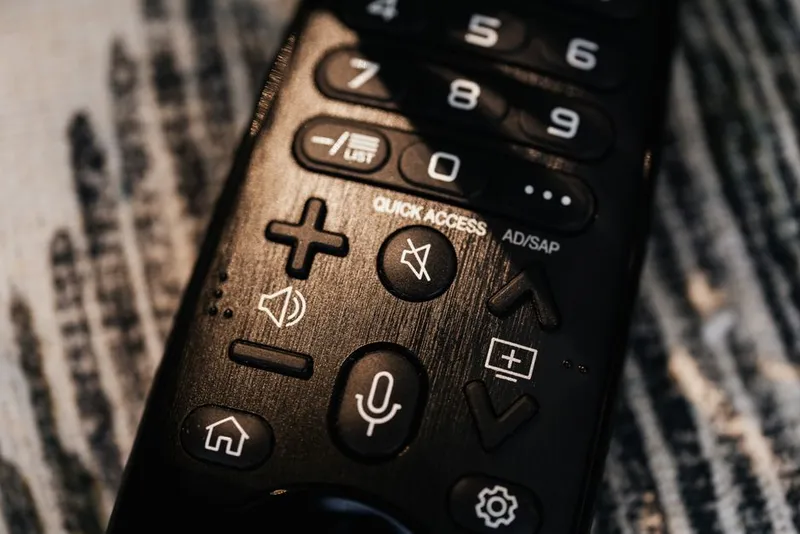
- What: TiVo’s thumbs-up and thumbs-down remote buttons let viewers rate shows directly, helping power TiVo Suggestions and making early TV recommendation data easy to collect.
- Where: In the home, through the TiVo set-top box and remote.
- When: Early 2000s, following TiVo’s 1997 founding and late-1990s/early-2000s DVR era.
TiVo’s remote did something small that turned out to be structurally important for television: it gave viewers thumbs-up and thumbs-down buttons. In the early 2000s, those buttons let people rate programs directly from the couch, and TiVo used that feedback to power TiVo Suggestions, its built-in recommendation feature.
The object itself looked ordinary enough. A TiVo remote had the standard transport controls, channel navigation, and a few branded shortcuts. But the two rating buttons changed the relationship between the device and the viewer. Instead of only recording what someone watched or skipped, the box could also collect an explicit signal: this show was liked, or this one was not.
How TiVo Suggestions Worked
That mattered because recommendation systems work differently when they get direct feedback. Watching a program can mean many things. Maybe it was chosen on purpose. Maybe it was just left on. Maybe someone else in the room picked it. A thumbs-up was clearer. A thumbs-down was clearer still. TiVo combined those ratings with viewing behavior to generate TiVo Suggestions, automatically recording shows it predicted the household might want.
By current standards, that sounds basic. It was basic. But that simplicity was the point. TiVo did not need a long survey or a profile page full of preferences. It reduced personalization to two concrete actions on a physical remote. Pressing one button or the other turned an opinion into usable data without interrupting the act of watching TV much.
TiVo in Early Personalization
There is useful context here. In the late 1990s and early 2000s, personalized media recommendations were not yet an assumed part of every screen. TiVo, an American company founded in 1997, introduced DVR features that already made television feel more responsive by pausing live TV and scheduling recordings. TiVo Suggestions added another layer: the machine was not just storing shows, it was trying to infer taste.
The significance was not that TiVo invented recommendation logic by itself, or that it resembled modern AI in some oversized way. It was that a mass-market consumer device normalized the idea that preference data could be collected through tiny, low-friction interactions. The remote became an input tool, not just a control tool.
Legacy of TiVo Rating Buttons
That is the concrete legacy of those thumbs buttons. On TiVo, a couple of clicks on a handheld remote helped decide what the DVR would record later, turning ordinary TV use into one of the clearest early examples of recommendation data gathered right in the living room.
Did You Know?
TiVo was founded in 1997.