
🏆 Legends born in the arena
Boston Marathon Guide Cue Helped Erich Manser Stay Smooth
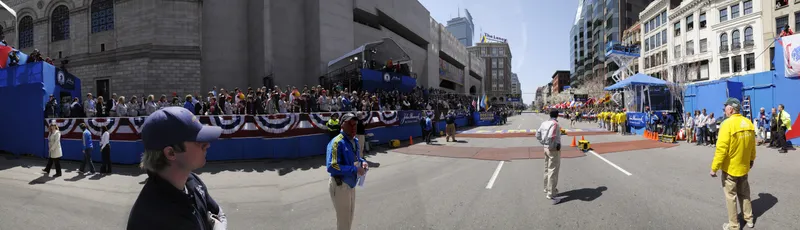
- What: At the 2016 Boston Marathon, guide Andrew Trotman gave visually impaired runner Erich Manser a brief cue to avoid a puddle without losing stride.
- Where: Boston Marathon course in Boston.
- When: 2016.
On the course at the 2016 Boston Marathon, visually impaired runner Erich Manser got a quick instruction from his guide, Andrew Trotman: veer toward me. The reason was simple and immediate. There was a puddle ahead, and the call let them avoid it without breaking stride.
Guide Cues in Marathon Running
That moment was small enough to miss from the roadside, but it says a lot about how guided marathon running works. A guide is not there just for direction at major turns or crowded sections. The job also includes constant, precise information about the road surface, spacing, obstacles, and pace. When Trotman warned Manser about the puddle and told him which way to move, the goal was not drama. It was continuity.
In a marathon, continuity matters. A sudden sidestep, hesitation, or clipped step can interrupt rhythm that took miles to establish. For a visually impaired runner, that rhythm depends on communication being fast, clear, and trusted. The cue has to be short enough to process instantly and specific enough to act on without second-guessing. Veer toward me is just that kind of instruction.
Boston Marathon Guide Partnership
The Boston Marathon, with its packed fields and changing road conditions, puts extra weight on that partnership. Runners are managing weather, noise, other athletes, and the physical strain of a long course. For a guided pair, there is another layer: translating the environment into usable information in real time. That means a guide is reading the road almost continuously, then turning what they see into simple commands that fit the runner’s cadence.
What stands out in this 2016 moment is the precision. The puddle itself was minor. The significance was the timing of the cue and the trust behind it. Manser did not need a long explanation. Trotman did not need to overcorrect. One brief instruction was enough to preserve form and pace.
How Erich Manser Stayed Smooth
That is the larger context of visually impaired marathon running: success often depends on details that barely register to spectators. The visible part is two athletes moving together. The less visible part is the stream of decisions underneath it, measured in steps, surfaces, and split seconds.
In concrete terms, the puddle was avoided, the rhythm held, and the pair kept moving through Boston as planned. The moment was ordinary in size but central in function, which is often exactly what effective guiding looks like over 26.2 miles.
Did You Know?
Boston is known for its point-to-point course, so runners must handle changing road conditions rather than repeating the same loop.