🌍 Records from the halls of power
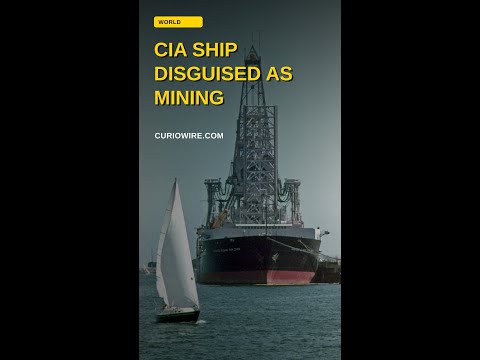
Glomar Explorer: The CIA Ship Hidden as a Mining Vessel
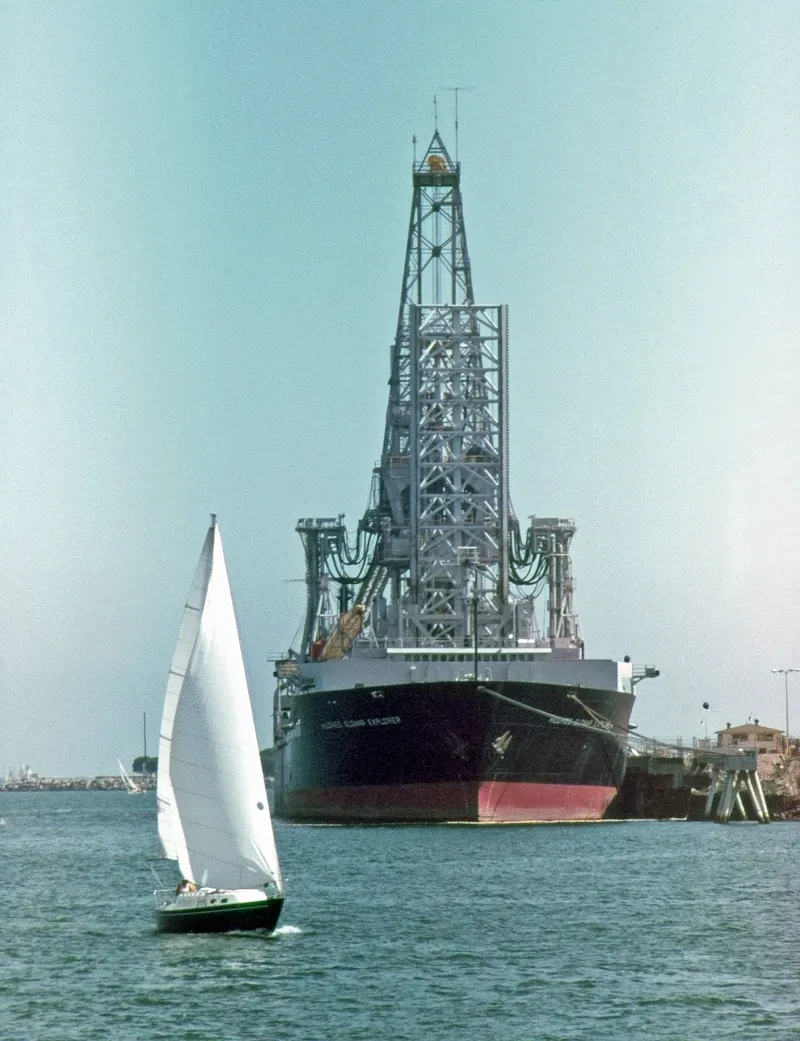
- What: The Glomar Explorer was a CIA-fronted deep-sea ship built for Project Azorian, a secret attempt to recover the Soviet submarine K-129 from the ocean floor.
- Where: Pacific Ocean northwest of Hawaii.
- When: Early 1970s, with the recovery attempt in 1974.
It looked like a deep-sea mining ship. In reality, the Glomar Explorer was built for an unusual CIA Cold War operation.
Deep-Sea Mining Cover Story
In the early 1970s, the vessel was presented to the public as a commercial effort to harvest manganese nodules from the ocean floor. That explanation was not random. Deep-sea mining sounded ambitious, technical, and just plausible enough to explain why an enormous specialized ship was being built. The public face of the project was tied to Howard Hughes, whose business empire and reputation for unconventional ventures helped make the cover story more believable.
Project Azorian and K-129
What the ship was actually for was far more specific. In 1968, a Soviet Golf-class ballistic missile submarine, K-129, sank in the Pacific Ocean northwest of Hawaii. U.S. intelligence located the wreck deep under the sea. Recovering it from that depth was a major engineering problem, but the potential intelligence value was obvious: code materials, cryptographic equipment, missiles, and insight into Soviet naval technology.
The result was Project Azorian, a secret CIA effort centered on the Glomar Explorer. The ship was designed with a large internal well and a heavy lifting system intended to lower a massive claw-like device to the seabed, grip part of the submarine, and raise it without exposing the operation in open view. In 1974, the recovery attempt took place in the Pacific. During the lift, part of the submarine reportedly broke apart, and only a section was recovered. Exactly what intelligence was gained has never been fully made public.
The Glomar Response Legacy
The common misconception is that the manganese-mining story was just a colorful extra. It was more than that. The cover had to explain not only the ship’s size, but also its unusual equipment, its ocean-going behavior, and why a private industrial project would spend heavily in deep water far from shore. The disguise was built into the engineering and the public narrative at the same time.
The Glomar Explorer also left behind a phrase that outlived the mission. When reporters later pushed for confirmation, the government’s refusal helped popularize what became known as the Glomar response: neither confirming nor denying. So the ship’s concrete legacy is not only a partially successful submarine recovery in the Pacific in 1974, but also a widely recognized formula in modern secrecy law and intelligence language.
Did You Know?
The phrase “Glomar response” became famous in U.S. law after it was used in a 1970s Freedom of Information Act case involving the ship and CIA secrecy.