
🌿 Stories carved by wind and water
Ansel Adams Quote on Government and Conservation Fights
It is horrifying that we have to fight our own Government to save our environment.
- Who: Ansel Adams.
- Where: In the context of U.S. conservation and environmental politics, especially conflicts over wilderness protection, development, and federal land management.
- When: 1983 (early 1980s).
- Why: The line mattered because it captured the conflict between environmental protection and government-backed development, and it became a memorable statement of conservation opposition to federal power.
Ansel Adams is often remembered for monumental black-and-white landscapes, but one of his most enduring public lines was political: “It is horrifying that we have to fight our own Government to save our environment.” The wording is widely associated with Adams’s conservation advocacy in the early 1980s, when battles over development and wilderness policy on public lands forced environmentalists into direct conflict with federal power.
Conservation Conflicts in the Early 1980s
That context matters. This was not a general complaint about politics. Adams was speaking from a specific moment in American conservation, when the same government that managed national parks, forests, and public land could also approve projects that threatened them. Fights over wilderness protection, public-lands development, and land management decisions made that contradiction impossible to ignore. Citizens who believed public land should be preserved often found themselves lobbying, protesting, or litigating against federal agencies and elected officials.
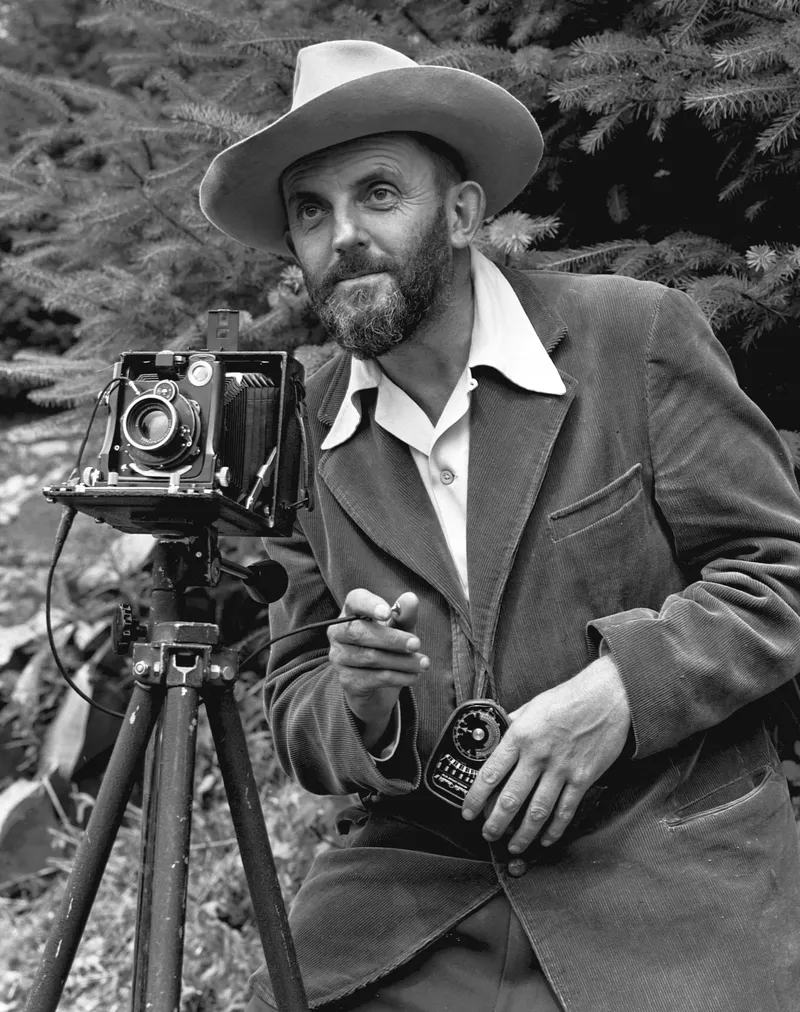
The force of the quote comes from that contradiction. Adams did not say it was disappointing or frustrating. He said it was horrifying. That choice of word gave the sentence its charge. It suggested that something deeper than policy disagreement was at stake: a failure in the basic idea that government should protect a shared natural inheritance, not endanger it. The line also turns on the phrase “our own government.” It frames the conflict as internal and civic, not foreign or abstract. The enemy, in this formulation, was not nature’s remoteness or private ignorance alone, but public authority acting against public interest.
Why the Quote Resonated
That is why the quote resonated so strongly at the time. By the early 1980s, environmental concern was a national flashpoint in the United States. Pollution, urban growth, major infrastructure projects, and disappearing open land were no longer niche issues. Adams’s sentence gave that public feeling a simple form. It captured the shock many people felt when official progress and environmental protection no longer seemed aligned. Coming from Adams, whose reputation rested on making American landscapes visible and valuable to a mass audience, the criticism carried unusual weight. He was not speaking as a detached partisan figure, but as a prominent witness to what could be lost.
Government and Environmental Protection
The quote is still remembered because the conflict it describes never fully disappeared. Environmental debates still often involve permits, agencies, land use rules, and competing claims about the public good. Adams’s line survives not as a vague expression of anger, but as a precise statement from a period when conservationists realized that saving wilderness could require fighting the institutions meant to steward it. That is the concrete reason the sentence lasts: it names a recurring problem in American environmental politics with blunt, memorable clarity.
Did You Know?
Ansel Adams’s reputation as a photographer gave the criticism added weight because he was also widely seen as a witness for the American landscape.