
🎭 Fragments from the heart of civilization
Rockabilly Slap Bass Wear Marks Tell a Rhythm Story
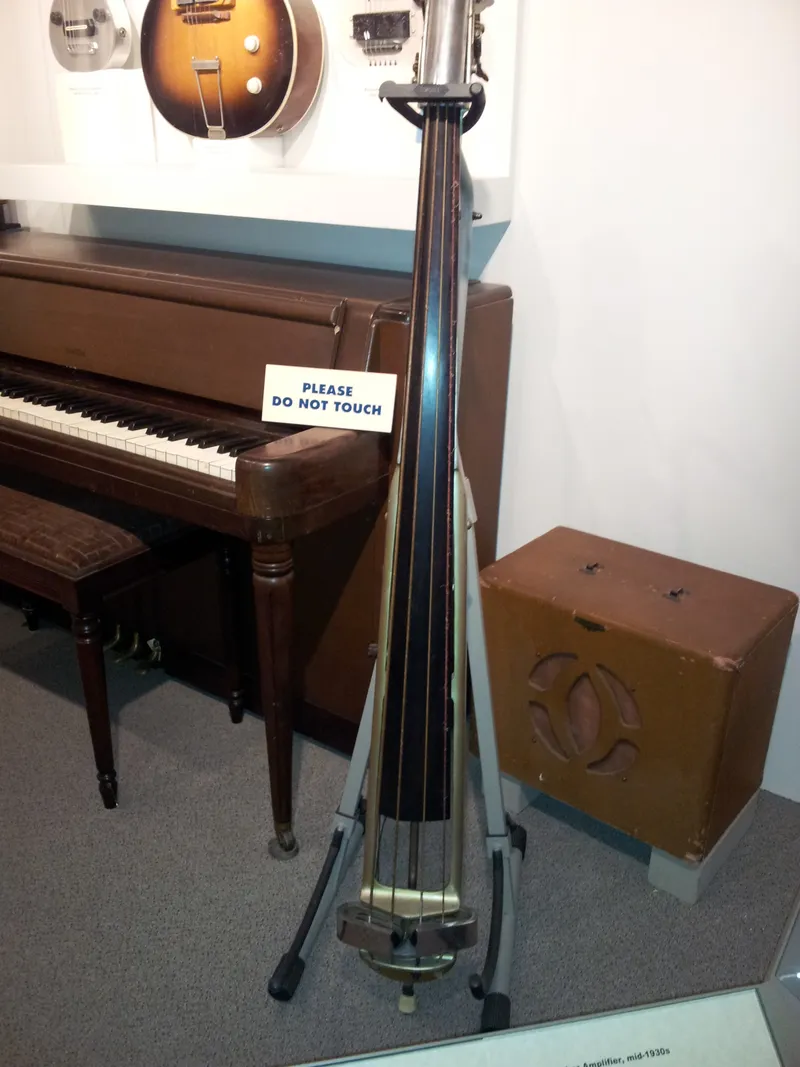
- What: The article explains that the worn fingerboards of vintage rockabilly slap basses often show the physical damage caused by repeated string-pulling and snapping during performance.
- Where: On vintage double basses used for rockabilly and slap bass playing.
- When: Especially from the 1950s onward, with later revival scenes in Europe and Japan.
Look closely at an old rockabilly upright bass, especially near the end of the fingerboard, and the wear can be impossible to miss. Deep scuffs, chipped finish, compressed wood, and dark impact marks often sit right around where slap players spent years yanking and snapping the strings back against the fingerboard.
How Slap Bass Creates Wear
On a vintage double bass, that damage is not random. It lines up with a very specific technique. In slap bass, the player does more than stop a note. The string gets pulled away from the board and released so it smacks back, adding a sharp percussive click to the pitch. In rockabilly, especially from the 1950s onward in the United States and later in revival scenes in Europe and Japan, that click became part of the engine of the music. The bass was keeping time and making rhythm at the same moment.
The instrument shows it. A bass used for this style can develop heavy wear in the upper playing area of the fingerboard and around the string path, because the same motion happens potentially thousands of times in a set, then across years of gigs. Some players also wear through finish on the shoulders or top where the right hand and forearm repeatedly make contact. None of that automatically proves a famous owner or a precise date. But it does record repeated physical habits with unusual clarity.
Fingerboard Marks as Evidence
That is what makes these basses interesting as cultural objects, not just instruments. The fingerboard becomes a kind of material archive. You can see, in wood and ebony, that rockabilly rhythm was not only counted or felt. It was physically manufactured through impact. The groove was built by force, rebound, timing, and endurance. Long before high-volume amplification solved everything, players were extracting extra attack from the instrument itself.
There is also a useful correction in that evidence. Rockabilly slap bass can sound effortless on a recording, like a clean little click underneath the band. The worn board says otherwise. It points to labor: repetitive motion, setup choices, string tension, and the reality that a rhythm style can reshape the object producing it. Not every old bass shows the same pattern, and not every worn fingerboard comes from slap. But on a true working rockabilly bass, the marks often match the music with almost forensic precision.
Working Rockabilly Bass Damage
So when a vintage slap bass shows a battered fingerboard, the clearest reading is usually the simplest one. That surface was used as part of the rhythm section itself, and the wood kept the record.
Did You Know?
Leo Fender helped popularize the electric bass in the 1950s, but rockabilly players often kept the upright bass because its slap attack was central to the style.