🎭 Fragments from the heart of civilization
5 European Bone Churches and Catacombs with Human Remains
- What: This list highlights European religious sites that deliberately use human bones or preserved bodies as architectural and devotional displays, making death visibly present.
- Where: Europe, especially Catholic churches, chapels, crypts, and catacombs.
- When: Mainly from the early modern period through the 19th century.
Across Europe, some of the most unsettling religious spaces are also among the most carefully designed. These bone churches, chapels, and catacombs do not hide death underground and out of sight. They frame it.
In Portugal, the Czech Republic, Italy, and Poland, human skulls, tibias, and even dressed mummies were arranged into arches, chandeliers, wall patterns, and full public displays. The result is not random burial overflow. It is a formal spectacle.
1. Évora’s Bone-Covered Chapel
In Évora, Portugal, the Capela dos Ossos turns thousands of human remains into architecture. Its walls and pillars are lined with skulls and tibias, arranged in repeating patterns and arches that make the entire chapel feel constructed from mortality itself.
What makes it striking is the deliberate design. Built in the 16th century as a memento mori, it was not just a storage space for bones. It was a visual lesson, using symmetry and repetition to keep death constantly in view.
2. Sedlec’s Bone Chandelier Chapel
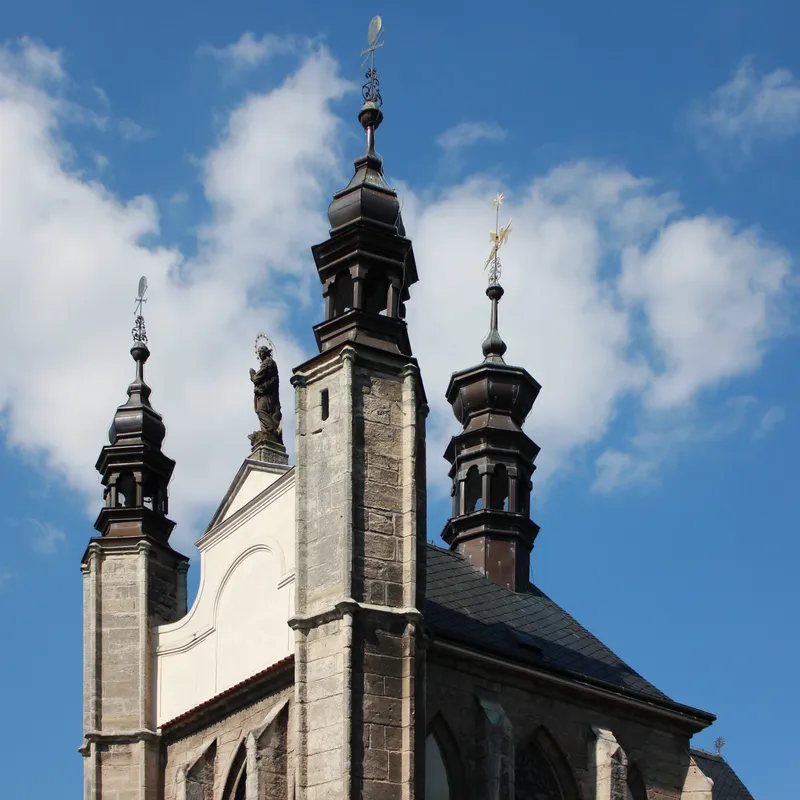
Near Kutná Hora, the Sedlec Ossuary may be the most famous bone-decorated chapel in Europe. Inside this small cemetery chapel, bones were fashioned into garlands and decorative forms, with a chandelier that reportedly incorporates almost every bone in the human body.
The shock comes from how refined the display looks. In the 1870s, the remains were arranged not as a grim heap but as ornament, turning a Christian funerary space into something that feels both intimate and theatrical.
3. Rome’s Capuchin Crypt of Curated Skulls
Beneath Santa Maria della Concezione dei Cappuccini in Rome, Capuchin friars arranged the bones of their brethren into a sequence of ornate chapels. Skulls, skeletal parts, and symmetrical patterns create a space that is devotional but also undeniably staged.
The power of the crypt lies in its message. These are not anonymous decorative choices detached from belief; they were paired with moral reminders about the vanity of life, making the display feel like both art and warning.
4. Palermo’s Dressed Dead
The Capuchin Catacombs of Palermo take the spectacle in a different direction. Here, naturally mummified and embalmed bodies were dressed, posed, and placed in niches and corridors, creating rows of preserved people rather than abstract bone designs.
That is why Palermo feels especially direct. Instead of skull patterns or chandeliers, visitors face human figures still wearing clothes, frozen in what became a noted 19th-century attraction that blurs memorial, display, and public curiosity.
5. Poland’s Tiny Skull Chapel
In Czermna, Poland, the Chapel of Skulls compresses the same idea into a small rural space. Thousands of skulls and bones are embedded directly into the walls and ceiling, turning a late-Baroque ossuary into a room where almost every surface bears human remains.
Its scale is part of what makes it memorable. Unlike larger catacombs, this is a tiny chapel, which means the effect is immediate and close. The decoration is not distant background. It surrounds the viewer.
Taken together, these European bone churches and catacombs show how public encounters with death were shaped through design, not hidden from view: chandeliers, wall arrays, inscriptions, and posed bodies all made mortality visible on purpose.
Did You Know?
The phrase above Évora’s Capela dos Ossos entrance is commonly translated as: “We bones that are here await yours.”