
🧩 Fragments from the unknown
Fridtjof Nansen's Fram Diaries and the Sounds of Arctic Ice
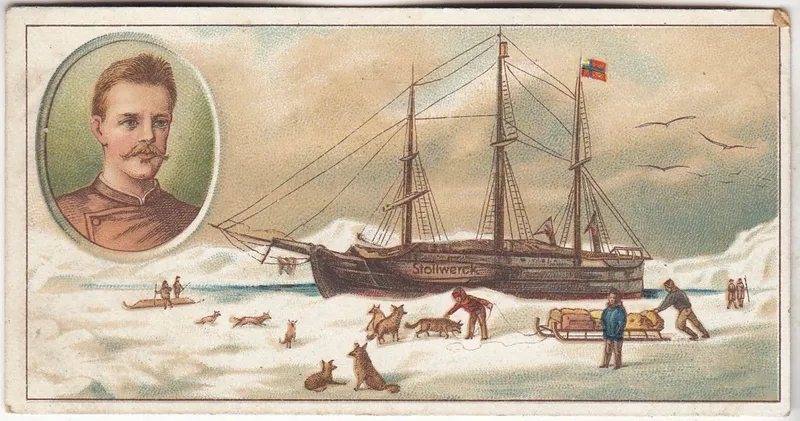
- What: Fridtjof Nansen’s Fram expedition diary descriptions of Arctic ice sounds were later supported by scientific recordings showing that stressed sea ice and icebergs can groan, crack, and emit low acoustic rumbles.
- Where: The Arctic Ocean, aboard the Fram and in polar sea ice environments.
- When: 1893–1896, with later validation by mid-20th-century recordings.
For centuries, strange sounds in polar ice could be mistaken for exaggeration. But when Fridtjof Nansen wrote during the Fram expedition from 1893 to 1896 that Arctic sea ice groaned, cracked, and even seemed to sing, he was describing something later researchers would actually record.
Nansen on the Fram Expedition
Nansen’s expedition drifted with the pack ice across the Arctic Ocean aboard the Fram, a ship built to survive pressure that crushed ordinary vessels. In that environment, the ice was never still. It shifted under stress, opened into leads, pressed into ridges, and transmitted vibration over long distances. In his diaries, Nansen noted the noises around the ship with the matter-of-fact attention of someone living inside a moving frozen landscape. The effect was eerie, not because it was supernatural, but because the Arctic was mechanically alive.
The basic idea is simple: ice makes sound when it bends, fractures, rubs, or melts. Temperature changes create stress. Pressure from wind and currents forces sea ice against sea ice. Icebergs release trapped air and crack as they warm or roll. Those processes produce creaks, pops, long groans, and high, almost tonal vibrations. What sounded unusual to 19th-century explorers turned out to be a real acoustic system.
How Arctic Ice Makes Sound
That is where the later recordings matter. By the mid-20th century, hydrophones and other recording equipment captured the underwater acoustics of polar ice and icebergs. Researchers documented sharp impulses from cracking ice, sustained low-frequency rumbles, and patterned sounds created by movement and stress within frozen masses. Modern listeners often describe some of these recordings as haunting because they do not sound random. They can seem rhythmic, layered, even strangely vocal, while still being fully physical in origin.
This gives Nansen’s diary entries a stronger context. He was not reporting a legend from the Arctic fringe. He was observing a soundscape that science later measured. The gap between the diary page and the hydrophone recording is part of what makes the story stick: an explorer in the 1890s wrote down an unsettling detail, and decades later instruments confirmed that the frozen ocean really does produce structured, memorable noise.
Recorded Sounds of Polar Ice
The hard fact is that sea ice and icebergs generate identifiable acoustic signals, and polar researchers have recorded them for decades. Nansen’s descriptions from the Fram expedition in 1893 to 1896 align with that reality: Arctic ice can groan, crack, and sometimes seem to sing because stressed ice is a sound-producing material.
Did You Know?
Hydrophones are designed to listen underwater, which made them especially useful for capturing ice sounds beneath the polar surface.