🚀 Whispers from the silent cosmos
Apollo 12 Lightning Strike and the SCE to AUX Fix
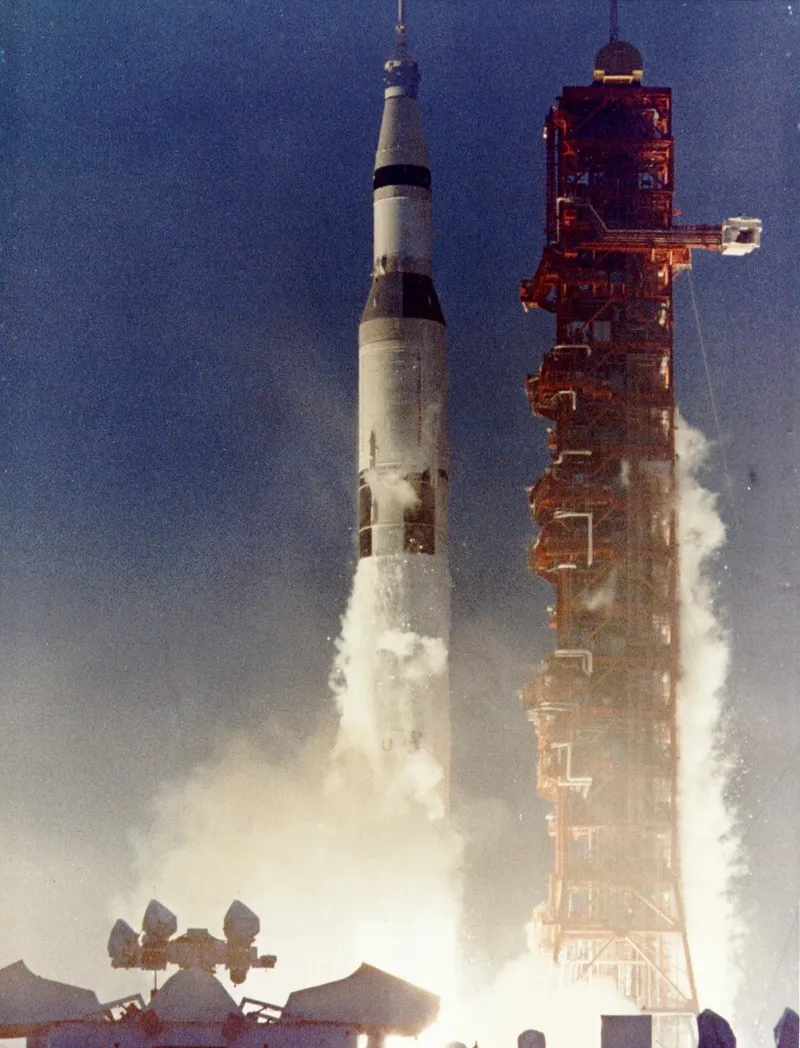
- What: During Apollo 12’s launch, a lightning strike caused telemetry problems, but the “SCE to AUX” command helped restore usable data and keep the mission going.
- Where: Kennedy Space Center and Mission Control in Houston.
- When: November 14, 1969, during the Apollo 12 launch.
On November 14, 1969, Apollo 12 was only seconds into launch from Kennedy Space Center when lightning hit the Saturn V. Then it hit again. Inside the spacecraft, warning lights came alive, telemetry on the ground turned chaotic, and for a moment the mission looked like it might be slipping away.
What “SCE to AUX” Meant
This is where one small, obscure command mattered: “SCE to AUX.” Flight controller John Aaron said it from Mission Control in Houston after recognizing a pattern he had seen before in a simulator. The phrase sounded cryptic because it was. “SCE” meant Signal Conditioning Equipment, a system tied to how the spacecraft’s instrument readings were processed and displayed. “AUX” meant switching it to an auxiliary setting.
The problem was not that the rocket had stopped flying. The Saturn V was still climbing. The bigger danger was that the crew and controllers were suddenly losing good data at the exact moment they needed to understand the spacecraft’s condition. The lightning strike had caused fuel cells to disconnect and had scrambled telemetry, making it hard to tell what was actually failing and what was just bad instrumentation.
Alan Bean Restores Telemetry
Astronaut Alan Bean, sitting in the right seat, recognized the switch location and moved it. Almost immediately, the telemetry returned to something usable. That did not magically erase every issue. The crew still had to restore fuel cells and work through a checklist of electrical problems. But the mission had shifted from a launch-threatening systems confusion to a survivable troubleshooting job.
What makes the moment endure is not mystery or myth. It is how narrow the solution was. One controller happened to know one unusual switch setting. One astronaut happened to find it quickly in a cockpit full of alarms. Without that, Mission Control would have had much less reliable information during a critical phase of flight, and an abort would have become far more likely.
Apollo 12 Mission Outcome
The consequence was concrete. Apollo 12 stayed on course, reached the Moon, and completed the second crewed lunar landing. In the record of the mission, “SCE to AUX” remains a reminder that in spaceflight, a mission can hinge not on a dramatic invention, but on a single precise command spoken at the right second.
Did You Know?
Alan Bean later became the fourth person to walk on the Moon.