🚀 Whispers from the silent cosmos
6 Apollo Moonquake Facts That Made the Moon Ring
- What: The article explains how Apollo seismic experiments showed that the Moon experiences impacts and quakes whose vibrations can persist unusually long, revealing a dry, fractured interior that makes the Moon seem to “ring.”
- Where: The Moon.
- When: During the Apollo era, based on seismic data collected by Apollo missions.
Apollo seismometers turned the Moon from a silent-looking world into a place full of signals. What they heard was strange: impacts, cracks, and quakes that did not fade the way Earth’s usually do.
The big surprise was not just that the Moon shakes. It was how long those vibrations could last. Apollo-era seismic data revealed a dry, fractured world that seemed to hold onto motion and let it echo.
1. Apollo impacts that made the Moon ‘ring’ for up to about an hour
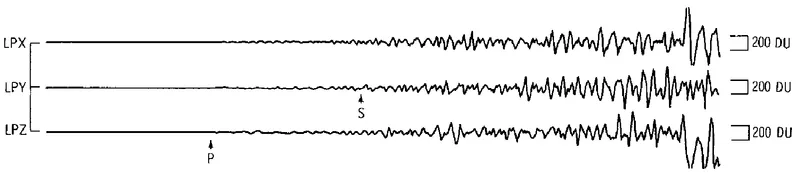
During Apollo, engineers deliberately crashed hardware near the seismic stations, including Saturn stages and Lunar Modules. These artificial impacts gave scientists controlled seismic events to study.
The weird part was the aftermath. Instead of fading quickly, the signals reverberated for tens of minutes to nearly an hour. That long coda became one of the clearest signs that the Moon transmits seismic energy with unusually low damping.
2. Deep, tidally timed moonquakes
Some moonquakes came from deep below the surface, hundreds of kilometers down, and from fixed source regions. They were not random bursts scattered everywhere.
They also followed a roughly monthly rhythm tied to Earth–Moon tidal stresses. That made them seem less like isolated jolts and more like a repeating internal pulse, a deep lunar response to the gravitational pull between Earth and Moon.
3. Shallow quakes that rattled the surface for minutes
Shallow moonquakes were rarer than the deep ones, but they were stronger and more alarming. Some reached around magnitude 5, which is substantial for any rocky body.
What made them especially surprising was their duration. On the Moon, these events could keep the ground shaking for minutes. In a place where structures would have no atmosphere or weather to contend with, seismic shaking becomes a much bigger design problem.
4. Thermal quakes at lunar sunrise
Not every seismic signal came from deep inside the Moon or from impacts. Some were triggered by the day itself. As sunlight hit the frigid lunar surface at local sunrise, regolith and rocks warmed and expanded.
That thermal stress produced small quakes, repeatedly detected in a pattern that peaked near sunrise. It is an almost eerie idea: the Moon quietly cracking and ticking as morning arrives.
5. Meteoroid impacts as sharp seismic staccato
Apollo’s instruments also picked up meteoroid and micrometeoroid strikes. These events appeared as short, high-frequency seismic bursts, very different from the longer ringing signatures.
That mattered because each impact was more than a hit. By counting and locating them, scientists could estimate impact rates and improve models of how seismic waves move through the Moon.
6. The network that revealed the Moon’s ‘ringing’ personality
No single instrument could have told the full story. Apollo’s Passive Seismic Experiment network revealed the pattern across different kinds of events: impacts, deep quakes, shallow quakes, and thermal cracking.
Taken together, the stations showed that the Moon’s dry, fractured crust lets seismic energy linger. That is why Apollo-era records gave rise to the famous idea that the Moon could “ring” compared with Earth.
Apollo’s seismic legacy is not just that the Moon is active. It is that lunar shaking behaves in a distinctly lunar way: persistent, echoing, and unexpectedly revealing.
Did You Know?
Apollo 12, 14, 15, and 16 deployed seismometers, creating the first seismic network ever operated on another world.