🎭 Fragments from the heart of civilization
5 Museums Built Around or Highlighting a Famous Shipwreck or Sunken Site
- What: This list highlights museums built around or highlighting a single major underwater archaeological story, such as one shipwreck, treasure recovery, or a drowned site.
- Where: Europe, the Caribbean, and the southeastern United States.
- When: Mainly underwater losses from the 16th to 18th centuries, interpreted in modern museums.
Some museums collect a little bit of everything. These museums do the opposite. They build much of the experience around one underwater story that refuses to stay buried.
From Stockholm to Jamaica, these shipwreck and sunken-site museums turn a single recovery into the main event: a raised hull, preserved timbers, treasure from one galleon, or objects from a drowned city.
1. Vasa Museum — a whole 17th-century warship in a hall
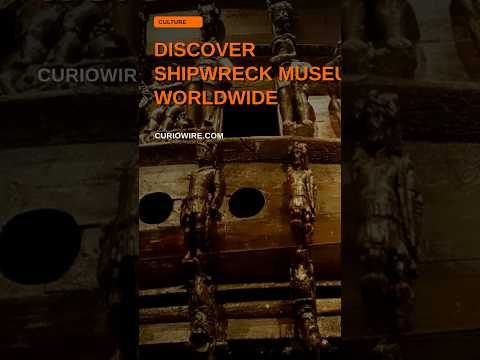
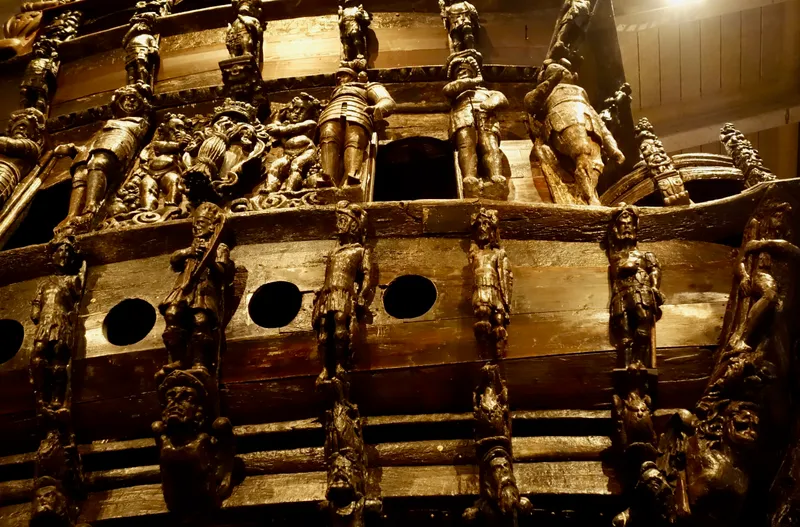
In Stockholm, the Vasa Museum is organized around one staggering sight: the nearly intact warship Vasa, which sank in 1628 and now fills a purpose-built hall. You are not looking at a model or a fragment. The ship itself defines the architecture of the visit.
That is what makes it so striking. Most maritime collections scatter attention across cases and labels. Here, the recovered hull is the center of gravity, and everything else orbits that one wreck.
2. Mary Rose Museum — Tudor ship reconstructed around its bones
In Portsmouth, the Mary Rose Museum is built around the preserved timbers of the Tudor warship Mary Rose and thousands of recovered objects. The ship’s remains are not treated like a side exhibit; the museum is designed so visitors encounter both the vessel and its conservation.
The surprise is in the scale of the reconstruction. Instead of a few dramatic relics, the museum uses the ship’s surviving structure and its objects to turn one wreck into a fully realized historical scene.
3. Mel Fisher Maritime Museum — treasure from a single Spanish galleon
In Key West, the Mel Fisher Maritime Museum gives major gallery space to the 1622 galleon Nuestra Señora de Atocha. Coins, bullion, and personal items recovered from that wreck form the backbone of the story.
That focus changes the mood completely. Rather than presenting treasure as a random pile of valuables, the museum frames it as the result of one salvage saga tied to one famous shipwreck.
4. St. Augustine Shipwreck Museum — Spanish treasure-fleet finds as a signature draw
This private museum in St. Augustine highlights artifacts from Florida’s Spanish treasure fleets, including the 1715 fleet. Even with material from other wrecks, that notorious fleet disaster is presented as a headline thread.
What stands out is the way one fleet loss becomes a headline attraction. The museum’s identity nods to that single disaster, with the wider shipwreck material supporting the main draw rather than replacing it.
5. Port Royal Museum — an entire sunken city anchors the show
Jamaica’s Port Royal Museum centers its galleries on objects recovered from the submerged 17th-century city of Port Royal. This is not one ship but one drowned place, assembled into a museum experience on land.
That gives it a different kind of power. Instead of following one vessel to the bottom, visitors move through the remains of a whole sunken town, with the recovered objects carrying the weight of one vanished site.
What links these five is simple: each museum elevates one legendary underwater loss as a central thread.
Did You Know?
The Vasa was salvaged in 1961 after spending 333 years underwater.