
🧩 Fragments from the unknown
Breguet's Secret Signature Helped Deter Watch Counterfeits Early
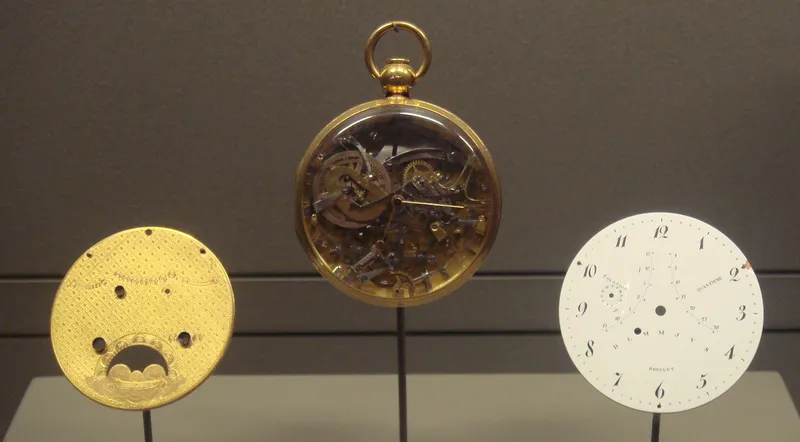
- What: Abraham-Louis Breguet used a nearly invisible dial signature as an early anti-counterfeiting measure on luxury watches.
- Where: Paris, in the context of Breguet’s watchmaking workshop.
- When: Late 18th century, especially the 1790s.
In the late 18th century, Abraham-Louis Breguet added something to his watch dials that most buyers would never notice: a nearly invisible secret signature. It was often cited as one of the earlier anti-counterfeiting features in luxury watchmaking, and it worked by hiding in plain sight.
Breguet’s Hidden Dial Signature
The mark was not meant to stand out. On many Breguet dials, the signature was engraved so lightly that it could disappear under normal viewing. Only when the dial caught angled light, or when examined through a loupe, would the name become visible. That was the point. A counterfeiter could copy the style, the hands, even the layout. Copying a subtle security detail that was hard to detect was another matter.
Breguet had good reason to be careful. By the 1790s in Paris, his watches were already prestigious and already being imitated. His designs were distinctive enough to attract attention and valuable enough to attract fraud. Long before serial-number databases, laser engraving, or modern authentication labs, a watchmaker had to rely on craftsmanship itself as a defense.
Early Watch Counterfeiting Defense
The secret signature fit naturally into that world. It did not announce itself like a seal or badge. It was embedded in the object, woven into the dial as part signature, part security feature. That balance mattered. Luxury buyers wanted refinement, not obvious tamper-proof labeling. Breguet’s solution protected the brand without disturbing the look that made the watches desirable in the first place.
This detail also says something larger about the period. Counterfeiting is often treated like a modern problem tied to global supply chains and online resale, but elite goods were being forged centuries ago. Makers responded with the tools they had: hidden marks, workshop records, and details that only trained eyes would catch. In that sense, Breguet’s faint dial signature was an early version of the authenticity systems luxury brands still depend on now.
Why the Signature Mattered
What survives in the end is a very small mark with a very practical purpose. On a Breguet dial, visible only under the right light, that almost invisible signature was not decoration. It was a quiet warning that even in the age of hand-finished watches, forgery was already close enough to require defense.
Did You Know?
Breguet is also widely credited with inventing the tourbillon, a mechanism intended to improve timekeeping accuracy.