🏺 Recovered from the dusty archives
Mary Toft Rabbit Birth Hoax Fooled English Doctors
- What: Mary Toft convinced several respected 18th-century doctors that she had given birth to rabbits before the hoax was exposed and she confessed.
- Where: Surrey and London, England.
- When: 1726.
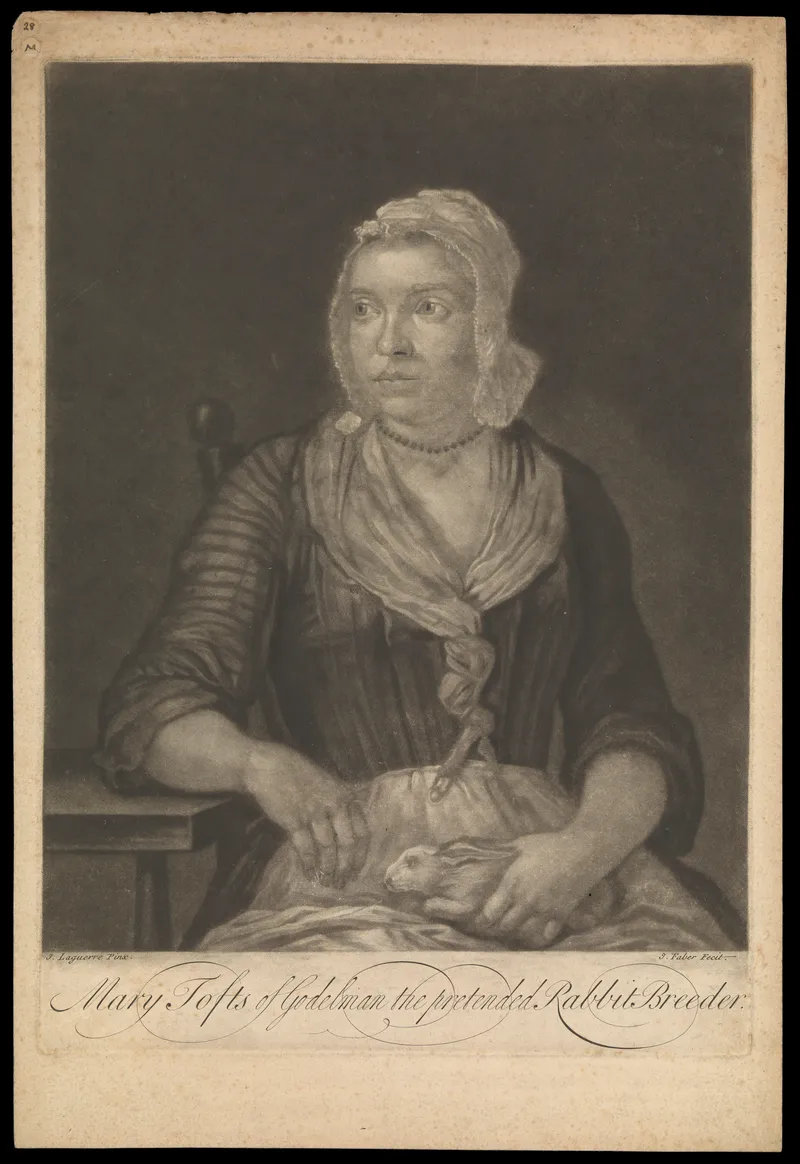
In 1726, in Surrey, England, Mary Toft persuaded respected physicians that she had given birth to rabbits. For a brief period, the story reached the royal court, drew elite medical attention, and turned a local claim into a national scandal.
How Mary Toft Fooled Doctors
The case moved quickly because the evidence seemed physical and immediate. Toft, a poor woman from Godalming, reportedly went through painful episodes during which animal parts were produced. Local surgeon John Howard examined her and sent reports upward. Soon the claim attracted Nathanael St. André, surgeon and anatomist to King George I, who investigated and initially accepted that something extraordinary had happened.
That acceptance mattered. In early 18th-century medicine, anatomy and direct observation carried enormous weight, but so did reputation. If a royal surgeon said the case deserved belief, others were more likely to treat it seriously. The older idea of “maternal impression” also made the claim seem less impossible than it does now; some believed a pregnant woman’s intense experiences could physically shape a fetus. That did not mean rabbit births were ordinary. It meant the medical world had room for strange explanations.
How the Hoax Collapsed
The tension rose when more observers arrived and the story became harder to control. The king sent another surgeon, Cyriacus Ahlers, who grew suspicious. Details did not line up. Investigators found signs that rabbit parts may have been inserted into Toft’s body rather than born from it. Under pressure, and after being moved to London for closer examination, Toft confessed that the supposed births were a fraud.
Exactly who helped plan it, and how much was driven by Toft herself versus people around her, is still discussed. But the central fact is not disputed: the rabbit-birth claim collapsed, and some prominent doctors had been taken in by it.
Mary Toft Hoax Aftermath
The misconception this episode exposes is not that 18th-century physicians were uniquely foolish. It is that expertise automatically defeats expectation. In this case, trained observers saw what they were prepared to see, especially when status, novelty, and public attention reinforced one another.
The aftermath was concrete and damaging. St. André’s reputation suffered badly. The affair became a printed joke in pamphlets and newspapers. Mary Toft, whose body had briefly become a site of royal investigation, ended up remembered less as a medical marvel than as the center of a famous English hoax about how evidence can be misread.
Did You Know?
After the scandal, satirists mocked the affair in print, and it became a well-known example of medical credulity in Georgian England.