
🚀 Whispers from the silent cosmos
NASA LCROSS Moon Crash Found Water Ice
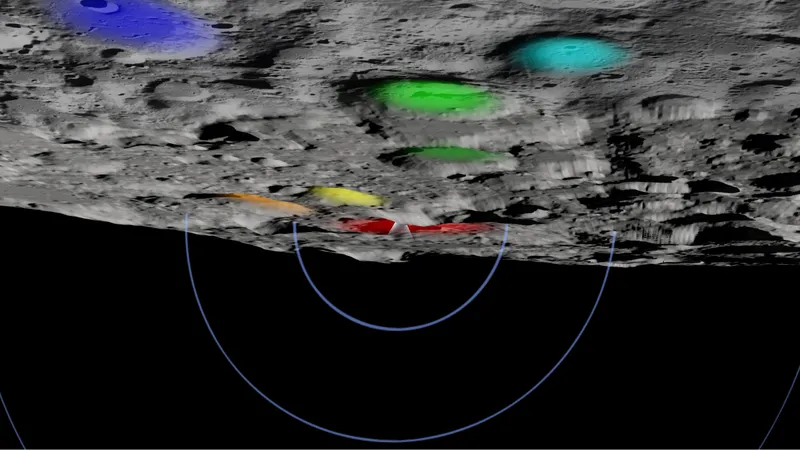
- What: NASA’s LCROSS mission deliberately crashed a rocket stage into a lunar crater and confirmed that water was present in the resulting plume, showing that some permanently shadowed regions on the Moon contain substantial ice.
- Where: Cabeus crater near the Moon’s south pole
- When: October 2009
In October 2009, NASA intentionally crashed part of a rocket into the Moon. The target was Cabeus crater near the lunar south pole, a permanently shadowed place so cold that sunlight never reaches the floor. Scientists wanted to know whether that darkness had trapped water ice for billions of years.
How the LCROSS Mission Worked
The mission was called LCROSS, short for Lunar Crater Observation and Sensing Satellite. First, the mission sent a spent Centaur rocket stage into the crater at high speed. Then the LCROSS spacecraft flew through the debris plume, measuring what the impact kicked up before it also hit the surface.
The result was more than a dramatic collision. Instruments detected clear signs of water in the plume, along with other volatile materials. NASA later reported that the excavated material contained about 5.6 percent water by mass, with uncertainty around that estimate. For a place once treated as a dry and difficult target, that was a meaningful amount. It suggested the Moon’s permanently shadowed craters could hold more water ice than many pre-impact models had projected.
Lunar South Pole Ice Findings
That does not mean every dark crater is packed with easy-to-collect ice, or that the Moon suddenly became a simple fuel depot. Lunar polar ice is expected to be patchy, mixed with soil, and locked inside extremely cold terrain that is hard to reach and operate in. Researchers have also used later missions, including NASA’s Lunar Reconnaissance Orbiter, to refine where ice is likely concentrated and in what form.
Still, LCROSS changed the conversation. Before the impact, water at the Moon’s poles was strongly suspected, but the direct sampling of an impact plume gave scientists a much firmer answer. The mission showed that permanently shadowed regions are not just geologic curiosities. They are resource targets.
Why Moon Water Matters
That matters because water on the Moon is more than drinking water. It can support life support systems and, after processing, provide hydrogen and oxygen for rocket propellant. The concrete implication of the LCROSS crash is simple: a deliberately staged impact at Cabeus crater showed that at least some lunar polar cold traps contain substantial water, making the Moon’s south polar region far more practical for future exploration than many models had suggested.
Did You Know?
LCROSS’s impact plume was observed by multiple instruments, including telescopes on Earth, helping confirm the water detection.