
🌍 Records from the halls of power
Tonlé Sap Floating Villages Rise and Fall With the Lake
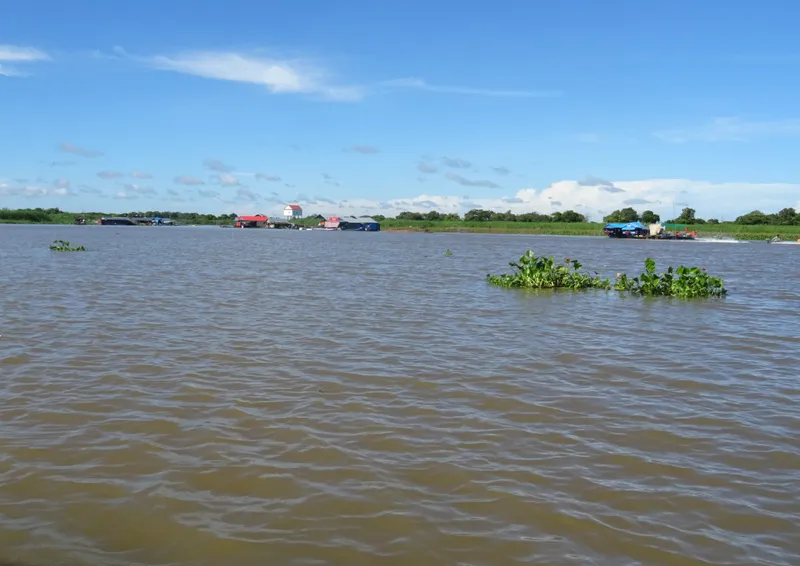
- What: Tonlé Sap’s floating villages in Cambodia are built on rafts and pontoons so homes, schools, shops, and other services can function with the lake’s seasonal rise and fall.
- Where: Tonlé Sap Lake, Cambodia.
- When:
In Cambodia’s Tonlé Sap Lake, a school can sit beside a market, a church, and rows of family homes, all floating on the water. These are not temporary structures. They are villages built on rafts and pontoons, designed to move with a highly dramatic seasonal water cycle.
Tonlé Sap Water Cycle
The basic idea is practical. Tonlé Sap expands and shrinks sharply through the year, especially during the monsoon season, when water from the Mekong system helps swell the lake. In the dry season, the water retreats. Instead of trying to hold still against that cycle, many lake communities are built to rise and fall with it. Houses float. Boat routes change. Daily life adjusts with the shoreline.
That means entire communities function on water, not just individual homes. In some floating settlements, there are schools where children arrive by boat, small shops stocked like neighborhood stores, places of worship, repair services, and working docks tied to fishing and transport. A market is not an isolated curiosity here; it is part of a full local system. The same is true of classrooms and religious buildings. They are ordinary institutions, just adapted to a floating setting.
How Floating Villages Function
The striking part is not only that the buildings float, but that the villages are organized around movement as a normal condition. Roads are replaced by canals and boat paths. Distances shift as water levels change. What looks unusual from the outside is, in practice, a response to a landscape that does not stay fixed.
That context matters. Tonlé Sap is often described through its environmental extremes, and those extremes are real. But the floating villages are also examples of infrastructure shaped by local conditions over time. They reflect how people build communities when seasonal change is not an interruption but a constant. The lake’s flood pulse affects fishing, travel, trade, and where structures can safely sit, so mobility becomes part of the design.
Infrastructure Built for Mobility
On Tonlé Sap, a village is not defined by being anchored to land. It is defined by remaining usable as the lake rises and drops. A classroom still has to open, a shop still has to sell food, and a family still has to get home. The rafts under those buildings are what make that possible.
Did You Know?
The Tonlé Sap is often described as Southeast Asia’s largest freshwater lake.