
🌍 Records from the halls of power
5 Famous Places Swallowed by Water and Still Remembered
- What: This list covers well-known towns and villages that were submerged by reservoirs, floods, or dam projects but remain culturally visible through ruins, memory, and periodic reappearance.
- Where: Wales, Australia, Argentina, and India.
- When: Mainly from the late 19th century through the 20th century and into the present, as low water levels continue to reveal remains.
Some places do not vanish cleanly. They sink beneath reservoirs, flooded lakes, or hydro schemes, then keep returning in fragments: a wall in drought, a road line in the mud, a story people refuse to let die.
These famous submerged places span Wales, Australia, Argentina, and India. In each case, rising water erased a community from the map, but not from memory.
1. Capel Celyn (Wales) — drowned for Llyn Celyn
In 1960s Wales, Capel Celyn was inundated to create Llyn Celyn, a reservoir built to supply Liverpool. What disappeared was not just a village in the Tryweryn valley, but a living Welsh-speaking community.
The shock of that loss outlived the flood itself. Capel Celyn became a national rallying cry, remembered through the phrase Cofiwch Dryweryn, memorials, and songs. The village is gone beneath the water, but its political and cultural afterlife remains vivid.
2. Welsh reservoir villages (various) — hamlets beneath Vyrnwy and the Elan Valley
Capel Celyn was not the only Welsh community to go under. Across Wales, several hamlets were cleared for reservoirs linked to late-19th- and 20th-century water schemes, including landscapes beneath Vyrnwy and in the Elan Valley.
What makes these places eerie is the way they sometimes return. When reservoir levels drop, old walls, lanes, and tree stumps can reappear. The ruins are partial, but they are enough to bring local stories rushing back.
3. Old Adaminaby (Australia) — moved and drowned for a scheme
Old Adaminaby was forced uphill when the Snowy Mountains Scheme created Lake Eucumbene. The original town site was abandoned, and the community had to rebuild in a new location above the future waterline.
That kind of relocation is dramatic on paper, but drought makes it tangible. In low water, foundations and fence lines from Old Adaminaby emerge again, turning a major engineering story into a ghostly landscape that still draws photographers.
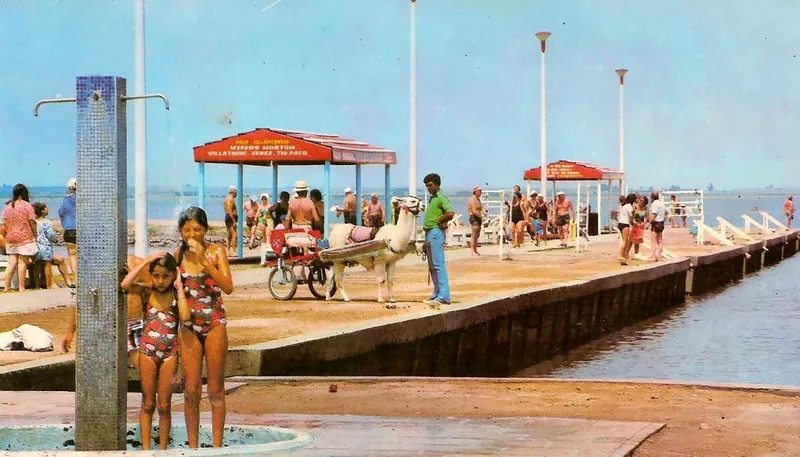
4. Villa Epecuén (Argentina) — a salt lake’s town emerges
Villa Epecuén was a resort town on Lago Epecuén until a protective dike failed in 1985. The lake water overwhelmed the town, and what had been a destination became a ruin beneath a highly saline flood.
Then the water receded. Decades later, the remains returned as a salt-bleached ghost city, stripped down to stark lines and broken forms. Few flooded places look this otherworldly, which is why Villa Epecuén became famous all over again after its destruction.
5. Old Tehri (India) — relocated for a hydro dam
Old Tehri, a hill town in India, was submerged by the reservoir created for the Tehri Dam. Residents were relocated to New Tehri, and the old town gave way to the rising water behind the hydro project.
Its memory persists through what people recall seeing when water levels are low, especially the remembered and sometimes visible spire of a sunken temple. Even without the full town in view, that image captures the scale of what was lost.
What links these places is not just water, but unfinished disappearance. They were abandoned, submerged, and altered forever, yet pieces of them still surface in stone, in drought, and in collective memory.
Did You Know?
The slogan “Cofiwch Dryweryn” means “Remember Tryweryn” in Welsh.