
🏺 Recovered from the dusty archives
Thomas Paine's Crisis Line in America's Darkest Winter
These are the times that try men's souls.
- Who: Thomas Paine.
- Where: In the opening of The American Crisis, No. 1.
- When: December 19, 1776, during the winter campaign of the American Revolution.
- Why: It mattered because Paine wrote it to rally support and stiffen resolve at a moment when the revolutionary cause seemed close to defeat.
“These are the times that try men’s souls” is one of the most durable lines of the American Revolution because it was written for a moment that seemed close to defeat. Thomas Paine published it as the opening of The American Crisis, No. 1 on December 19, 1776, when the revolutionary cause was under severe strain and morale had sunk during the winter campaign.
December 1776 and the Crisis
If the line is often remembered now as a general statement about hardship, in 1776 it was much more immediate than that. The Continental Army had suffered major setbacks around New York. Enlistments were running out. Support for the cause could not be assumed. This was not a victory speech or a polished retrospective. Paine was writing into a live emergency, trying to stiffen resolve when the Revolution seemed fragile.
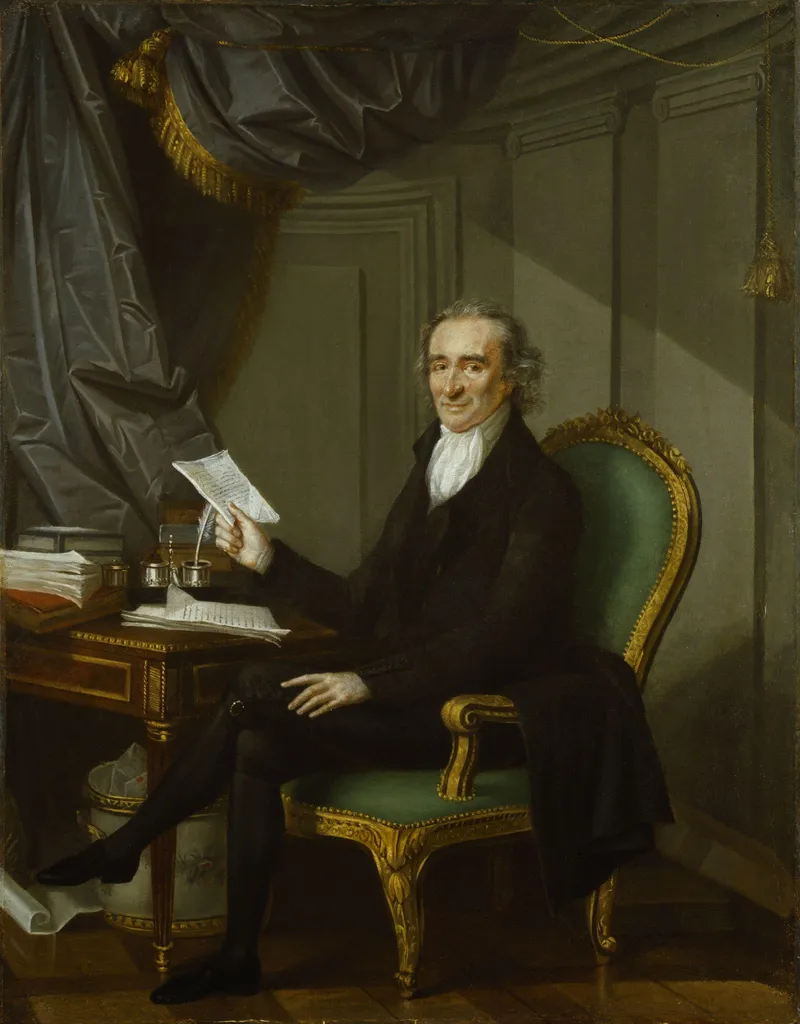
Meaning of “Try Men’s Souls”
That situation gives the sentence its force. Paine did not begin with policy, theory, or celebration. He began with pressure. “Try” here means test. “Souls” widens the crisis beyond battlefield losses and turns it into a measure of character and endurance. The wording is plain, compact, and severe. It tells readers that suffering is real, but it also implies that hard times reveal who will stand firm. That balance mattered. Empty optimism would have sounded false in late 1776. Paine instead acknowledged the depth of the danger and then argued that perseverance in such a moment was exactly what gave the cause its worth.
The line resonated because it matched public feeling without simply mirroring despair. Paine was already known for writing that reached ordinary readers directly, and here he used that skill to frame wartime fear as a test rather than an endpoint. In the same opening passage, he sharply contrasts the “summer soldier and the sunshine patriot” with those willing to endure the present crisis. That sharpened the moral stakes. Staying committed was not just difficult; it became honorable precisely because it was difficult.
Why the Line Endured
The quote is still remembered because it carries its original setting inside it. It is memorable not only for its rhythm but for the exact historical pressure behind it: a revolutionary movement trying to survive a winter when success was uncertain. Its endurance comes from that combination of compression and context. Paine found a sentence strong enough to rally people in real time, and specific enough that it still points back to December 1776, when words were being used as wartime equipment.
Did You Know?
The same opening passage contrasts “the summer soldier and the sunshine patriot” with those who would endure the crisis.