
🛍️ Artifacts of human ingenuity
Sperry Top-Sider Origin: How a Dog Inspired Boat Shoes
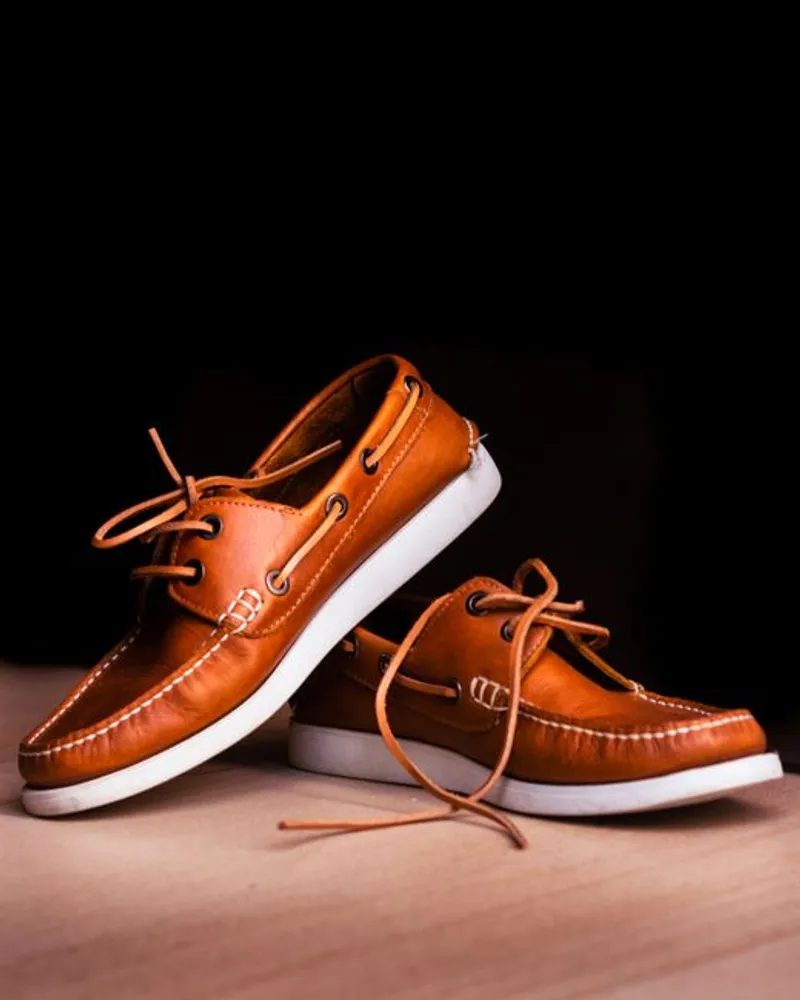
- What: Paul Sperry developed the Sperry Top-Sider after noticing his dog’s paw traction, leading him to create a patented non-slip boat shoe with grooved rubber soles for better grip on wet decks.
- Where: New England and wet boat decks.
- When: The 1930s, with a U.S. patent in the mid-1930s and broader use during World War II.
Paul Sperry’s best-known product idea started with a slipping problem. In the 1930s, after he slipped on an icy surface in New England, Sperry began looking closely at why his own shoes had so little grip and why his cocker spaniel did not.
Dog Paw Inspiration
The event came first: loss of traction, then inspection, then experimentation. Sperry noticed the grooves and texture in his dog Prince’s paw pads and used that observation as a starting point. He did not copy a paw directly into rubber, but he translated the basic idea of patterned traction into a practical sole. Using a knife, he cut siping-like grooves into rubber to improve grip on wet surfaces. That concept became the foundation of the Sperry Top-Sider.
In the mid-1930s, Sperry patented the shoe design in the United States. The key feature was the non-slip sole, built to hold more reliably on wet boat decks than the flatter shoes many people were wearing at the time. The rest of the shoe also fit the setting: low profile, leather upper, and deck-friendly construction. It was a product answer to a narrow, specific problem, which is often how durable designs begin.
Non-Slip Sole Design
The shoe spread because the use case was clear. Sailors needed traction without marking decks, and Sperry’s design addressed both. The U.S. Navy later adopted Sperry shoes for some use during World War II, which expanded the brand’s visibility and tied the Top-Sider more firmly to maritime life. From there, the shoe moved beyond working boats and into leisure wear, but its reputation was built on performance first.
The useful insight is not that inspiration came from a dog. It is that a small observation became valuable only after Sperry converted it into manufacturing details people could actually use. Plenty of people notice patterns in nature. Far fewer turn that into a sole pattern, a patent, and a product category that holds up under real conditions.
Boat Shoe Performance Legacy
That is why the Sperry Top-Sider matters as more than a style icon. Its core feature was concrete and measurable: better traction on wet decks. A moment of looking closely at paw pads in the 1930s ended up under the feet of sailors around the world, in the form of a rubber sole cut to grip where older shoes slipped.
Did You Know?
The Sperry Top-Sider is often credited as the first boat shoe, and its original sole was made by cutting siped grooves into rubber by hand.