
🛍️ Artifacts of human ingenuity
HP Printer Cartridge Chips and the Fight Over Ink
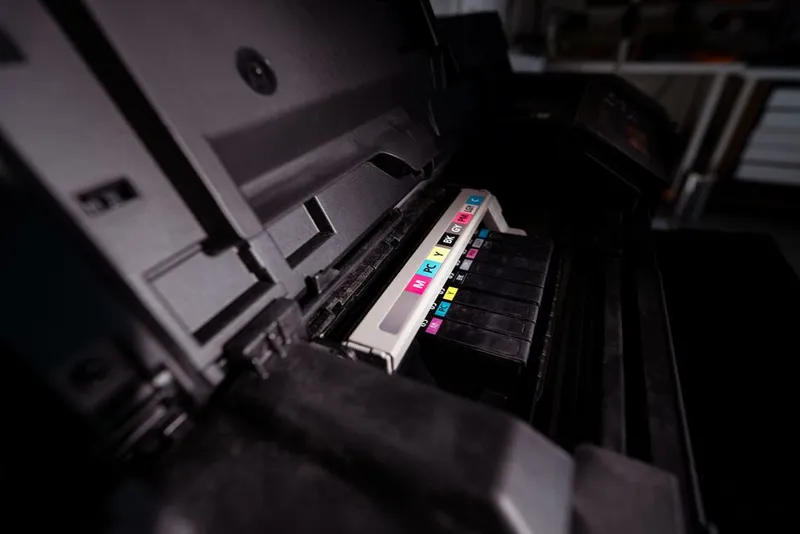
- What: HP printer cartridge chips let cartridges identify themselves, report ink status, and in some cases determine whether the printer would accept or reject them, turning ink supply into a controlled system.
- Where:
- When: Late 1990s through the 2010s.
HP printer cartridge chips helped turn ink from a simple refill into a managed system. Starting in the late 1990s and early 2000s, many ink cartridges began carrying tiny integrated circuits that could identify the cartridge, communicate with the printer, and estimate ink status. In some models, those chips also became a gatekeeper for whether a cartridge would keep working at all.
How Cartridge Chips Work
The basic idea was not mysterious. A printer no longer had to treat a cartridge as a passive plastic box full of ink. It could read data, track usage, and flag problems. Manufacturers said this improved reliability and print quality. In practice, it also made life much harder for third-party refillers and remanufacturers, whose business had long depended on cleaning, refilling, and reselling used cartridges.
HP was one of the biggest names in that fight, though it was far from the only company using chips. Different cartridge lines worked in different ways. Some chips mainly reported estimated ink levels. Others stored identifiers or interacted with printer firmware in ways that could reject non-HP supplies or cartridges the printer considered spent. That difference mattered, because “cartridge chip” became a catchall term for several related controls, not one single technology.
Firmware Updates and Dynamic Security
The conflict became especially visible in the 2000s and 2010s as aftermarket companies kept finding workarounds. Some sold replacement chips. Some reset or reprogrammed certain cartridges. Others redesigned compatible cartridges to mimic expected signals closely enough to pass. Then printer makers updated firmware, and the cycle started again. A particularly public flashpoint came in 2016, when HP faced backlash over its “Dynamic Security” system after some printers began rejecting certain third-party cartridges following a firmware update. HP later issued an update for some affected models, but the larger dispute did not disappear.
Control Over Ink Cartridges
The consequence was bigger than printer maintenance. A tiny chip shifted control from the physical cartridge to the rules surrounding the cartridge: what counted as empty, what counted as authentic, and what the printer was allowed to accept. Ink was still a consumable, but it increasingly behaved like part of a controlled platform.
That is why a small chip on an HP cartridge mattered so much. It did not just measure ink. In many models, it helped define who could sell the cartridge, who could refill it, and whether a working printer would recognize the plastic box sitting inches from its printhead.
Did You Know?
HP introduced the OfficeJet Pro X series in 2013, and some HP printers have used firmware updates to change how third-party cartridges are detected.