🏺 Recovered from the dusty archives
Toussaint Louverture's Labor Policy and Haiti's Economic Recovery
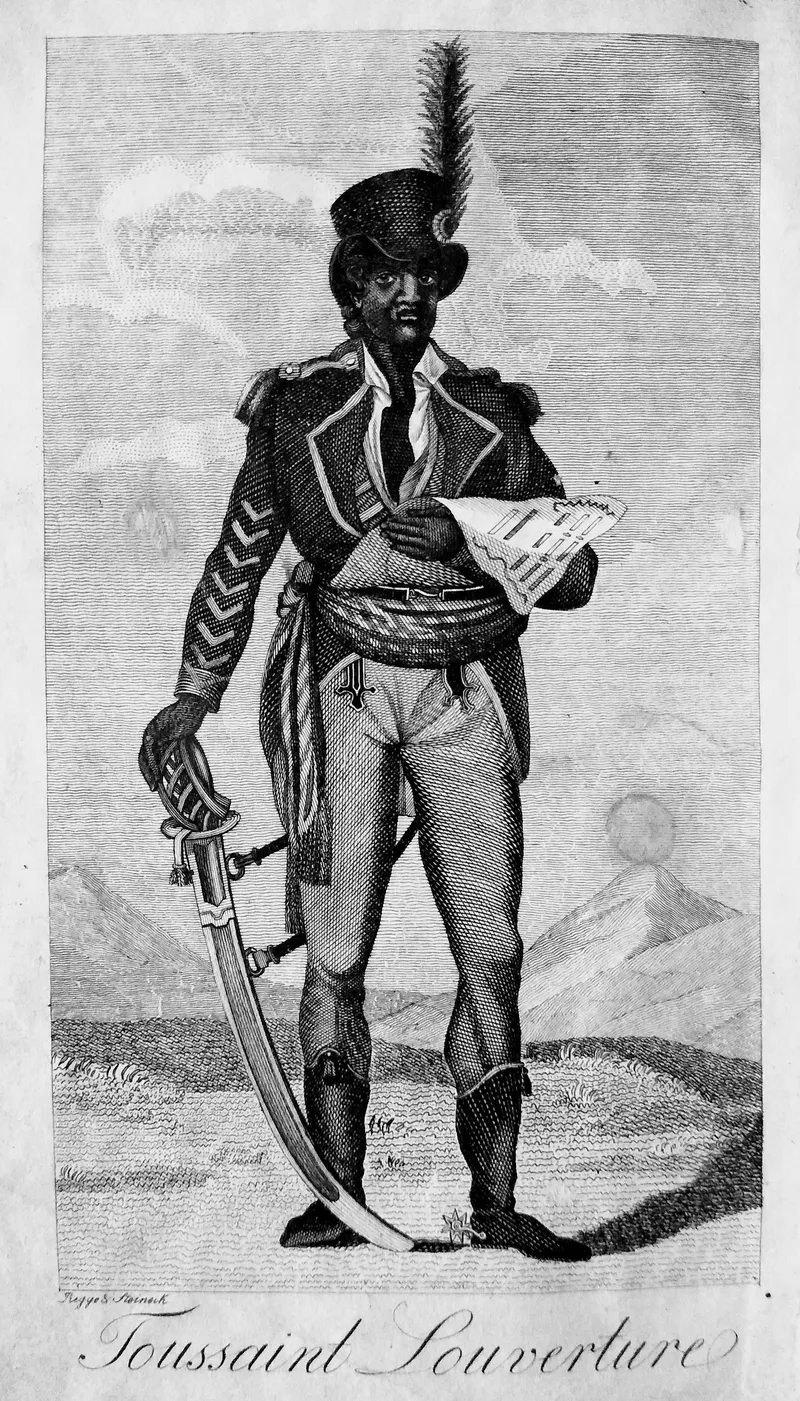
- What: Toussaint Louverture restored plantation agriculture in post-revolutionary Haiti through a coercive labor system meant to revive exports and stabilize the economy.
- Where: Saint-Domingue, the colony that became Haiti.
- When: During the Haitian Revolution, especially in the late 1790s and early 1800s.
Haiti won freedom through revolution, but freedom did not automatically refill the sugar mills or restart the coffee exports. Under Toussaint Louverture in Saint-Domingue, the colony that would become Haiti, the economy had been shattered by years of war in the 1790s. Plantations were damaged, trade was disrupted, and the system that had made the colony one of the richest in the Caribbean had largely collapsed.
Louverture’s Plantation Labor System
Louverture faced a hard reality: if production stayed broken, the new Black-led regime would have less revenue, less food security, and less leverage against foreign powers watching closely. If the fields did not produce, the revolution’s survival itself became harder to defend. So he moved to restore plantation agriculture, especially sugar and coffee, through a strict labor system that tied formerly enslaved workers to large estates under military-backed rules.
On paper, this was not a return to slavery. Workers were legally free, and Louverture’s government described the arrangement as paid labor organized by contract. Some wages or shares of production were supposed to go to laborers. But in practice, many people experienced the system as coercive. Workers often could not simply leave plantations at will. Military officers and managers enforced attendance, discipline, and output. For people who had fought to escape plantation control, that resemblance mattered.
Economic Recovery Through Exports
Louverture’s reasoning was not mysterious. He believed export agriculture was the fastest way to rebuild Saint-Domingue’s economy, finance the government, and prove that emancipation did not mean economic ruin. He also wanted order after years of violence. Critics, then and since, have pointed out the cost: a revolution made in the name of emancipation was now being stabilized through regimented plantation work that many freed people had never wanted to resume.
That tension had consequences. Louverture’s labor policy helped revive production to a degree, but it also deepened mistrust between the state and rural workers. It exposed one of the central problems of post-revolutionary Haiti: political freedom and economic recovery were not moving along the same path. Rebuilding the export economy often meant rebuilding forms of discipline that freedom had been expected to destroy.
Post-Emancipation Control of Work
By the early 1800s, the issue was no longer abstract. In fields and mills across Saint-Domingue, emancipation existed alongside armed enforcement of labor. Louverture’s system showed, in concrete terms, that Haiti’s recovery depended not just on ending slavery, but on the unresolved question of who would control work after slavery ended.
Did You Know?
Saint-Domingue had been one of the richest colonies in the Caribbean before the war disrupted its plantations and trade.