
🛍️ Artifacts of human ingenuity
Levi's Rivets Started With a Pants Repair Problem
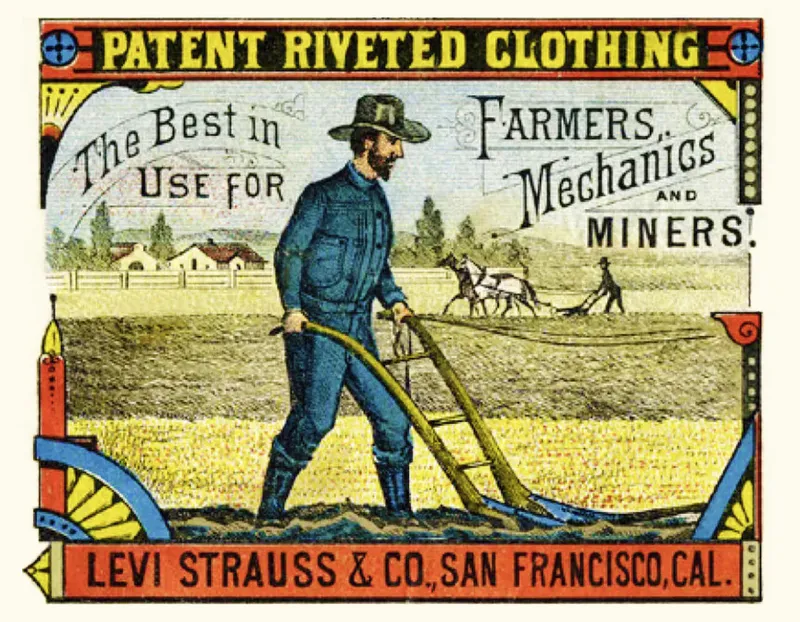
- What: Jacob Davis added metal rivets to work pants to strengthen weak points, and the 1873 patent with Levi Strauss helped define riveted jeans.
- Where: Reno, Nevada, and San Francisco, California.
- When: Early 1870s, especially 1873.
Levi’s rivets began as a practical fix, not a fashion idea. In the early 1870s, tailor Jacob Davis was making work clothes in Reno, Nevada, when a customer asked for pants strong enough to withstand hard labor.
Why Jacob Davis Added Rivets
Davis had a simple problem in front of him: pockets and stress points kept tearing. So he reinforced those weak spots with small metal rivets, the same kind of hardware used to strengthen horse blankets and other sturdy goods. The change was not decorative. It was meant to stop pants from splitting where they failed most often.
The result worked well enough that Davis saw a larger opportunity. He wanted to patent the method, but he reportedly did not have the money to file on his own. So he contacted Levi Strauss, the San Francisco dry goods wholesaler who supplied him with fabric. In 1873, Jacob Davis and Levi Strauss received a U.S. patent for improving pocket-opening fastenings with rivets.
The 1873 Rivet Patent
That moment matters because it turned a local, repair-minded solution into a manufacturable product feature. Rivets gave work pants a visible, repeatable advantage: they lasted longer at points that took the most strain. In a crowded market for durable clothing, that kind of difference was easy to explain and easy to spot.
The key point is not that the patent magically created modern jeans. Denim workwear already existed, and durable trousers were already being made. What Davis and Strauss formalized was a specific reinforcement system that helped define one famous version of them. Over time, the copper rivets became part of the product’s identity, even though they started as a direct answer to wear and tear.
How Rivets Shaped Levi’s
The consequence was bigger than the repair itself. A tiny hardware decision helped standardize what people recognized as riveted blue jeans and gave Levi Strauss & Co. a durable product signature tied to function. The most familiar details on a pair of Levi’s, especially the metal points at the pockets, trace back to one tailor trying to keep a customer’s pants from falling apart.
Did You Know?
Levi’s famous red tab on the back pocket was introduced in 1936 to help customers identify the brand from a distance.